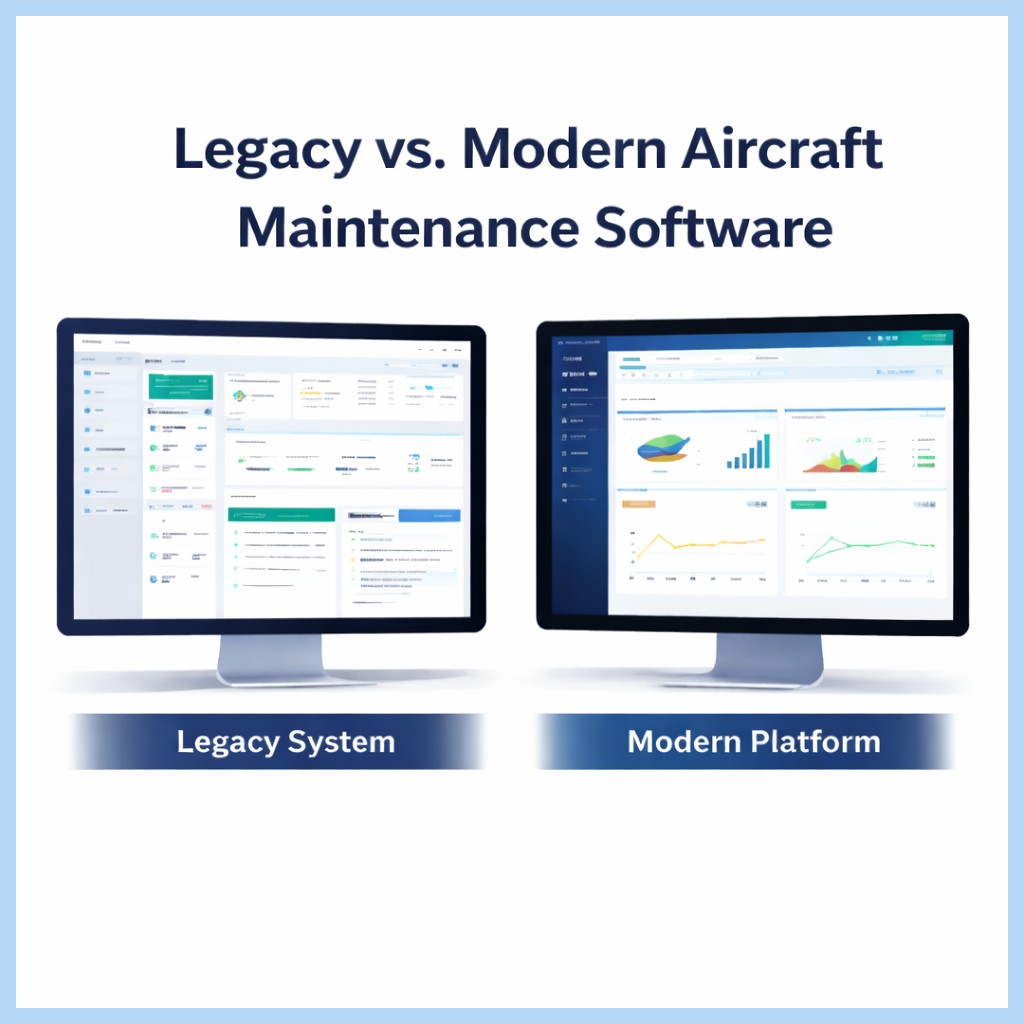
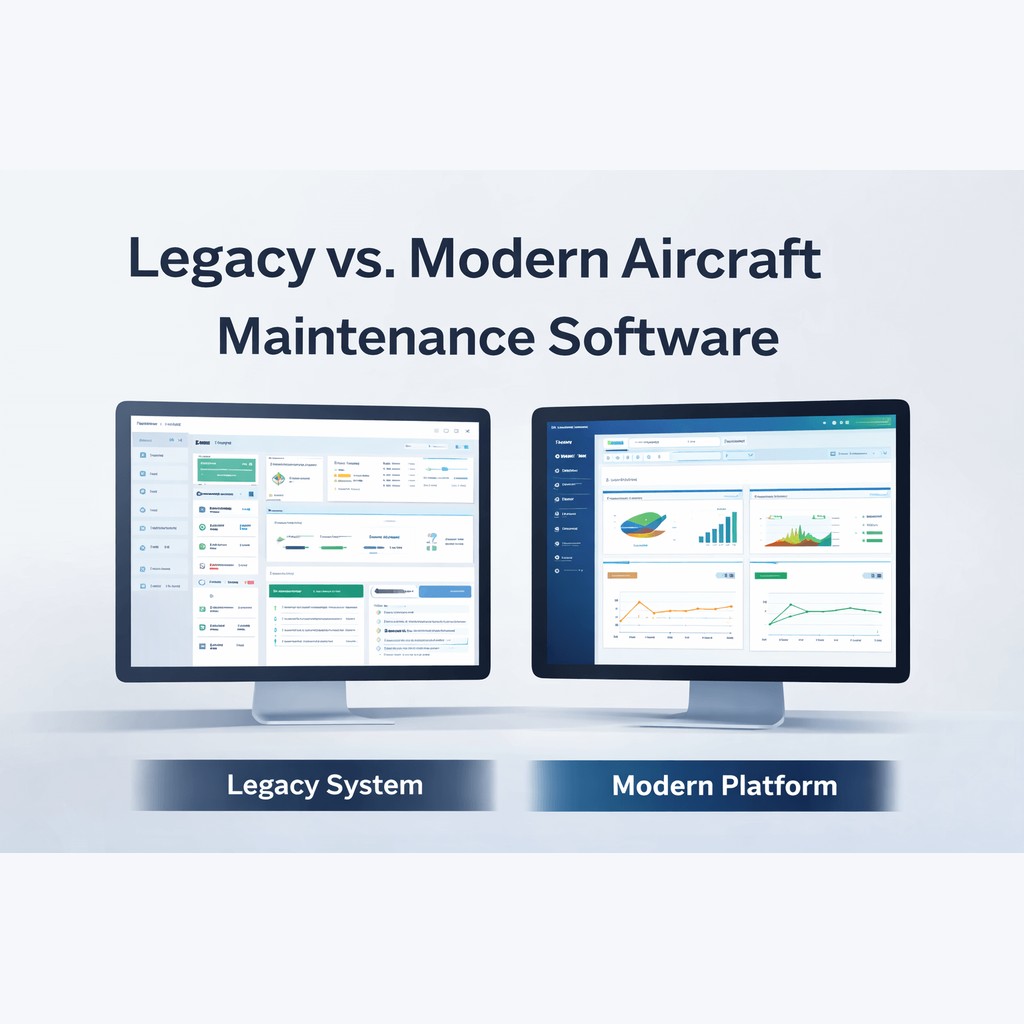
The aircraft maintenance software market is experiencing its most significant transformation since digitization began three decades ago. With over 70% of MROs still operating on systems designed in the 1990s, the industry stands at a critical inflection point.
The Legacy Aircraft Maintenance Management Crisis
Legacy aircraft maintenance tracking software wasn’t built for today’s operational complexity. Monica Badra, founder of Aero NextGen, observes: “Most operators are managing 787s and A350s with software that predates the smartphone. The disconnect isn’t just technological, it’s operational and financial.”
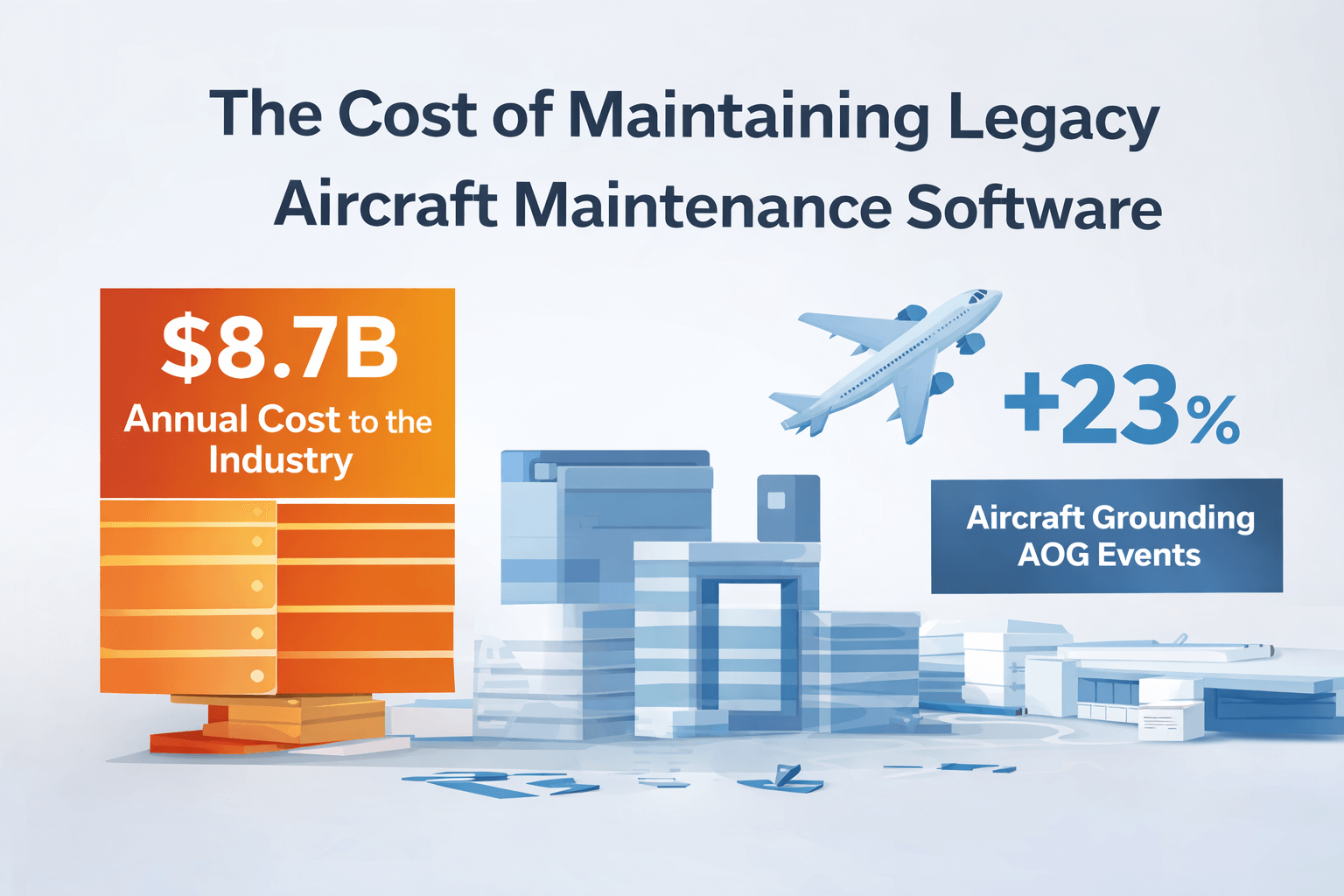
The numbers support this. According to Aviation Week’s 2025 MRO survey, maintenance delays attributed to software limitations cost the industry $8.7 billion annually. Aircraft on ground (AOG) events triggered by poor data visibility increased 23% year-over-year.
What Modern Aircraft Maintenance Tracking Programs Must Deliver
Today’s aircraft maintenance management software requirements have fundamentally changed:
Real-Time Data Integration: Modern fleets generate terabytes of operational data. Aviation maintenance software must ingest ACARS, flight data monitoring systems, and IoT sensor feeds, not just track work orders.
Regulatory Complexity: EASA Part-145 amendments, FAA Part-135 updates, and CAAC regulatory expansion mean aviation maintenance management systems need dynamic compliance engines, not static form fields.
Supply Chain Resilience: The Boeing production issues and Pratt & Whitney GTF crisis exposed how aircraft maintenance tracking software must integrate with global supply networks. Static inventory modules no longer suffice.
The MRO Software Architecture Debate: Hybrid vs. Best-of-Breed
The aviation maintenance tracking software market has split into two camps.
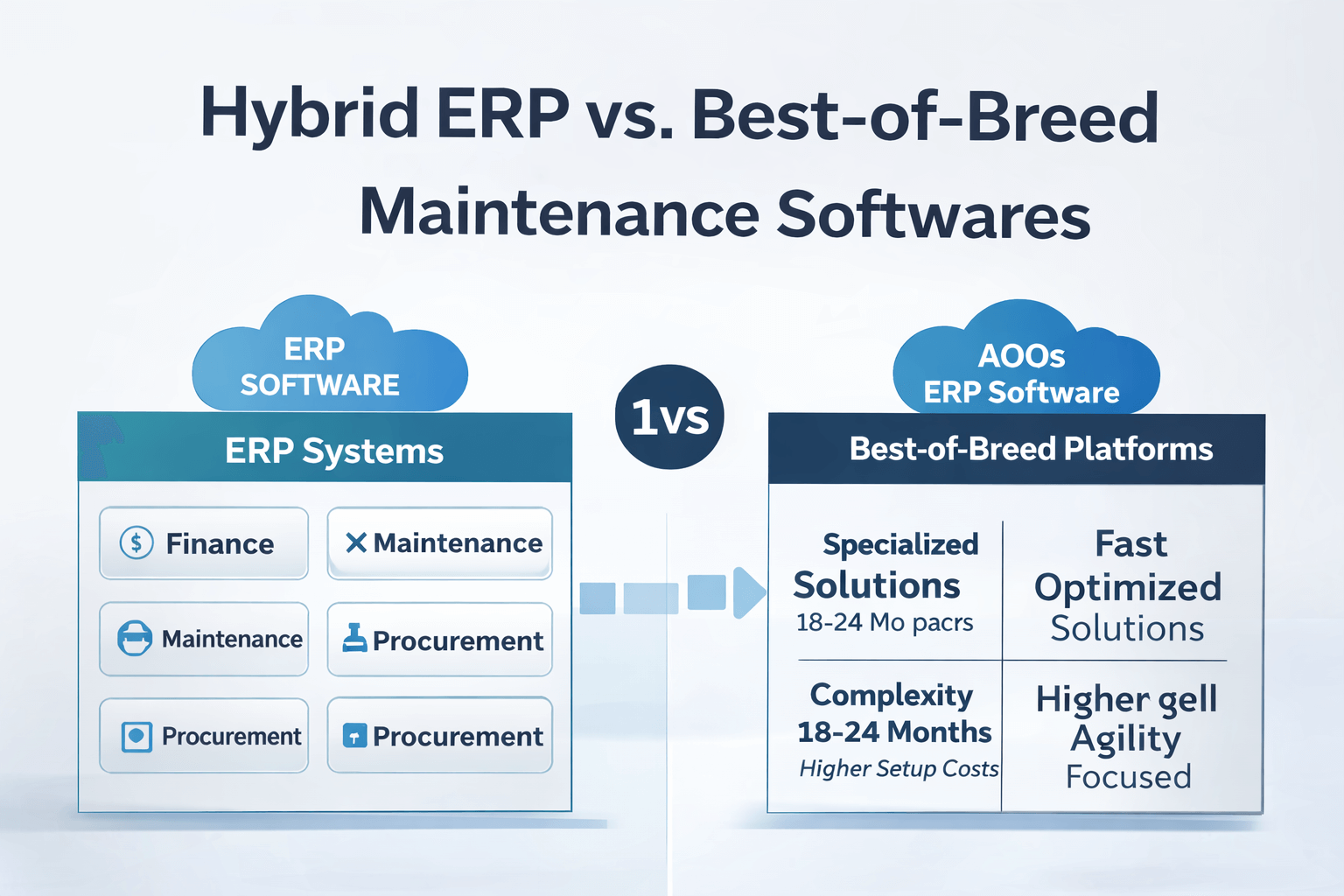
Hybrid ERP Systems: Traditional aviation ERP software promises end-to-end integration. Players like Infor and SAP offer comprehensive modules spanning maintenance, finance, and procurement. The appeal is singular data architecture.
The reality? Implementation timelines averaging 18-24 months and customization costs exceeding $2M for mid-sized operators, according to AviTrader’s Q4 2025 analysis.
Best-of-Breed Platforms: Modern operators are selecting specialized aircraft maintenance planning software, integrating via APIs. This approach, championed by progressive MROs like StandardAero and AAR, prioritizes operational agility over architectural purity.
Lara Magazine’s January 2026 feature on digital transformation highlighted FL Technics’ 14-month journey from legacy to best-of-breed architecture, reducing maintenance planning cycle time by 40%.
Critical Capabilities for Aviation Maintenance Software in 2026
Predictive Maintenance Intelligence
Aircraft engineering maintenance is transitioning from scheduled to condition-based approaches. Advanced aircraft maintenance management software now employs machine learning algorithms analyzing engine performance trends, structural health monitoring data, and historical failure patterns.
Lufthansa Technik’s AVIATAR platform demonstrates this shift, their predictive models reduce unscheduled component removals by 35%, as reported in Aerotime’s recent deep-dive.
Mobile-First Operations
Line maintenance occurs on ramps, in hangars, at remote stations, rarely at desks. Aviation maintenance tracking software must function seamlessly on tablets and smartphones, supporting offline operations with automatic synchronization.
Audit Trail and Compliance Automation
Aviation authorities worldwide are tightening digital record-keeping standards. Aircraft maintenance tracking programs require immutable audit logs, electronic signature compliance, and automated regulatory reporting.
The Hidden Cost: Technical Debt in Aviation MRO Software
Oliver Wyman’s 2025 MRO Technology Report quantified technical debt’s impact: operators running software older than 10 years experience 47% higher IT maintenance costs and 3.2x more cybersecurity incidents.
This context makes aircraft maintenance management software selection not just an operational decision, but a risk management imperative.
Solutions Gaining Traction
Forward-thinking operators are evaluating platforms that balance depth with flexibility. Solutions must handle complex aircraft maintenance planning software requirements, from A-check scheduling to heavy maintenance project management, while remaining configurable without custom code.
The marketplace has matured. Modern aircraft asset management software integrates maintenance execution, materials management, and engineering documentation within unified platforms, while still supporting API-driven ecosystems.

What This Means for Your Operation
If your aircraft maintenance software can’t answer these questions instantly, you’re operating with a strategic disadvantage:
- What’s my current maintenance reserve exposure across the fleet?
- Which aircraft will exceed next check threshold first?
- Where are my AOG-critical rotables right now?
- Am I compliant with the latest airworthiness directives?
The aircraft maintenance management software you select in 2026 will define your operational efficiency for the next decade. Choose accordingly.
Ready to find the right aircraft maintenance software for your operation? Take Aero NextGen’s Solution Finder Quiz to receive a personalized, vetted shortlist of aviation maintenance management platforms matched to your specific operational requirements, fleet complexity, and regulatory environment. Get your customized recommendations in minutes at aeronextgen.com/solution-finder.