
FBO software is no longer a fuel log and a spreadsheet. A fixed-base operator (FBO) is the entity an airport authorizes to sell aeronautical services on its ramp — fuel, hangar and tie-down space, ground handling, and passenger amenities — and every one of those service lines now runs through software that has to talk to the others. The category has consolidated around a clear job: replace paper fuel tickets, whiteboards, and standalone billing systems with one connected system covering dispatch, fuel, line service, customer records, and compliance. This guide breaks down what FBO software actually does, the core modules to evaluate, and how to shortlist a platform without getting locked into a vendor pitch.
This is a category guide, not a vendor ranking. Aero NextGen indexes FBO and ground-handling software inside its 600+ solution provider catalog — the fastest way to see which platforms fit a specific ramp is the Solution Finder quiz: https://www.aero-nextgen.com/erp-finder-quiz

WHAT FBO SOFTWARE ACTUALLY DOES
FBO software automates the operational and financial functions of running a ramp: aircraft and passenger handling requests, fuel dispatch and inventory, line service task assignment, billing and into-plane reconciliation, and customer records. The Wikipedia definition of an FBO covers the service list — fueling, hangaring, tie-down, parking, aircraft rental, maintenance, flight instruction — and modern software exists because each of those lines used to run on its own disconnected process (Wikipedia — Fixed-base operator: https://en.wikipedia.org/wiki/Fixed-base_operator).
The market has responded with purpose-built platforms. FBO One is a SaaS system built to run front- and back-office aircraft handling and fuel service processes across single or multi-location FBO networks, with configurable workflows designed to eliminate duplicate data entry (Capterra, FBO One product listing). FBO Director combines fuel management, flight dispatch, and automated billing with QuickBooks integration for smaller operators that need accounting to sync automatically (FBO Director, fbodirector.com). CAMP Aviate positions itself as unifying ramp, front desk, and finance into one real-time environment specifically for North American FBOs (CAMP Aviate, campaviate.aero). These are examples of how the category has been built, not a recommendation — the right fit depends on ramp size, transaction volume, and whether fuel or hangar/maintenance revenue dominates the business.
CORE MODULE 1: FUEL MANAGEMENT AND DISPATCH
Fuel is the highest-value, highest-risk transaction an FBO processes, and it’s the module buyers should scrutinize hardest. Fuel management software needs to handle real-time inventory across tanks and trucks, dispatch fuel orders to line crews, and capture the transaction digitally at the wingtip rather than on a paper ticket that gets keyed in later.
- Digital ticket capture eliminates the reconciliation lag. Varec’s FuelsManager IntoPlane platform is built specifically to replace paper into-plane tickets with guided digital data entry, removing the backlog that inventory accountants face when reconciling a stack of handwritten tickets against tank readings (Varec — Into-Plane Fuel Management: https://www.varec.com/solutions/aviation/into-plane-fuel-management/).
- Airline-scale platforms show where the category is heading. QT Technologies connects dispatch, ramp ticketing, and inventory into one digital chain, replacing manual, paper-based fueling entirely across a network — the same architecture pattern is now filtering down into independent FBO fuel modules (QT Technologies — Fueling Software: https://www.qttechnologies.com/solutions-aviation/).
- Reconciliation automation is the ROI driver. Logicraft’s FuelCOUNTER automates fuel ticket data collection and validates it against actual flight schedules, closing the gap between what was pumped and what was invoiced (Logicraft — Aviation Fuel Management: https://logicraft.com/home-2a/). i6 Group adds real-time scheduling and allocation with mobile, intrinsically safe hardware for airside data capture, plus automated reconciliation and reporting (i6 Group: https://www.i6.io/).

The evaluation question for any fuel module: does it eliminate the paper ticket entirely, and does the reconciliation report tie every gallon pumped to an invoice without a manual match step?
CORE MODULE 2: RAMP AND LINE SERVICE SCHEDULING
Line service is the labor-intensive side of FBO operations — marshaling, towing, lavatory and water service, GPU hookup, de-icing — and scheduling software needs to assign tasks in real time as aircraft arrive and depart unpredictably. Aviatize’s review of the category notes that FBO platforms increasingly bundle scheduling, capacity planning, and billing-ready occupancy reporting for hangar and ramp space into one dashboard, and that line service crews can now get real-time task assignment tied to labor allocation rather than working off a printed schedule board (Aviatize — Best FBO Management Software 2026: https://www.aviatize.com/blog/best-fbo-management-software-2026; AirPlx — FBO Software for Hangar & Ramp Operations: https://www.airplx.com/fbo-software/).
The buyer’s checklist here:
- Does the scheduling display update automatically when a flight plan changes or an aircraft diverts?
- Can it assign and track individual line technician workload, not just aircraft-level tasks?
- Does hangar and ramp occupancy data flow straight into billing without a separate spreadsheet?
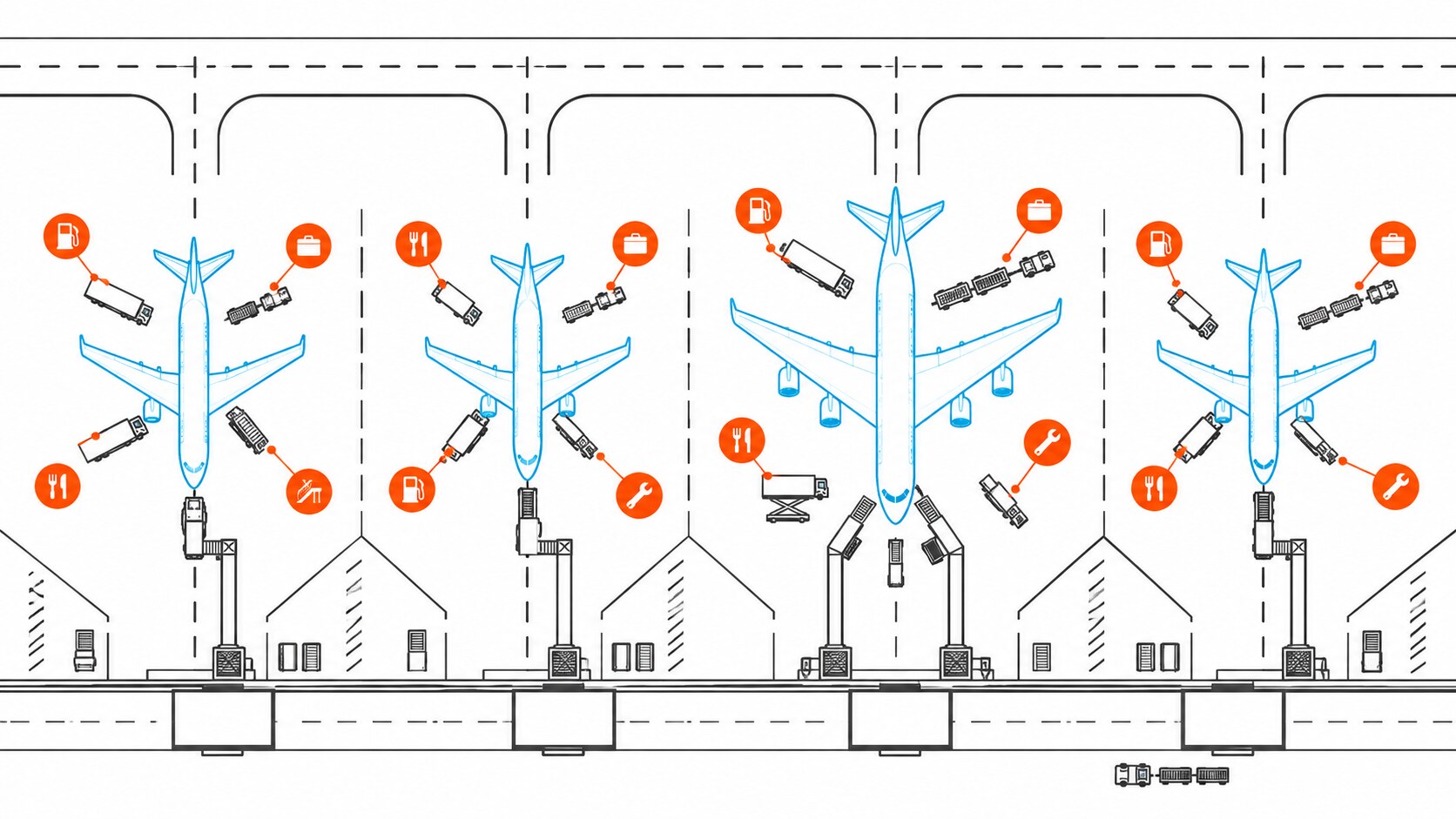
CORE MODULE 3: AIRCRAFT AND PASSENGER HANDLING REQUESTS
Every arrival triggers a chain of requests — catering, ground transportation, customs coordination, crew rest areas, weather briefings — and this is the module that determines whether an FBO feels like a five-star operation or a scramble. Signature Aviation’s approach illustrates the ceiling of this category: its FBO network ties handling requests to a loyalty framework so that repeat customers get a faster, more predictable service chain every time they land (Signature Aviation — Signature Status: https://www.signatureaviation.com/rewards/signature-status). Signature also runs TailWins, a points-based loyalty program, and launched BRAVO in 2024, a free membership for smaller turbine operators without a direct fuel contract — evidence that handling and loyalty are converging into one customer data layer rather than staying separate systems.
For an independent or regional FBO without Signature’s scale, the module requirement is simpler but non-negotiable: a single request record per tail number that every department (ramp, front desk, fuel, concierge) can see and update in real time, so a catering delay or a customs hold doesn’t get lost between departments.
CORE MODULE 4: CUSTOMER RECORDS, CRM, AND LOYALTY FBO software needs a CRM layer that remembers aircraft-specific preferences (fuel type, parking preference, cabin service requests) and ties them to a tail number or operator account, not just a contact record. Off The Ground Marketing’s research on FBO customer acquisition notes that pilots and flight departments search using operational terms and airport codes rather than corporate branding language — meaning the CRM and the marketing site need to be fed by the same operational data, not run as separate systems (Off The Ground Marketing, “SEO for FBOs”).
Loyalty and discount logic is now a standard software feature rather than a manual spreadsheet exercise — configurable fuel discounts by volume tier, membership status, or contract type, applied automatically at the point of invoicing.
CORE MODULE 5: BILLING, INVOICING, AND FINANCIAL RECONCILIATION Billing is where fuel, ramp fees, hangar rent, and handling charges converge into one invoice, and it’s the module most likely to break if the upstream modules aren’t integrated. FBO Director’s QuickBooks integration is a direct response to a common failure mode: FBOs running fuel and scheduling software that don’t talk to the accounting system, forcing manual re-entry of every transaction (FBO Director, fbodirector.com). The buyer question: can the platform generate a billing-ready occupancy and fuel report without an employee re-keying data from one system into another at month-end?
CORE MODULE 6: COMPLIANCE AND SAFETY MANAGEMENT
Compliance in FBO operations spans TSA airport access rules, insurance and liability documentation, and environmental controls for fuel storage and spill prevention. TSA’s airport access security requirements apply to the ramp environment broadly, and AOPA maintains guidance for operators navigating identification and access-control obligations (AOPA — TSA Airport Access Security Requirements: https://www.aopa.org/advocacy/airports-and-airspace/security-and-borders/tsa-airport-access-security-requirements). Much of the specific Airport Security Program detail is Sensitive Security Information and isn’t published — which is precisely why FBOs need software that keeps a defensible audit trail (who accessed the ramp, when, and under what training record) rather than trying to track it manually.
Safety Management System (SMS) software has become a parallel requirement, not an optional add-on. Platforms like Nimbl and SMS Pro’s FBO-focused module give small and mid-size operators a structured way to track procedures, manuals, and regulatory-change updates in one place instead of a shared drive full of PDFs (Nimbl — Fixed Base Operators: https://gonimbl.com/fixed-based-operators/; ASMS Pro — FBO SMS Software: https://www.asms-pro.com/industries/fixedbaseoperators.aspx).
MARKET CONTEXT: WHY THIS CATEGORY IS MOVING FAST
Business aviation demand is the direct driver of FBO software investment. Post-pandemic private jet departures rose more than 15% above pre-pandemic levels, and business aviation now represents roughly 73% of FBO service adoption in the US market as of 2025, driven by corporate travel recovery, fleet modernization, and demand for premium ground handling (market research aggregated via Reanin and Market Growth Reports, FBO market analyses, 2025-2026). Estimates of the global FBO market’s size vary significantly by research firm — figures range from roughly $25 billion to $40 billion depending on methodology and scope, with growth projections in the 11-12% CAGR range through the early 2030s. Treat any single market-size figure with caution; the directional signal — sustained double-digit growth — is more reliable than any specific number.
That growth is why the software layer underneath FBOs is consolidating: operators handling more transactions with the same headcount need one connected system, not five disconnected ones.
EVALUATION CRITERIA: HOW TO SHORTLIST
Before requesting a demo, an FBO or charter operator should be able to answer:
- Integration depth. Does fuel, scheduling, billing, and CRM run on one data model, or are they bolted together through exports and manual re-entry?
- Multi-location support. If the operator runs more than one FBO location, does the platform consolidate reporting and avoid duplicate customer records across sites?
- Mobile and airside capture. Can line crews and fuelers capture data on intrinsically safe mobile hardware at the aircraft, or does data entry still happen at a desk after the fact?
- Accounting integration. Does it post directly to QuickBooks or another general ledger system, or does someone re-key invoices monthly?
- Compliance and audit trail. Can the system produce a TSA-access log and SMS training record on demand, not just store documents?
- Total cost versus transaction volume. Fuel-heavy operations should weight fuel reconciliation accuracy and per-gallon transaction cost; hangar/maintenance-heavy FBOs should weight scheduling and occupancy billing more.
“FBOs have spent a decade bolting fuel systems, scheduling boards, and billing software together and calling it an operation. The ones pulling ahead in 2026 are the ones who stopped patching and picked one connected platform.”
— Monica Badra, Founder & CEO, Aero NextGen
FIND THE RIGHT FBO PLATFORM
There is no single “best” FBO software — the right platform depends on whether an operation is fuel-dominant, hangar/maintenance-dominant, single-site, or a multi-location network, and on what’s already running in the back office. Rather than evaluate every vendor manually, aviation operators can run a free, vendor-neutral match through the Aero NextGen Solution Finder.
Get your custom aviation software shortlist in about 3 minutes: https://www.aero-nextgen.com/erp-finder-quiz
SOURCES
- Wikipedia — Fixed-base operator: https://en.wikipedia.org/wiki/Fixed-base_operator
- Capterra — FBO One Software: https://www.capterra.com/p/267563/FBO-One/
- Aviatize — Best FBO Management Software 2026: https://www.aviatize.com/blog/best-fbo-management-software-2026
- FBO Director: https://fbodirector.com/
- Nimbl — Fixed Base Operators: https://gonimbl.com/fixed-based-operators/
- ASMS Pro — FBO SMS Software: https://www.asms-pro.com/industries/fixedbaseoperators.aspx
- CAMP Aviate — FBO Management Software North America: https://campaviate.aero/fueling-fbos-north-america/
- AirPlx — FBO Software for Hangar & Ramp Operations: https://www.airplx.com/fbo-software/
- Varec — Into-Plane Fuel Management: https://www.varec.com/solutions/aviation/into-plane-fuel-management/
- QT Technologies — Fueling Software for Commercial Airlines: https://www.qttechnologies.com/solutions-aviation/
- Logicraft — Aviation Fuel Management Software: https://logicraft.com/home-2a/
- i6 Group — Aviation Fuel Management Software: https://www.i6.io/
- Signature Aviation — Signature Status Loyalty Program: https://www.signatureaviation.com/rewards/signature-status
- AOPA — TSA Airport Access Security Requirements: https://www.aopa.org/advocacy/airports-and-airspace/security-and-borders/tsa-airport-access-security-requirements
- Reanin — Fixed-Base Operators (FBO) Market Size & Industry Share: https://www.reanin.com/reports/fixed-base-operators-market
- Market Growth Reports — Fixed-base Operators (FBO) Market Size & Share 2026-2035: https://www.marketgrowthreports.com/market-reports/fixed-base-operators-fbo-market-104057