
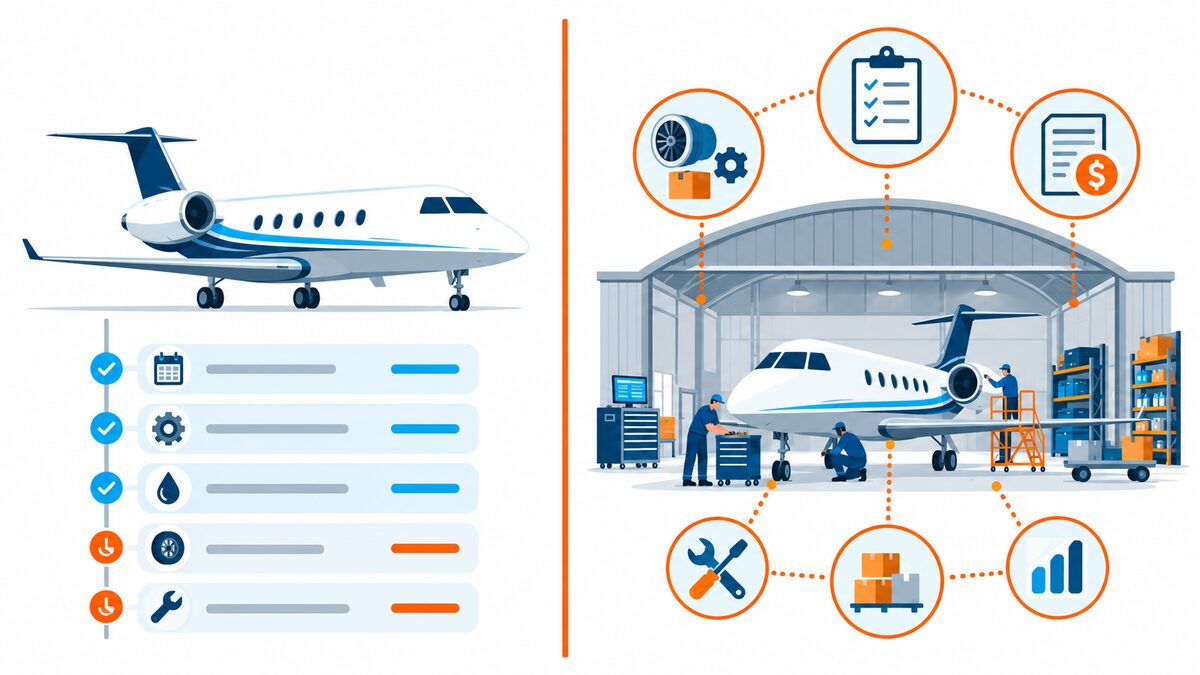
Aircraft fleets cannot operate reliably without consistent inspections, servicing, repairs, and maintenance planning. If you are asking what is fleet maintenance, it is the process of keeping a group of aircraft or other operational assets safe, serviceable, compliant, and available through scheduled maintenance, repairs, inspections, recordkeeping, and long-term planning.
In aviation, what is fleet maintenance involves much more than fixing aircraft after something fails. Airlines, charter operators, corporate fleets, and MRO organizations must track aircraft hours, cycles, inspections, component limits, defects, parts, labor, and maintenance records. Strong fleet maintenance helps organizations balance aircraft availability with the work required to keep each asset airworthy.
Why Fleet Maintenance Matters
Aircraft generate revenue or provide operational value only when they are available for service. Poor maintenance planning can lead to unexpected downtime, flight disruptions, expensive repairs, and difficulty meeting operational schedules. A well-managed maintenance program gives teams better visibility into upcoming work before it affects aircraft availability.
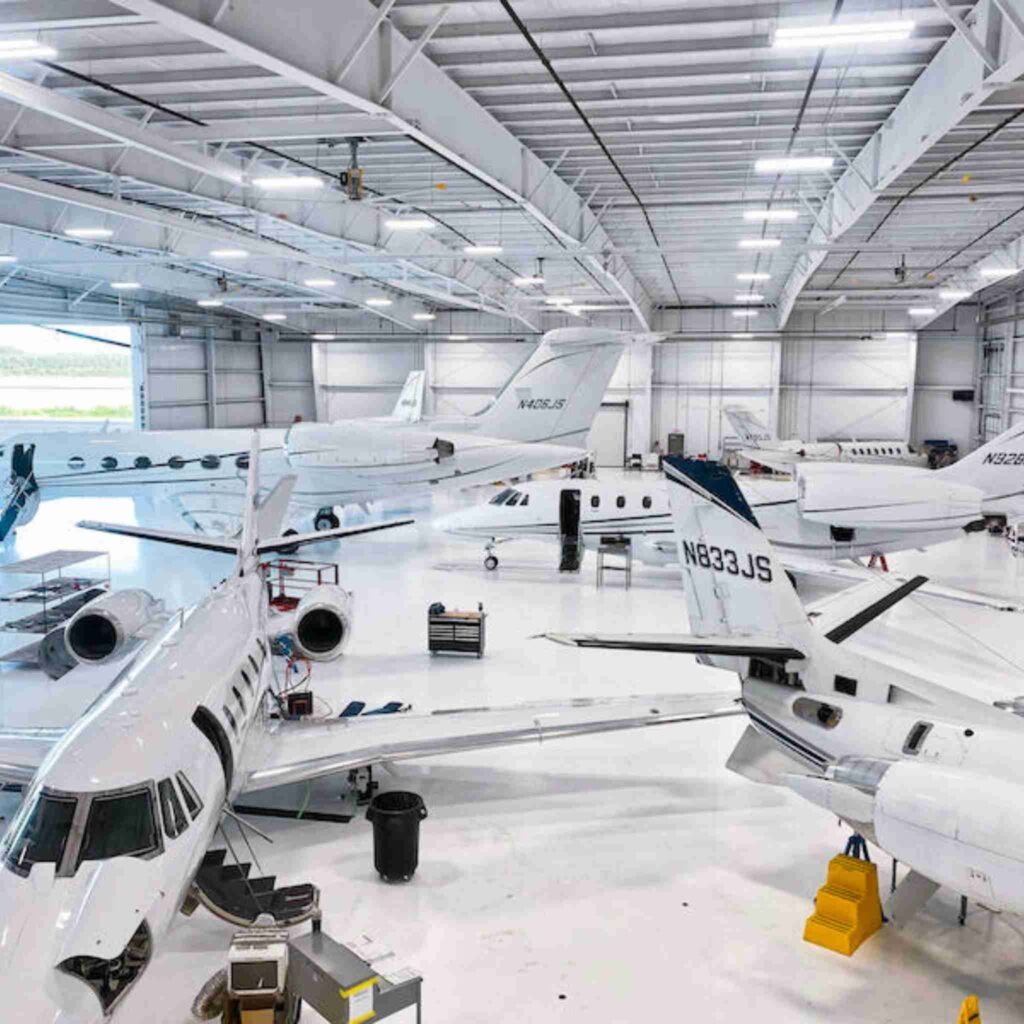
This operational connection is central to what is fleet maintenance. Maintenance managers must consider the condition of individual aircraft while also looking at the fleet as a whole. If several aircraft require major work during the same period, the organization may face shortages in hangar space, technicians, tooling, or replacement aircraft.
Scheduled Maintenance Keeps Aircraft Ready
Scheduled maintenance includes inspections and tasks performed at planned intervals. Requirements may depend on calendar time, flight hours, cycles, component limits, or an approved maintenance program. Teams can prepare for this work by arranging technicians, facilities, tooling, documentation, and parts before the aircraft enters maintenance.
Understanding what is fleet maintenance means recognizing the importance of these planned events. Operators should not wait until a due date approaches before organizing resources. Advance planning makes it easier to coordinate maintenance with aircraft schedules and can reduce delays caused by missing parts or unavailable personnel.
Unscheduled Repairs Require Fast Response
Not every maintenance requirement can be predicted. Aircraft can develop defects between scheduled inspections, pilots may report technical problems, or technicians may discover additional issues during routine work. Unscheduled maintenance requires teams to diagnose the problem, determine the correct action, and return the aircraft to service when appropriate.
This reactive work is another major part of what is fleet maintenance because unexpected defects can quickly affect the wider fleet schedule. If one aircraft becomes unavailable, another may need to cover its planned flights. Maintenance, operations, materials, and scheduling teams therefore need accurate information so they can respond without creating unnecessary disruption elsewhere.

Maintenance Planning Balances Availability
Maintenance planners coordinate future work across the fleet. They review upcoming inspections, component requirements, expected aircraft utilization, technician availability, hangar capacity, tooling, and parts. The goal is to complete required work while keeping enough aircraft available for operational demand.
Good planning provides a practical answer to what is fleet maintenance from a management perspective. Instead of treating every aircraft independently, planners examine how maintenance events interact across the entire operation. Staggering major checks and preparing resources early can help prevent several aircraft from becoming unavailable at the same time.
Parts And Inventory Affect Aircraft Downtime
A maintenance team may identify a problem quickly but still be unable to return an aircraft to service if the required part is unavailable. Fleet maintenance therefore depends heavily on purchasing, inventory, warehousing, repair vendors, and supply chain coordination. Long lead times can turn a relatively simple repair into extended downtime.
When considering what is fleet maintenance, parts planning should be included alongside technical work. Maintenance forecasts can help materials teams anticipate demand for frequently used or critical components. Organizations must balance availability with inventory cost because holding excessive stock ties up capital while carrying too little can delay maintenance.
Maintenance Records Support Fleet Control
Accurate maintenance records provide a history of work completed on each aircraft. Records may include inspections, repairs, component replacements, modifications, discrepancies, and other technical information. Maintenance teams rely on this information when determining aircraft status and planning future work.
The FAA explains that aircraft maintenance includes preservation, inspection, overhaul, repair, and parts replacement, while operators remain responsible for maintaining aircraft in an airworthy condition. Its aircraft maintenance guidance also highlights the importance of required inspections and maintenance records. Record accuracy is therefore an essential part of what is fleet maintenance in aviation.
Technology Improves Maintenance Visibility
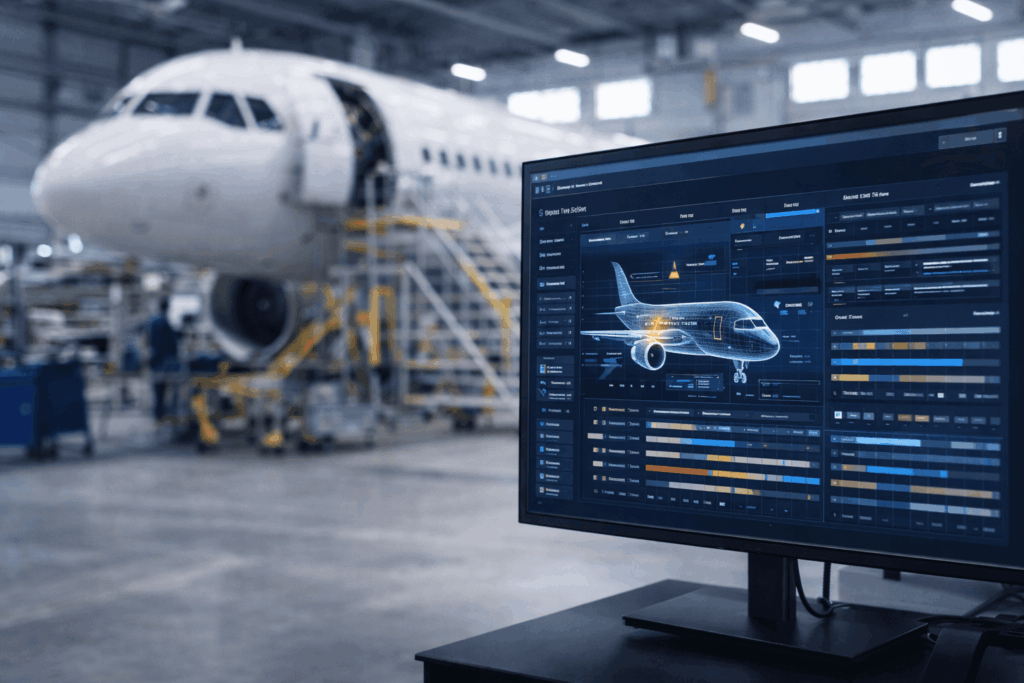
Managing a small number of aircraft through separate spreadsheets may be possible, but complexity rises quickly as a fleet grows. Teams need visibility into aircraft status, due tasks, defects, parts, labor, work orders, and maintenance history. Disconnected systems can make it difficult to see the complete fleet picture.
Digital platforms can centralize this information and make what is fleet maintenance easier to manage across departments. Aero Next Gen’s aircraft maintenance overview explains how modern maintenance operations use digital systems for work orders, aircraft status, inspections, records, parts, and planning. Better visibility helps teams spend less time reconciling separate information sources.
Predictive Maintenance Adds Proactive Insight
Traditional maintenance programs rely heavily on scheduled tasks, inspections, and technician findings. Modern aircraft also produce large amounts of operational and condition data. Predictive maintenance uses historical and real-time information to identify patterns that may indicate developing problems before they become obvious failures.
Predictive tools can strengthen what is fleet maintenance by giving planners another source of information. They may help teams identify unusual component behavior, prepare maintenance resources earlier, or investigate potential problems before they cause unscheduled downtime. These tools support maintenance professionals rather than replacing approved programs, inspections, or technical judgment.
Fleet Maintenance Costs Need Lifecycle Planning
Maintenance costs include more than individual repairs. Operators also spend money on labor, inspections, replacement parts, component overhauls, tooling, facilities, software, and aircraft downtime. An older aircraft may remain operational but require increasing maintenance spending as components age and repairs become more frequent.
For this reason, what is fleet maintenance also includes long-term asset decisions. Managers can compare maintenance spending, reliability, utilization, and downtime across aircraft to identify assets that are becoming expensive to operate. This information can help support decisions about upgrades, major overhauls, fleet changes, or eventual aircraft replacement.
Maintenance Performance Should Be Measured
Organizations need measurable information to determine whether their maintenance strategy is working. Useful indicators may include aircraft availability, maintenance delays, unscheduled removals, repeat defects, turnaround time, labor utilization, and maintenance cost. Trends across several months can reveal problems that individual maintenance events do not show.
Measuring performance adds another layer to what is fleet maintenance because managers need to understand both technical work and operational results. A fleet may complete every required maintenance task but still suffer from poor availability or repeated delays. Data can help teams identify where planning, supply chain, reliability, or workflow improvements may be needed.
Conclusion
So, what is fleet maintenance? It is the coordinated process of inspecting, servicing, repairing, documenting, planning, and managing a fleet so its aircraft remain safe, airworthy, and available for operation. It includes scheduled work, unscheduled repairs, parts management, technical records, maintenance planning, cost control, and performance monitoring.
As aviation becomes more connected, what is fleet maintenance increasingly includes digital maintenance systems, analytics, predictive tools, and integrated operational data. Aero Next Gen helps aviation organizations evaluate MRO, maintenance, ERP, fleet, analytics, and other technology solutions that can improve maintenance visibility and support more effective fleet planning.