By
A Thought Leadership Collaboration between Aero NextGen and Signol
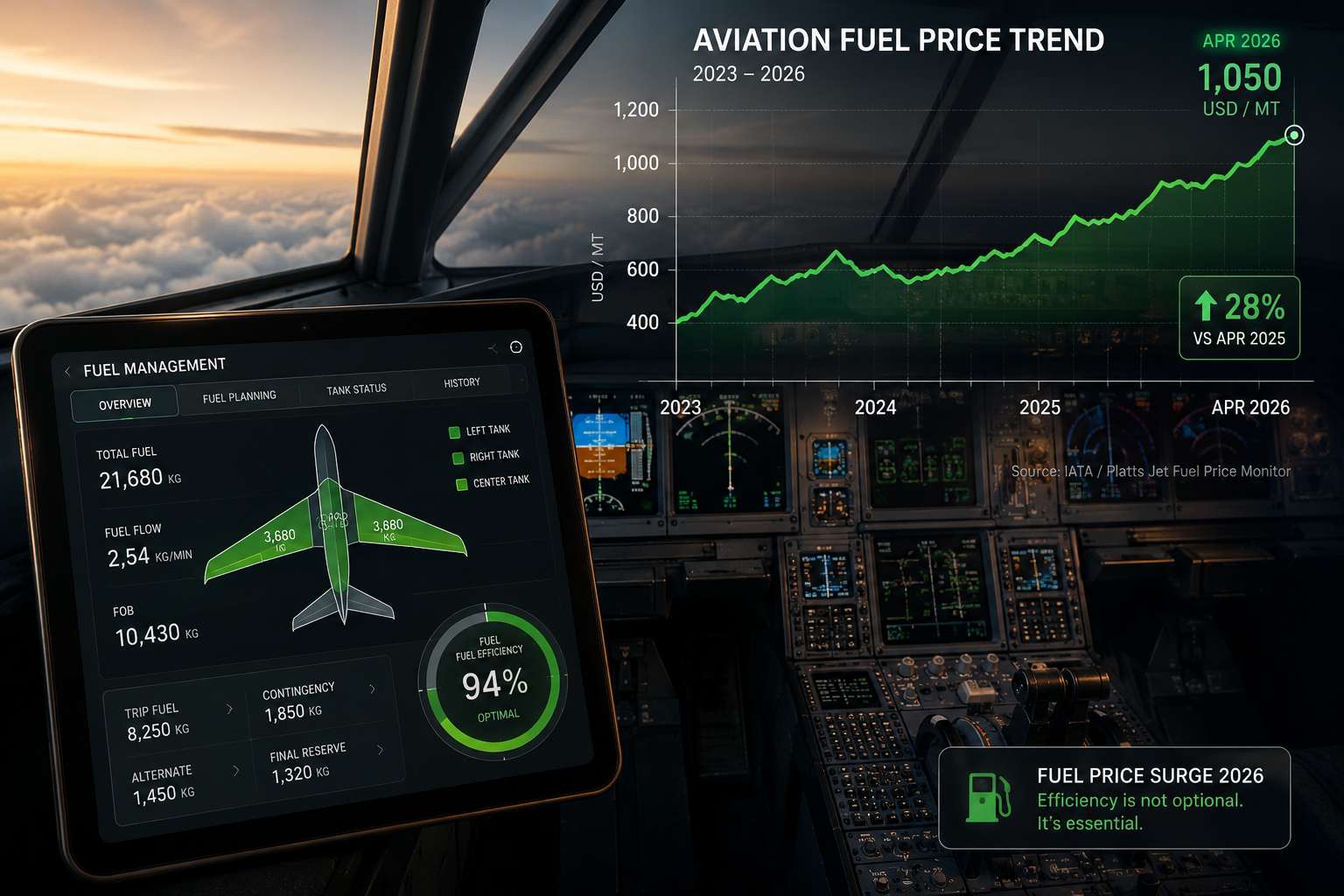
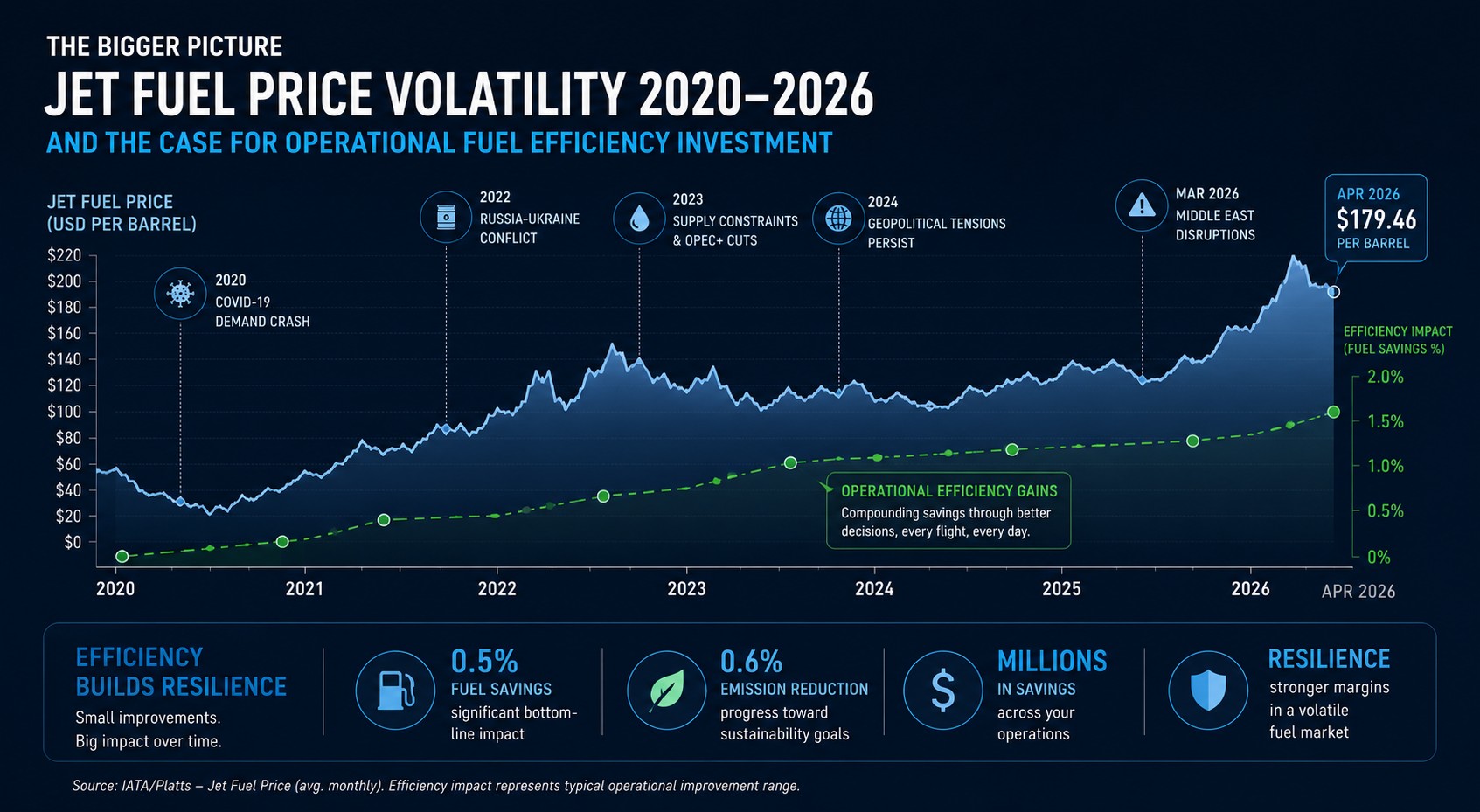
Jet fuel averaged $90 per barrel for the full year of 2025. By March 2026, it had surged past $197 per barrel, a near-doubling driven by Middle East supply disruptions that caught much of the industry off guard. As of late April 2026, prices have eased slightly to $179.46 per barrel (IATA/Platts), but remain more than 94% higher year-on-year.
For flight operations leaders, this is a known variable, but the speed of the 2026 surge is not. Fuel represents approximately 20% of airline operating costs, and when prices nearly double in six weeks, even well-hedged carriers face margin compression that outpaces their ability to adjust fares and capacity. IATA’s March 2026 analysis made an important distinction: it’s not necessarily the level of fuel prices that damages profitability,it’s the pace of change. Rapid surges overwhelm the ability to adjust fares, optimize capacity, and renegotiate contracts quickly enough.
Here’s what makes this moment different from previous fuel shocks: there is now a category of fuel efficiency solutions that require no capital expenditure, no fleet modifications, no new hardware, and no additional pilot training, and they are delivering proven, measurable savings today.
The Flight Ops Dilemma: High Urgency, Low Bandwidth
Flight ops leaders face a straightforward resource constraint. The ROI on fuel efficiency improvements is well-documented, but the operational demands of crew scheduling, regulatory compliance, fleet availability, and customer commitments leave limited bandwidth to evaluate, procure, and implement new technology. And in an environment where every dollar is under scrutiny, the appetite to invest in anything that doesn’t deliver immediate, measurable returns is close to zero.
The result is a timing mismatch: fuel efficiency delivers its highest ROI when prices are elevated, but that is precisely when operational teams have the least capacity to act on it.
The most effective solutions in this environment are the ones that require no lengthy onboardings and complex IT projects and work with the people and processes already in place.
Behavioral Science: The Overlooked Lever in Aviation Fuel Efficiency
The aviation industry has invested heavily in fleet renewal, engine technology, winglet retrofits, and operational procedures to improve fuel efficiency. These are important, and they work. But they share a common characteristic: they are capital-intensive, slow to deploy, and operate at the fleet level.
What they miss is the human element. Pilots make dozens of discretionary decisions on every flight, when to start engines, how to manage taxi operations, how to configure the approach, when to initiate descent. Each of these decisions has a measurable fuel impact. And across thousands of flights per year, small behavioral improvements compound into significant operational savings.
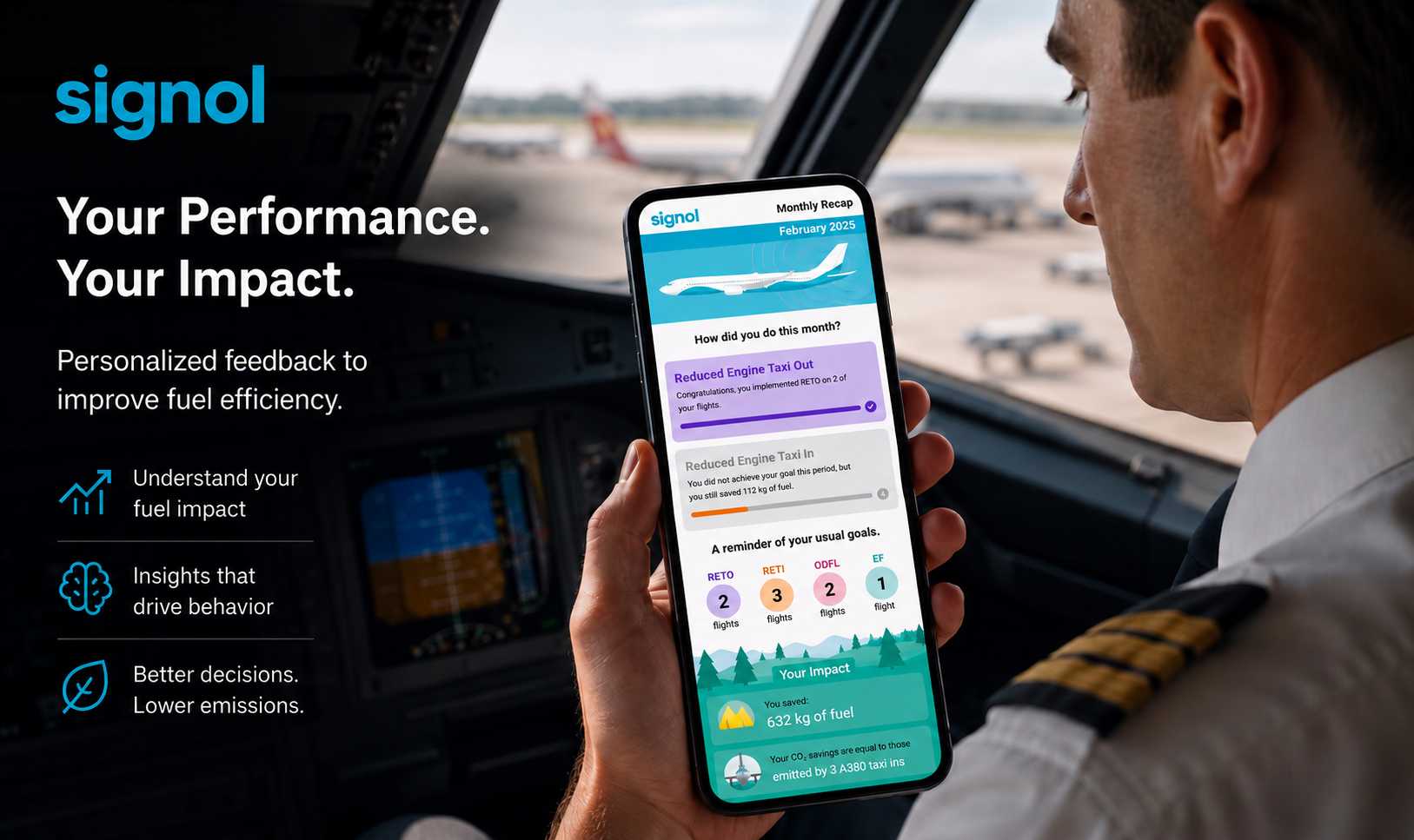
This is the insight behind Signol, a behavioral science technology that uses personalized data, performance feedback, and behavioral “nudges” to engage and motivate pilots to adopt fuel-saving practices more consistently. Developed in collaboration with pilot unions and designed with full pilot anonymity, Signol works alongside existing flight ops workflows and not against them.
What the Data Shows
The results from Signol’s deployments are not projections, they are measured outcomes from airline operations.
After Virgin Atlantic partnered with Signol they saved 39,434 metric tonnes of CO₂ over the first 18 months, equivalent to a 0.7% reduction in total fuel burn. The partnership built on an earlier academic study that demonstrated $5.4 million in fuel cost savings and 21,500 metric tonnes of CO₂ reduction over an eight-month period.
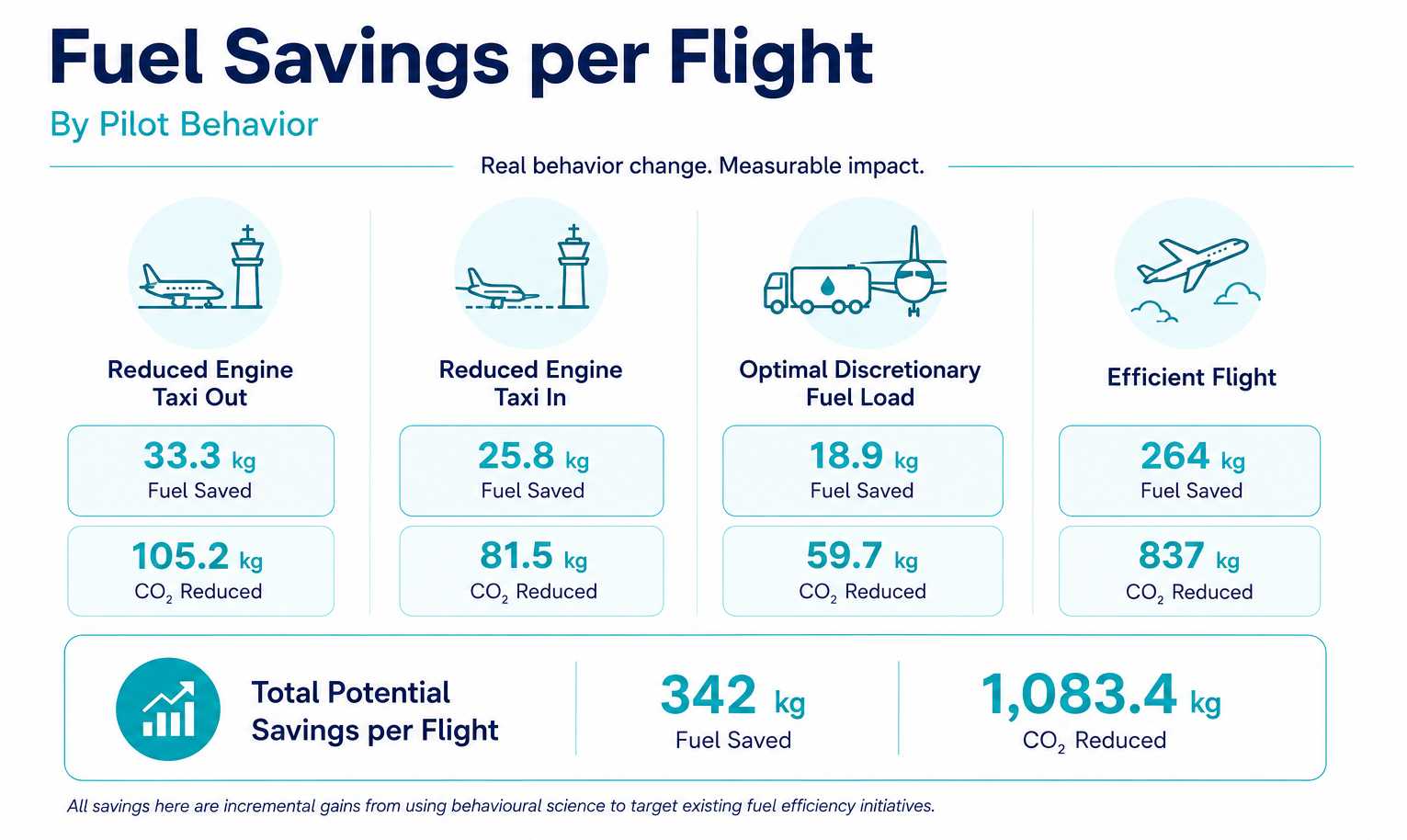
At the per-flight level, Signol’s data reveals something particularly significant for airlines that already have fuel efficiency programs in place: these savings were achieved on top of existing operational initiatives. Virgin Atlantic had already invested in fleet efficiency, procedural improvements, and fuel management programs before deploying Signol, the 0.7% fuel burn reduction represents additional gains extracted purely through behavioral science, targeting practices such as single-engine taxi procedures and optimized fuel loading. Critically, Signol’s methodology explicitly controlled for confounding variables, factors such as route changes, fleet mix, seasonal variation, and broader operational shifts were identified and corrected for in the analysis, so the measured savings reflect the isolated impact of behavioral change alone. This is where the real opportunity lies for most airlines today: the low-hanging fruit of basic fuel efficiency has largely been picked, but a measurable gap remains between what pilots can do and what they consistently do across every taxi, climb, cruise, and approach, and that gap is almost entirely behavioral.
Even at normal fuel prices, Signol consistently delivers ROI in excess of 10x, a return that becomes still more compelling in today’s environment, with jet fuel at $179 per barrel compared to a more typical $90.
Why This Matters for Flight Ops Teams Right Now
The operational advantage of a behavioral approach is what it eliminates from the equation. There is no hardware to install. No fleet modifications. No software integration project. No additional pilot training programs. No capital expenditure approval cycle.
Signol deploys as a communication and analytics service that connects directly with your existing operational data. Pilots receive personalized performance feedback through an app and emails, with full anonymity protected and union collaboration built into the design from day one. Flight ops managers get a dashboard that shows fuel and carbon savings at the fleet level, with the ability to drill into specific behaviors and trends.
For a flight ops team that has limited bandwidth to run a major technology project but urgently needs to reduce fuel costs, this is a solution that can be operational within weeks and delivering measurable savings almost immediately.
The Bigger Picture: Fuel Efficiency as a Strategic Capability
IATA’s historical analysis is instructive. During 2011–2014, when jet fuel averaged approximately $124 per barrel, the global airline industry maintained operating margins of around 3% lower than the 6–7% achieved during the cheaper fuel years of 2015–2019, but still positive. The airlines best positioned during that period were the ones that continued to invest in efficiency gains, capacity optimization, and procurement management even when prices were at a peak.
The same principle applies today. Fuel prices will always be volatile, that’s a structural reality of the aviation business. The operators who build fuel efficiency into their operational DNA, rather than treating it as a crisis response, are the ones who maintain margin resilience regardless of where prices land.
With SAF remaining 2–4x more expensive than conventional jet fuel (IATA, December 2025), and jet fuel demand projected to grow by nearly 4% in both 2025 and 2026, the pressure on operational efficiency is not easing. Behavioral fuel efficiency is one of the few levers that delivers immediate savings, scales across the fleet without infrastructure investment, and compounds over time as pilot engagement deepens.
Take the First Step
If you’re a flight ops leader looking for fuel efficiency solutions that deliver results without adding complexity to your operation, Signol is a strong place to start. Visit their dedicated page on the Aero NextGen platform to learn more, or explore their full capabilities at signol.io.
And if you’re evaluating broader operational technology needs, from ERP to maintenance tracking to predictive analytics, Aero NextGen’s Solution Finder Quiz matches you with vetted aviation technology providers based on your specific operation in under two minutes.
The price of fuel is outside your control. The decision to act on efficiency isn’t.
Sources & References
IATA/Platts Jet Fuel Price Monitor, $179.46/bbl as of late April 2026; $90/bbl full-year 2025 average; surge from $95.95 to $197/bbl Feb–Mar 2026
IATA Chart of the Week (March 2026), “Sudden change is more challenging than high fuel prices”: pace of price change matters more than price level; 2011–2014 margins at ~3% with $124/bbl average
IATA Fuel Fact Sheet (December 2025), Jet fuel demand growing ~4% in 2025 and 2026; SAF 2–4x more expensive than conventional jet fuel; SAF at 0.6% of total consumption in 2025
Signol / Virgin Atlantic Case Study (August 2024), 39,434 mt CO₂ saved in 18 months; 0.7% fuel burn reduction; $5.4M savings in initial 8-month academic study
Signol Aviation Performance Data (signol.io), Per-flight savings: 264kg fuel (EF), 33.3kg (RETO), 25.8kg (RETI), 18.9kg (ODFL); 10x ROI consistently delivered
AircraftIT / Signol, Developed in collaboration with pilot unions; full pilot anonymity