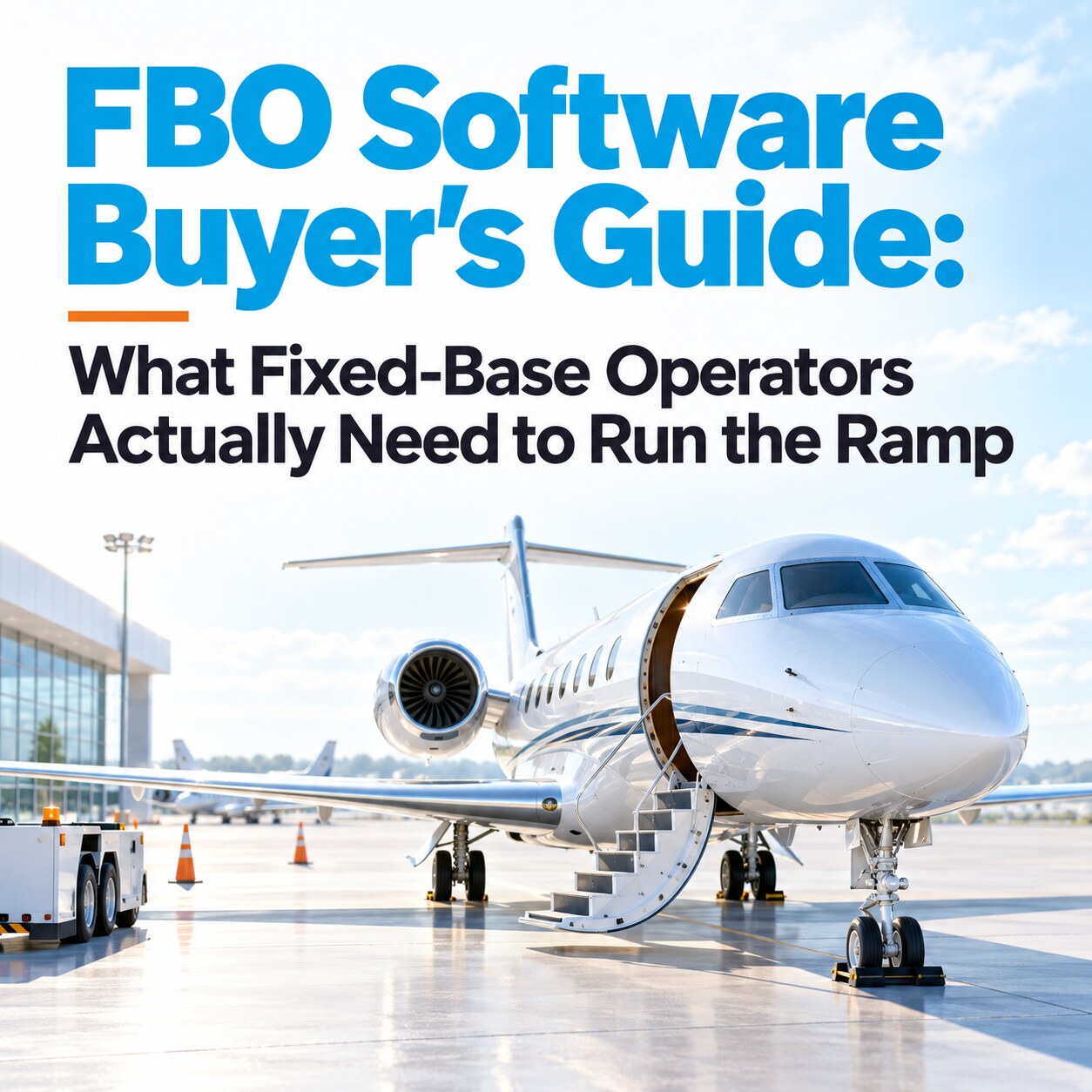

The aviation maintenance, repair, and overhaul industry stands at an inflection point. As global commercial fleets expand to unprecedented levels, with Boeing’s 2025 Commercial Market Outlook forecasting demand for 43,600 new aircraft deliveries over the next 20 years, the pressure on MRO operations has never been more intense. Yet many operators still rely on fragmented, outdated systems that hemorrhage efficiency and profitability.
The hard truth? Your legacy airline MRO software isn’t just inconvenient, it’s actively undermining your competitive position.

The $200 Billion Problem: Why Traditional Airline MRO Software Falls Short
The global commercial aircraft MRO market reached approximately $96 billion in 2025, with projections exceeding $121 billion by 2030 (Grand View Research, 2025). Despite this massive investment, the industry faces a persistent crisis: aircraft on ground (AOG) situations cost airlines anywhere from $10,000 to $150,000 per hour according to Boeing, yet preventable maintenance delays continue to plague operations.
Monica Badra, founder of Aero NextGen, observes: “The disconnect between MRO investment and operational outcomes reveals a fundamental problem, not lack of spending, but misalignment between technology capabilities and real-world maintenance complexities.”
The root causes are systemic:
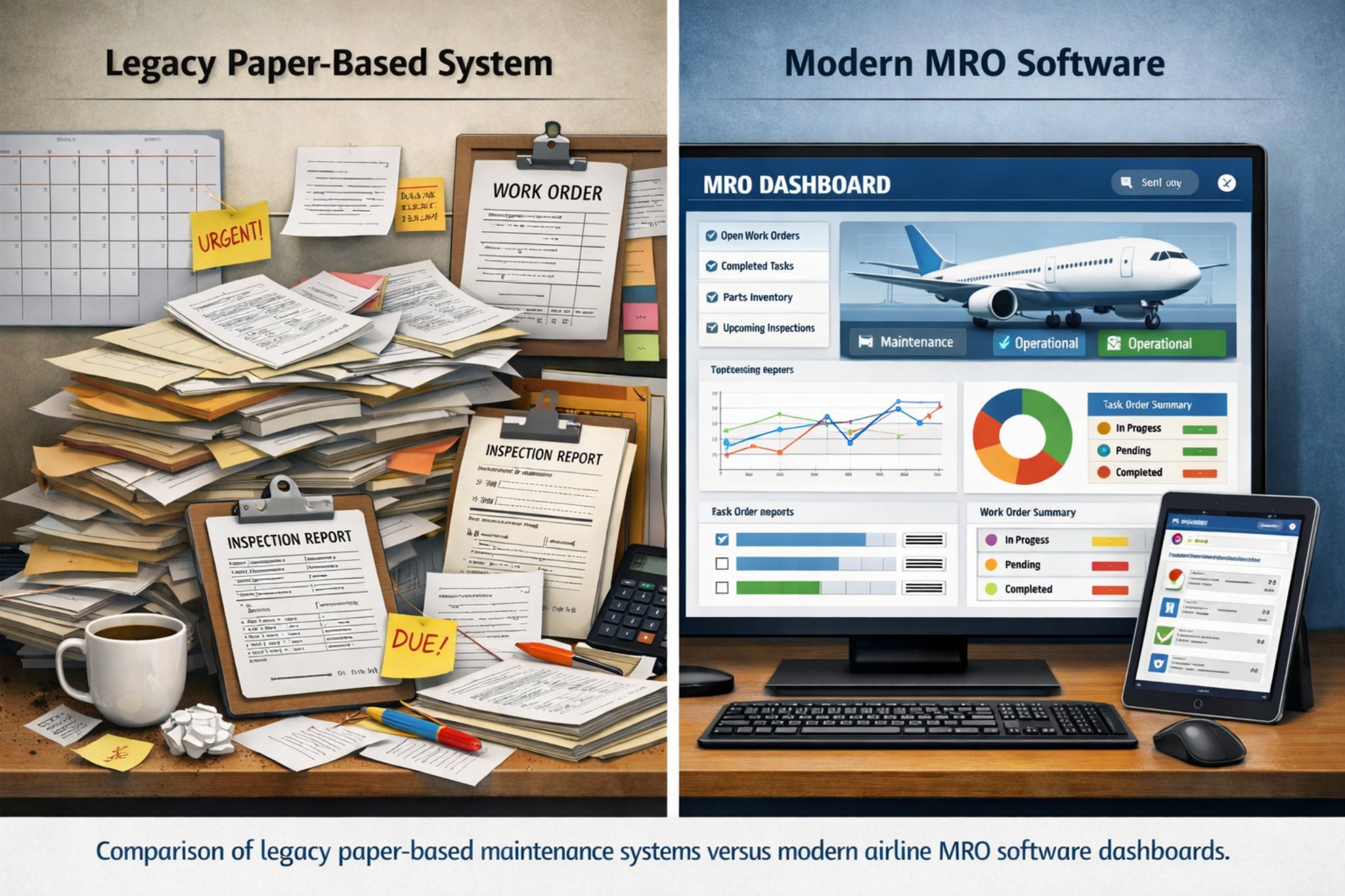
Data fragmentation across engineering, planning, and execution systems creates blind spots. Technicians spend a significant portion of their time searching for documentation, parts data, and compliance records across disconnected platforms, time that should be spent turning wrenches.
Manual compliance tracking exposes operators to regulatory risk. With EASA Part-IS mandating information security management systems across the European aviation ecosystem from October 2025 and February 2026, and FAA intensifying digital record-keeping requirements, paper-based or hybrid systems represent ticking time bombs.
Reactive maintenance models persist despite decades of predictive maintenance promises. Most operators still can’t effectively leverage the terabytes of aircraft health data generated by modern fleets.
Modern Airline MRO Software: The 2026 Technology Landscape
Today’s leading solutions represent a quantum leap from legacy systems. The best airline MRO software platforms integrate previously siloed functions into unified ecosystems that deliver measurable ROI.
Swiss-AS’s AMOS has established itself as the comprehensive solution for complex MRO environments, offering end-to-end maintenance management from planning through execution. Its strength lies in scalability, equally effective for regional operators and global MRO providers managing diverse fleets.
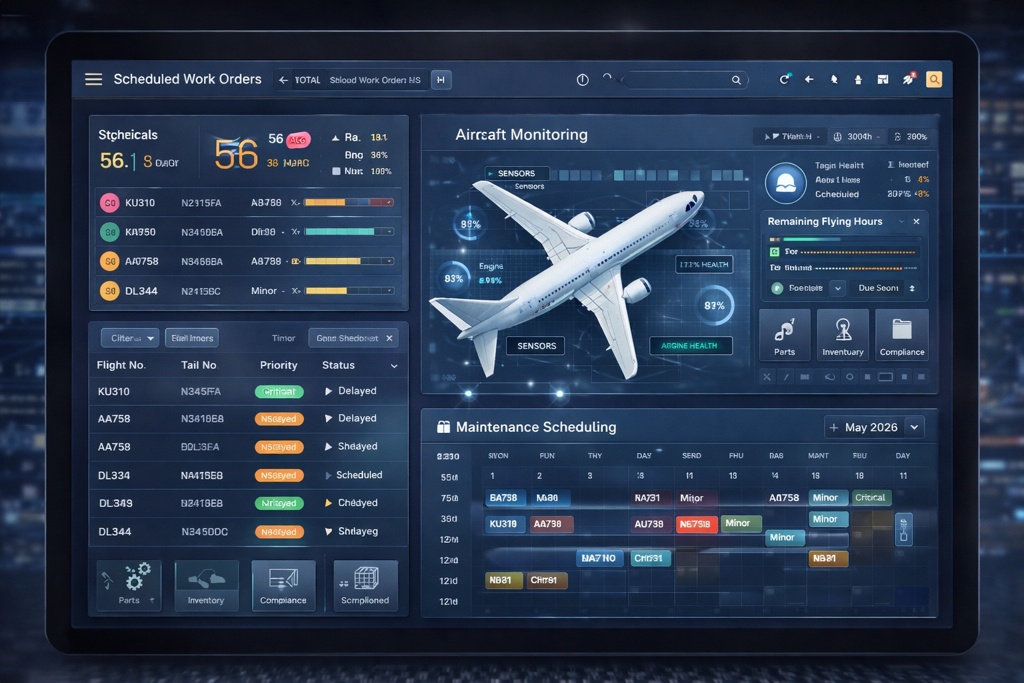
Camp Systems delivers cloud-native architecture with particular strengths in mobility and intuitive interfaces. Their platform excels at putting maintenance data directly into technicians’ hands on the flight line, eliminating the productivity drain of back-and-forth trips to desktop systems.
IFS Maintenix targets larger operators requiring deep customization and integration with broader enterprise systems. Its robust analytics capabilities enable the shift from reactive to predictive maintenance strategies.
The marketplace has matured significantly. Cloud-based solutions have become the clear preference for operators evaluating new MRO platforms, a complete reversal from just five years ago, when on-premise deployments dominated the landscape.
Implementing Airline MRO Software: The Real Success Factors Nobody Discusses
Here’s the uncomfortable reality: software selection matters less than implementation approach.
The industry is littered with failed deployments, millions spent on sophisticated platforms that ultimately get abandoned or underutilized. Budget overruns and missed efficiency targets remain common across MRO software implementations, particularly when organizations underestimate the change management effort required.
The distinguishing factor? Change management discipline.
Successful implementations share common characteristics:
Executive sponsorship that extends beyond budget approval to active involvement in redesigning workflows around new capabilities. Software doesn’t fix broken processes, it amplifies them.
Phased rollouts that prioritize quick wins and build organizational confidence. The temptation to implement every module simultaneously overwhelms training capacity and guarantees user resistance.
Investment in data cleanup before migration. Garbage in, garbage out isn’t just a cliché, it’s the reason most analytics modules deliver disappointing results despite algorithmic sophistication.
Integration with existing systems rather than rip-and-replace approaches. No MRO software exists in isolation. Seamless data flow with ERP, supply chain, and finance systems determines whether your investment delivers strategic value or becomes another data silo.

The Bottom Line: Strategic Imperative for 2026 and Beyond
The airline MRO software decision isn’t IT infrastructure, it’s competitive strategy. As labor shortages intensify, Boeing’s 2025 Pilot and Technician Outlook projects the industry will need 710,000 new maintenance technicians by 2044, and regulatory complexity increases, operational efficiency separates industry leaders from those struggling to maintain relevance.
The operators thriving in 2026 aren’t necessarily those with the largest budgets. They’re the organizations that recognized maintenance operations as strategic differentiators worthy of modern technology investment.
Your move.
Overwhelmed by options? Aero NextGen’s Solution Finder Quiz matches you with the perfect aviation software for your specific needs in under 2 minutes. Take the quiz and discover your ideal solution today.
Sources & References
Boeing 2025 Commercial Market Outlook, 43,600 new aircraft deliveries forecast 2025–2044 (boeing.com/cmo)
Grand View Research, Global Aircraft MRO Market, $95.92B (2025) to $120.96B (2030), CAGR 4.75%
Boeing AOG Cost Estimates, $10,000 to $150,000 per hour depending on aircraft type and route (Wikipedia / Boeing)
Boeing 2025 Pilot and Technician Outlook, 710,000 new maintenance technicians needed through 2044
EASA Part-IS, Information Security Regulations (EU) 2023/203 and 2022/1645, applicable October 2025 / February 202