


The aviation maintenance management landscape has reached an inflection point. While passenger traffic has surged 12% above pre-pandemic levels according to IATA’s March 2026 data, MRO providers still wrestle with decades-old systems that weren’t designed for today’s complex operating environment. The result? Spiraling costs, regulatory compliance nightmares, and maintenance delays that cascade through entire fleets.
This isn’t acceptable anymore, and the industry knows it.
Monica Badra, founder of Aero NextGen, puts it bluntly: “Aviation maintenance management has been the forgotten stepchild of digital transformation. While airlines invested billions in passenger-facing technology, their maintenance operations remained trapped in the 1990s. That gap is now costing the industry an estimated $8.7 billion annually in preventable inefficiencies.”
The Historical Problem with Aviation Maintenance Management Systems
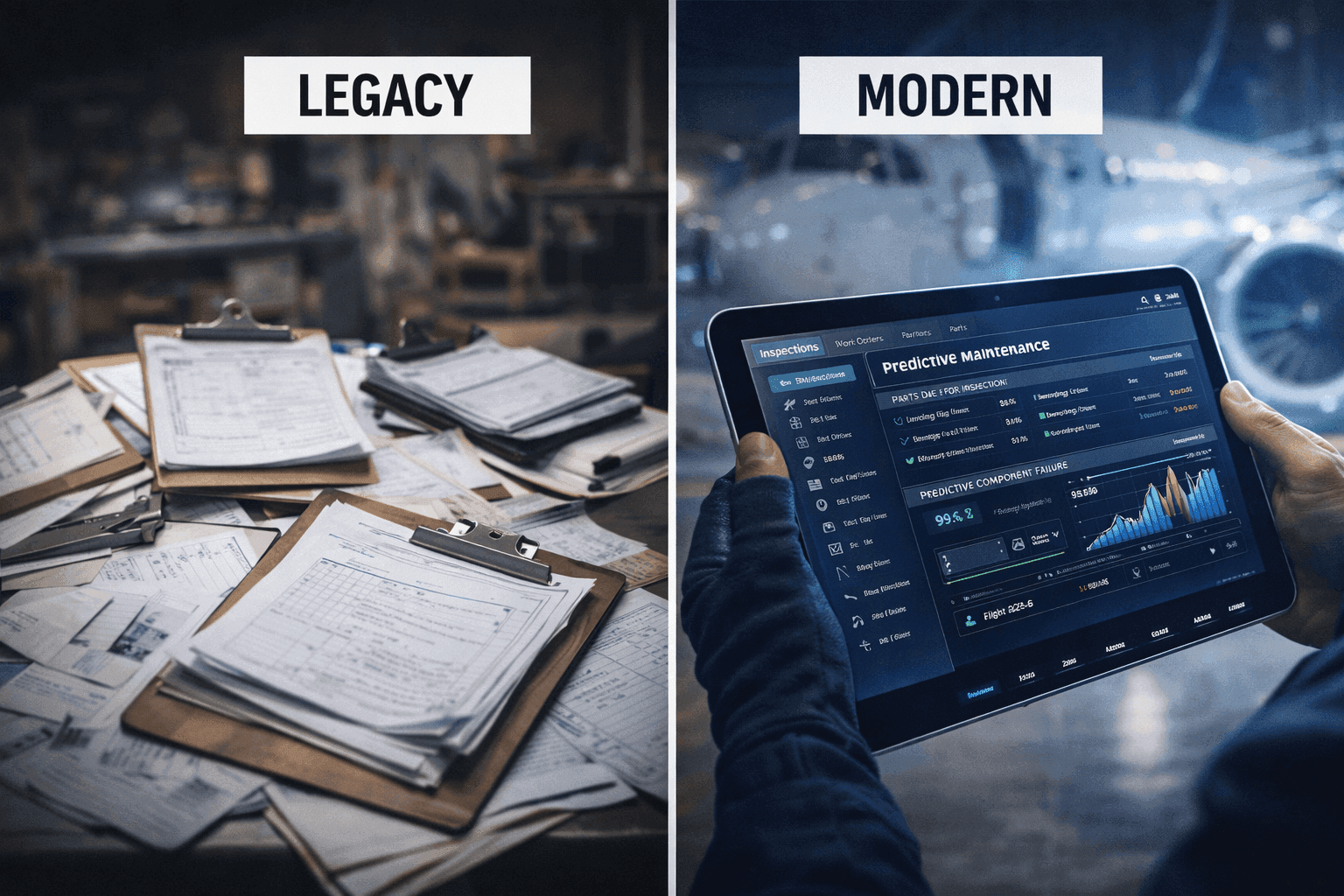
Legacy CMMS (Computerized Maintenance Management Systems) emerged when aircraft were simpler, regulations were fewer, and data existed primarily on paper. Fast forward to 2026: operators manage mixed fleets with diverse maintenance requirements, navigate increasingly stringent airworthiness directives, and face unprecedented pressure to reduce aircraft-on-ground (AOG) time.
Traditional aviation maintenance management approaches create three critical pain points:
Fragmented data ecosystems. Maintenance records live in one system, parts inventory in another, and compliance documentation in spreadsheets. This fragmentation makes it virtually impossible to achieve real-time visibility across operations.
Reactive maintenance cultures. Without predictive capabilities, MROs operate in constant firefighting mode, addressing failures after they occur rather than preventing them.
Compliance vulnerability. Manual tracking of airworthiness directives, service bulletins, and regulatory changes exposes operators to catastrophic certification risks.
Modern Aviation Maintenance Management: The Technology Shift
The good news? Aviation Week reported in February 2026 that MRO software investment has accelerated dramatically, with 67% of Part 145 repair stations now actively evaluating or implementing next-generation maintenance platforms.
Predictive analytics has moved from buzzword to business-critical. Solutions now integrate with aircraft health monitoring systems, using machine learning algorithms to predict component failures 30-45 days in advance. This isn’t theoretical, operators report 23-28% reductions in unscheduled maintenance events.
Mobile-first workflows are eliminating the clipboard. Technicians access digital work cards, complete inspections, and update maintenance records in real-time from the hangar floor. The efficiency gains are substantial: Mobile-enabled aviation maintenance management reduces average task completion time by 18%.
Blockchain for records management is solving the industry’s documentation nightmare. Companies like Skythread have introduced immutable digital maintenance logs that automatically satisfy regulatory requirements while enabling instant records transfer during aircraft sales or leases.

Implementing Effective Aviation Maintenance Management in 2026
Successful implementation requires more than software procurement, it demands operational transformation.
Start with data consolidation. Before implementing new platforms, audit your current data landscape. Where does critical maintenance information live? Who owns it? What format is it in? Companies that complete comprehensive data mapping before system selection report 40% faster implementation timelines.
Prioritize integration capabilities. Your aviation maintenance management platform must communicate with ERP systems, inventory management tools, and OEM databases. Standalone solutions create new silos instead of eliminating existing ones.
Invest in change management. The most sophisticated software fails without user adoption. Budget 25-30% of your implementation resources for training, process redesign, and stakeholder engagement.
The Cost of Inaction
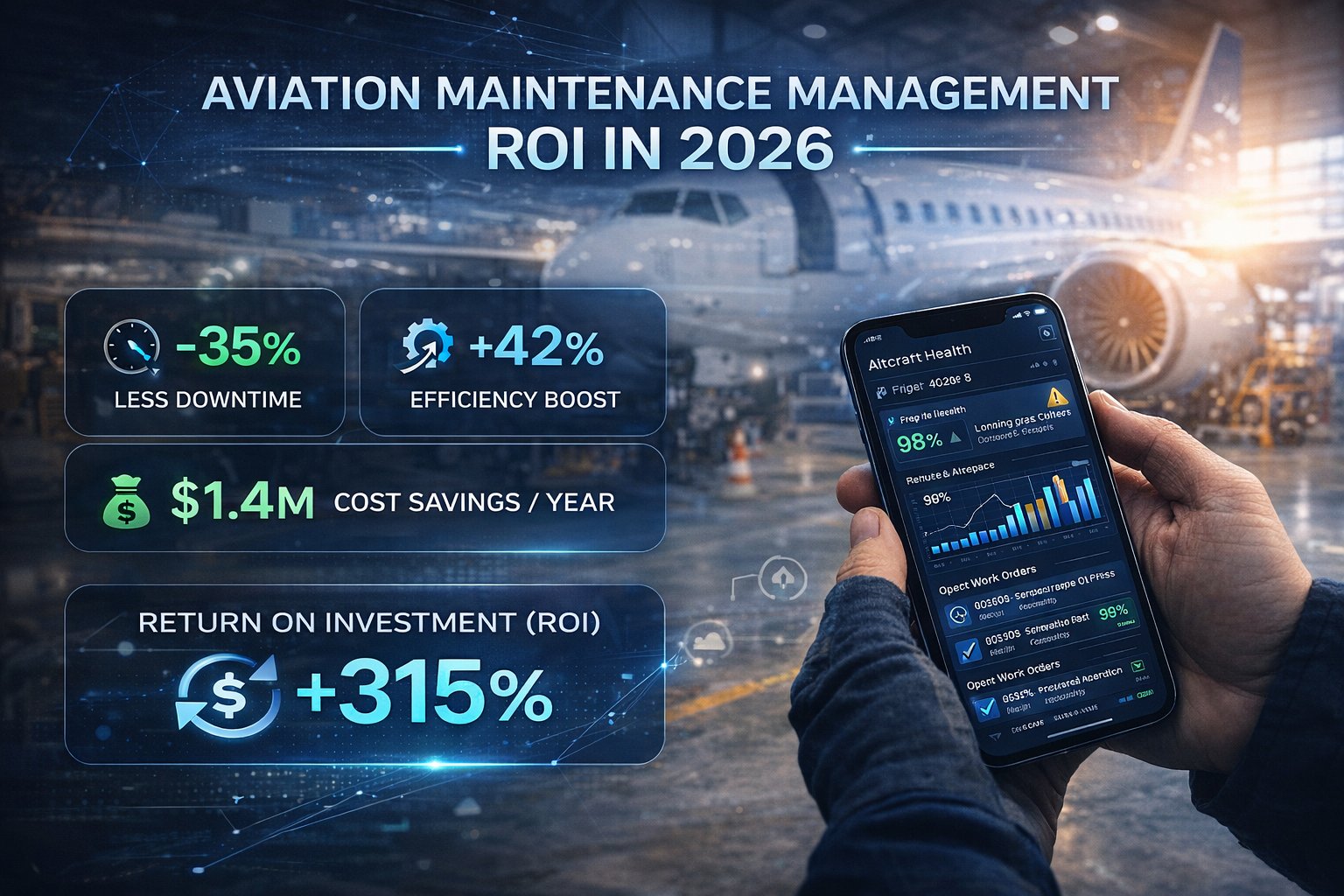
MROs using legacy aviation maintenance management systems experience 2.7x higher regulatory findings during audits and 34% longer average TAT (turnaround time) compared to digitally-mature competitors.
This performance gap is existential. Airlines increasingly select MRO partners based on technological capability, not just pricing. Operators without modern maintenance management infrastructure are being systematically excluded from RFPs.
Conclusion
Aviation maintenance management has evolved from administrative necessity to strategic differentiator. In 2026’s competitive landscape, your maintenance systems directly impact your market position, regulatory standing, and profitability.
The technology exists. The business case is proven. The only question is whether you’ll lead this transformation or be disrupted by it.
Overwhelmed by options? Aero NextGen’s Solution Finder Quiz matches you with the perfect aviation software for your specific needs in under 2 minutes. Take the quiz at aeronextgen.com and discover your ideal solution today.