Safe flight operations depend on more than technical flying skills. Pilots must communicate, divide tasks, monitor changing conditions, manage workload, and make sound decisions under pressure. If you are asking what is CRM in aviation, CRM stands for Crew Resource Management. It is a training and operating approach that helps flight crews use people, information, equipment, and procedures effectively to support safe operations.
CRM focuses on human performance and teamwork rather than teaching pilots how to physically control an aircraft. It addresses communication, situational awareness, decision-making, leadership, workload management, monitoring, and error management. Airlines use CRM principles during normal flights and unexpected situations because strong coordination can help crews recognize and manage problems before they become more serious.

What Does CRM Mean in Aviation?
Crew Resource Management developed from earlier concepts known as cockpit resource management. As the approach expanded beyond pilots, the aviation industry adopted the broader term Crew Resource Management. The FAA defines CRM around the effective use of available human resources, hardware, and information. It also recognizes dispatchers, flight attendants, maintenance personnel, and air traffic controllers as important participants in the wider CRM process.
The FAA’s Crew Resource Management Training guidance remains active and identifies CRM as an important part of flight crew training. It connects CRM with team building, information transfer, problem-solving, decision-making, situational awareness, and the management of automated systems. These skills help crews combine technical knowledge with effective teamwork.
Communication Is Central to CRM
Communication forms one of the most important CRM skills. Flight crews need to exchange information about aircraft status, weather, navigation, fuel, traffic, and operational changes. Clear communication helps everyone maintain the same understanding of the situation. It also reduces the chance that an assumption or incomplete message leads to a poor decision.
CRM encourages crew members to speak clearly and raise concerns when something appears wrong. A first officer should be able to question a decision when safety may be affected, while the captain should create an environment where useful input receives attention. This does not remove authority from the captain. Instead, it improves the quality of information available before important decisions.
Situational Awareness Helps Crews Stay Ahead
Situational awareness means understanding what is happening around the aircraft and anticipating what may happen next. Pilots need awareness of aircraft position, altitude, systems, weather, traffic, fuel, flight progress, and other operational factors. Losing that awareness can make it harder to recognize a developing problem.
CRM supports situational awareness through monitoring and shared information. One pilot may focus on flying while the other monitors instruments, communications, and flight progress. Each pilot helps check the other’s understanding. This shared mental picture gives crews a better chance of noticing changes before the situation becomes difficult to manage.
CRM Supports Better Decision-Making
Understanding what is CRM in aviation also requires looking at decision-making. Crews sometimes need to make choices quickly when weather changes, equipment fails, or an airport becomes unavailable. CRM encourages pilots to gather useful information, consider available options, evaluate risks, select a course of action, and continue monitoring the result.
Flight crews can also use resources outside the cockpit. Dispatchers, maintenance teams, air traffic controllers, and company operations staff may provide information that affects the decision. Aero Next Gen’s flight operations software guide explains how dispatch, crew scheduling, flight planning, and disruption systems can connect operational information across an airline.
Workload Management Helps Prevent Task Overload
Flight crew workload changes throughout a flight. Departure, approach, bad weather, busy airspace, and technical problems can create periods when several tasks require attention at once. CRM teaches crews to prioritize tasks and distribute responsibilities instead of allowing one person to become overloaded.
Crews can delay nonessential work, divide responsibilities, and use automation when appropriate. However, pilots still need to understand what automated systems are doing and monitor aircraft behavior. Effective workload management helps the crew protect attention for the most important tasks while keeping enough capacity to respond when conditions change.
Leadership and Teamwork Work Together
The captain leads the flight crew, but effective leadership does not mean making every decision alone. CRM encourages leaders to communicate plans, assign duties clearly, request useful input, and create an environment where team members can raise concerns. Strong leadership gives the crew direction while still making use of the knowledge and observations available within the team.
Other crew members also have responsibilities. They need to monitor operations and communicate when they identify a potential problem. CRM balances authority with teamwork. This helps prevent a situation where a crew member notices an error but stays silent because another person has more seniority or experience.
CRM Helps Crews Manage Threats and Errors
Aviation operations include threats that crews cannot completely remove. Weather, congestion, fatigue, equipment problems, time pressure, and unfamiliar airports can increase operational risk. CRM gives flight crews tools to recognize these threats and adjust their actions. Early recognition can make a problem easier to manage.
CRM also accepts that people can make mistakes. The goal is not to assume that trained crews will perform perfectly. Instead, pilots monitor and cross-check each other so they can detect errors early. The FAA’s CRM guidance specifically includes monitoring, challenging, decision-making, risk assessment, and situational awareness among the techniques used to reduce the effect of human error.
CRM Training Uses Realistic Flight Scenarios
Knowing CRM principles in a classroom is different from applying them during a demanding flight. Airlines therefore use scenario-based training to give crews opportunities to practice communication, leadership, decision-making, and workload management. These exercises can place crews in situations where several problems occur at the same time.
The FAA recommends active participation as part of effective CRM training and identifies Line-Oriented Flight Training as one method for practicing CRM skills. Recurrent training also matters because crews need to reinforce these behaviors throughout their careers. CRM becomes more useful when pilots apply its principles as normal operating habits rather than treating them as ideas used only during training.
Technology Can Support Crew Coordination
CRM remains a human-performance discipline, but modern aviation technology can improve access to the information crews and operations teams need. Crew scheduling systems can track qualifications and availability. Flight operations platforms can connect dispatch, weather, aircraft status, schedules, and disruption information. Better information can support stronger coordination when teams use it correctly.
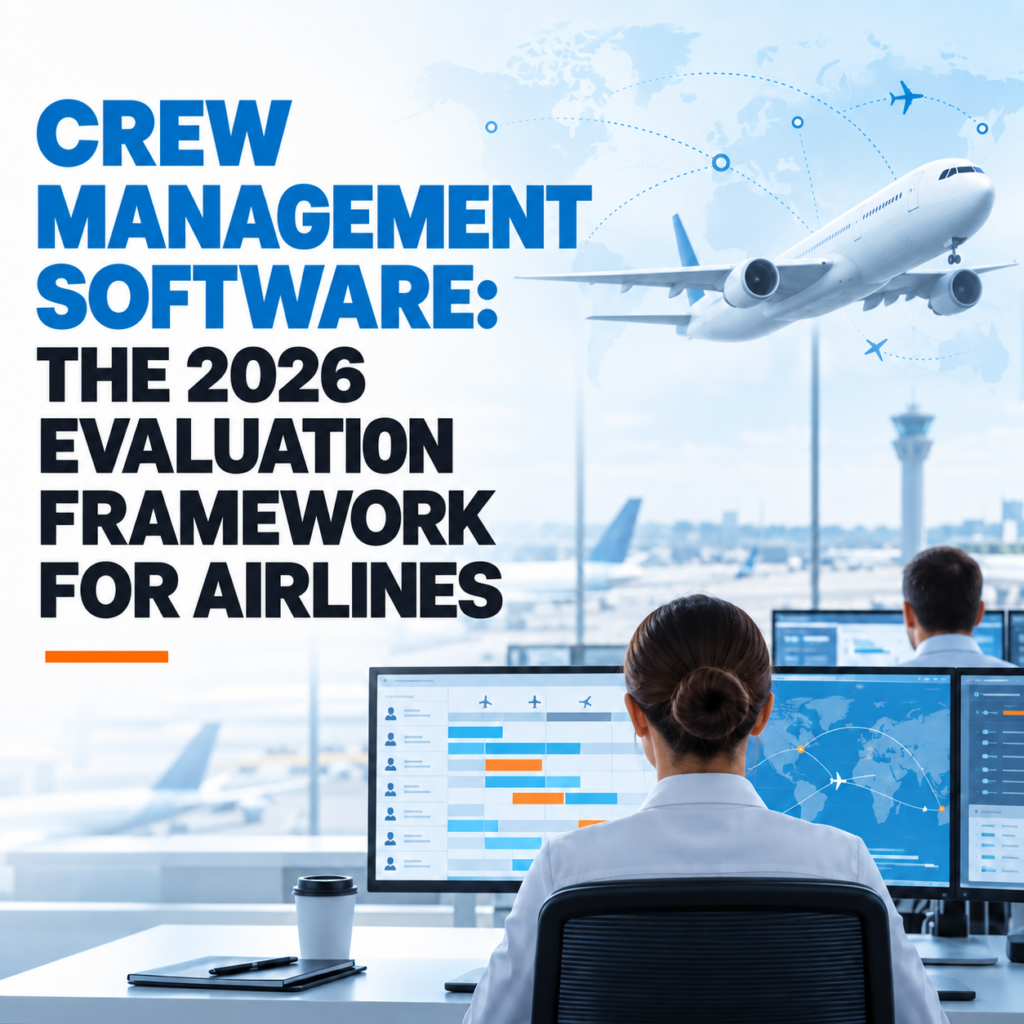
Aero Next Gen’s crew management software framework covers rostering, qualifications, fatigue risk, disruption management, and connections with wider airline operations. These technologies do not replace CRM. They support the operating environment by helping crews and managers access accurate information when planning and responding to changing conditions.
CRM Is Different From Customer Relationship Management
The acronym CRM has another common meaning in business technology: Customer Relationship Management. In aviation operations and flight training, CRM usually refers to Crew Resource Management. Customer Relationship Management software serves a different purpose by organizing customer information, sales activity, service communication, and business relationships.
This distinction can matter when researching what is CRM in aviation because both meanings appear within the aviation industry. An airline can use Crew Resource Management for flight safety while its commercial team uses CRM software for customer activity. Aero Next Gen also maintains a separate CRM technology category for aviation and MRO customer management, which focuses on customer data, sales, service, and communication rather than cockpit teamwork.
Why CRM Matters to Aviation Safety
Modern aircraft contain advanced systems, but crews still need to interpret information and respond to events. Technical skill alone cannot prevent every problem. Weak communication, poor workload management, loss of situational awareness, or ineffective decision-making can affect how a crew responds even when the aircraft itself works correctly.
CRM addresses those human factors by helping crews work as coordinated teams. The FAA states that CRM training aims to optimize the human-machine interface and interpersonal activities involved in flight operations. Its guidance also notes that research has associated CRM training with improvements in flight crew performance and reduced human error.

Conclusion
What is CRM in aviation? Crew Resource Management is a structured approach to improving communication, teamwork, situational awareness, decision-making, leadership, workload management, and error control. It helps flight crews use all available resources rather than relying only on individual technical ability. CRM principles support both routine operations and situations where crews must respond quickly to changing conditions.
Aero Next Gen helps aviation organizations evaluate crew management, flight operations, training, safety, and other aviation technology solutions. While technology cannot replace effective Crew Resource Management, connected systems can give crews and operations teams better access to the information they need. Combining reliable technology with strong CRM practices can support more coordinated and informed aviation operations.