
Aviation crews work in environments where communication, timing, workload, and decision-making can directly affect flight safety. If you are asking what is the purpose of crew resource management, the main goal is to help aviation professionals use people, information, equipment, and procedures more effectively. Crew Resource Management, or CRM, focuses on teamwork and human performance rather than aircraft handling skills alone.
CRM training helps crews communicate clearly, recognize threats, manage workload, maintain situational awareness, and make better decisions. It also encourages crew members to speak up when they notice a problem. These skills help reduce human error and improve coordination during normal operations, unexpected events, and emergencies.

CRM Focuses on Human Performance
Aircraft technology has become highly reliable, but people still make decisions throughout every flight. Pilots interpret information, manage systems, respond to weather, communicate with controllers, and coordinate with other crew members. CRM helps people perform these tasks as a team instead of working as isolated individuals.
The FAA’s Crew Resource Management guidance connects CRM training with communication, decision-making, teamwork, situational awareness, and error management. The guidance treats CRM as an important part of flight operations rather than a separate classroom topic.
Communication Is a Core CRM Skill
Searching what is the purpose of crew resource management? Clear communication helps crew members share important information before small problems become larger ones. Pilots need to communicate aircraft status, weather concerns, workload, navigation changes, and abnormal conditions. Flight attendants and dispatchers may also hold information that affects safe and efficient operations.
CRM encourages direct and professional communication. Crew members should confirm critical information and question decisions when something appears wrong. Strong communication reduces misunderstandings and helps teams build a shared picture of what is happening. This is a major part of what is the purpose of crew resource management in everyday flight operations.
CRM Improves Decision-Making
To know what is the purpose of crew resource management, it’s essential to understand that aviation crews often make decisions under time pressure. Weather can change, equipment can fail, and airport conditions can create unexpected challenges. CRM gives crews a structured approach for gathering information, comparing options, considering risk, and selecting an appropriate response.
Good decision-making does not mean the captain works alone. Other crew members can provide valuable observations or identify risks that one person may miss. CRM encourages crews to use all available resources before making important choices. This helps prevent authority or time pressure from narrowing the team’s thinking.
Situational Awareness Helps Crews Stay Ahead
Situational awareness means understanding what is happening now and anticipating what may happen next. Pilots need awareness of aircraft position, systems, weather, traffic, fuel, flight progress, and other operational conditions. Losing that awareness can make it harder to recognize developing problems.
CRM teaches crews to share information and monitor each other so the team maintains a common operational picture. One pilot may handle the aircraft while another monitors systems, communications, and flight progress. This shared attention can help the crew detect changes earlier and respond before a situation becomes more difficult.
Workload Management Reduces Errors
Workload can increase quickly during takeoff, approach, bad weather, technical failures, or busy air traffic conditions. When one person tries to manage too many tasks, important details can receive less attention. CRM encourages crews to distribute work according to priorities and available resources.
Effective workload management also includes delaying nonessential tasks when necessary. Crew members can divide responsibilities, request support, and use automation appropriately. Understanding what is the purpose of crew resource management includes recognizing that safe performance often depends on managing attention as carefully as managing the aircraft.
CRM Encourages Leadership and Teamwork
The captain holds important authority, but CRM does not support a cockpit where only one person contributes. Effective leaders create an environment where crew members can provide information, raise concerns, and participate in problem-solving. Good leadership combines clear direction with openness to useful input.
Team members also carry responsibility. They need to monitor the operation and communicate when they identify a risk. CRM helps crews balance authority with cooperation. This approach supports stronger decisions because the team uses the experience and observations of more than one person.
Threat and Error Management Supports CRM
People wanting to know what is the purpose of crew resource management should understand that aviation operations include threats that crews cannot always remove. Weather, congestion, equipment problems, unfamiliar airports, and schedule pressure can all create additional risk. CRM helps crews recognize these threats early and adjust their actions before the situation becomes harder to control.
Errors can still occur even with strong procedures and experienced professionals. The goal is to detect and manage them before they produce an unsafe outcome. Crew members can monitor each other’s actions, challenge unexpected decisions, and correct mistakes. This practical error-management approach forms an important part of modern CRM.
CRM Extends Beyond the Flight Deck
Crew coordination does not stop with the pilots. Dispatchers, cabin crews, maintenance teams, and operations staff can all provide information that affects a flight. Effective aviation organizations create communication channels that allow these groups to share important information at the right time.
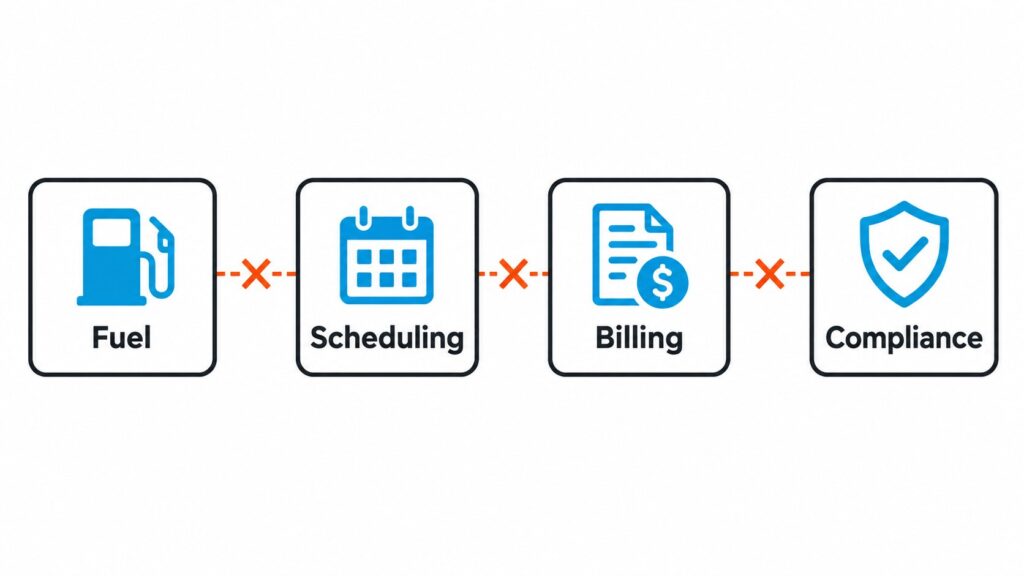
Modern aviation systems can support that coordination. Aero Next Gen’s AirOS Operations profile shows how current aviation platforms can combine flight operations, crew management, training records, compliance, maintenance, and operational oversight. Technology can make information easier to share, but strong CRM still depends on people using that information effectively.
Safety Systems Can Reinforce CRM Principles
CRM and Safety Management Systems address different areas, but they can support each other. CRM focuses strongly on crew behavior and human performance. Safety systems help organizations collect reports, identify hazards, assess risks, and improve processes at a wider organizational level.
Aero Next Gen’s QMSmart aviation safety and quality profile covers functions such as occurrence reporting, safety risk assessment, management of change, training management, and safety promotion. These tools can support the wider safety environment in which CRM training operates.
CRM Training Needs Continued Practice
CRM should not become a one-time training session that crews complete and forget. Communication, teamwork, leadership, and decision-making skills improve through repeated practice. Scenario-based training can place crews in realistic situations where they need to apply CRM concepts while managing operational pressure.
The FAA recommends integrating CRM into training and operations. Recurrent practice can help crews maintain effective habits and adjust to changes in aircraft technology or operating procedures. When asking what is the purpose of crew resource management, this continuing training element matters because CRM works best when teams use its principles routinely.
Conclusion
What is the purpose of crew resource management? Its purpose is to improve aviation safety and crew performance by helping people communicate clearly, maintain situational awareness, manage workload, make better decisions, and use all available resources. CRM recognizes that strong technical skills remain essential, but safe operations also depend on how well people work together.
Aero Next Gen helps aviation organizations evaluate crew management, safety, compliance, operations, training, and other aviation technology solutions. For companies reviewing how technology can support CRM-related processes, selecting systems that improve information flow and operational visibility can strengthen the wider environment in which crews make decisions.