A Thought Leadership Collaboration between Aero NextGen and GoSecure
Contributor: Zied Trabelsi, Cybersecurity Account Executive, GoSecure
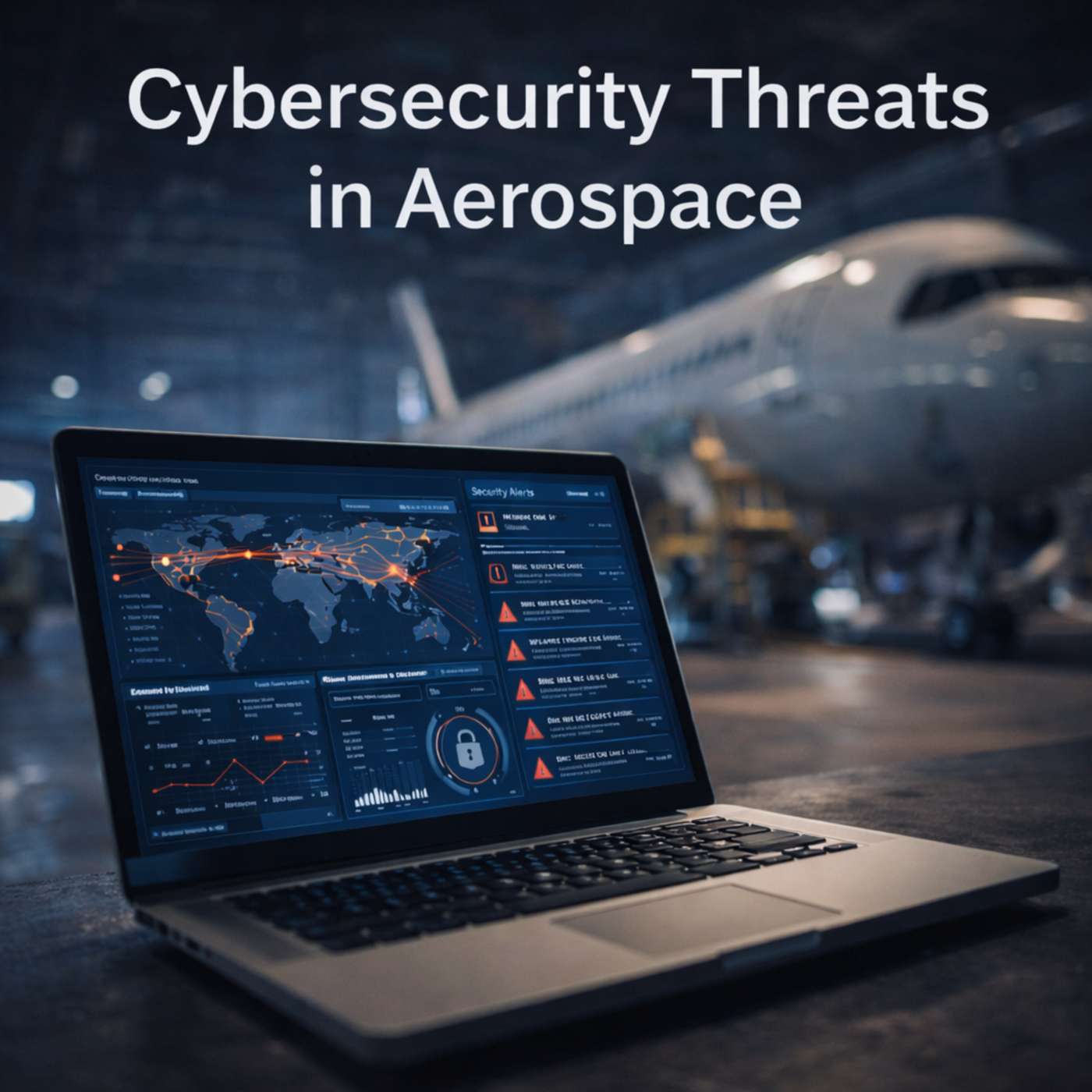
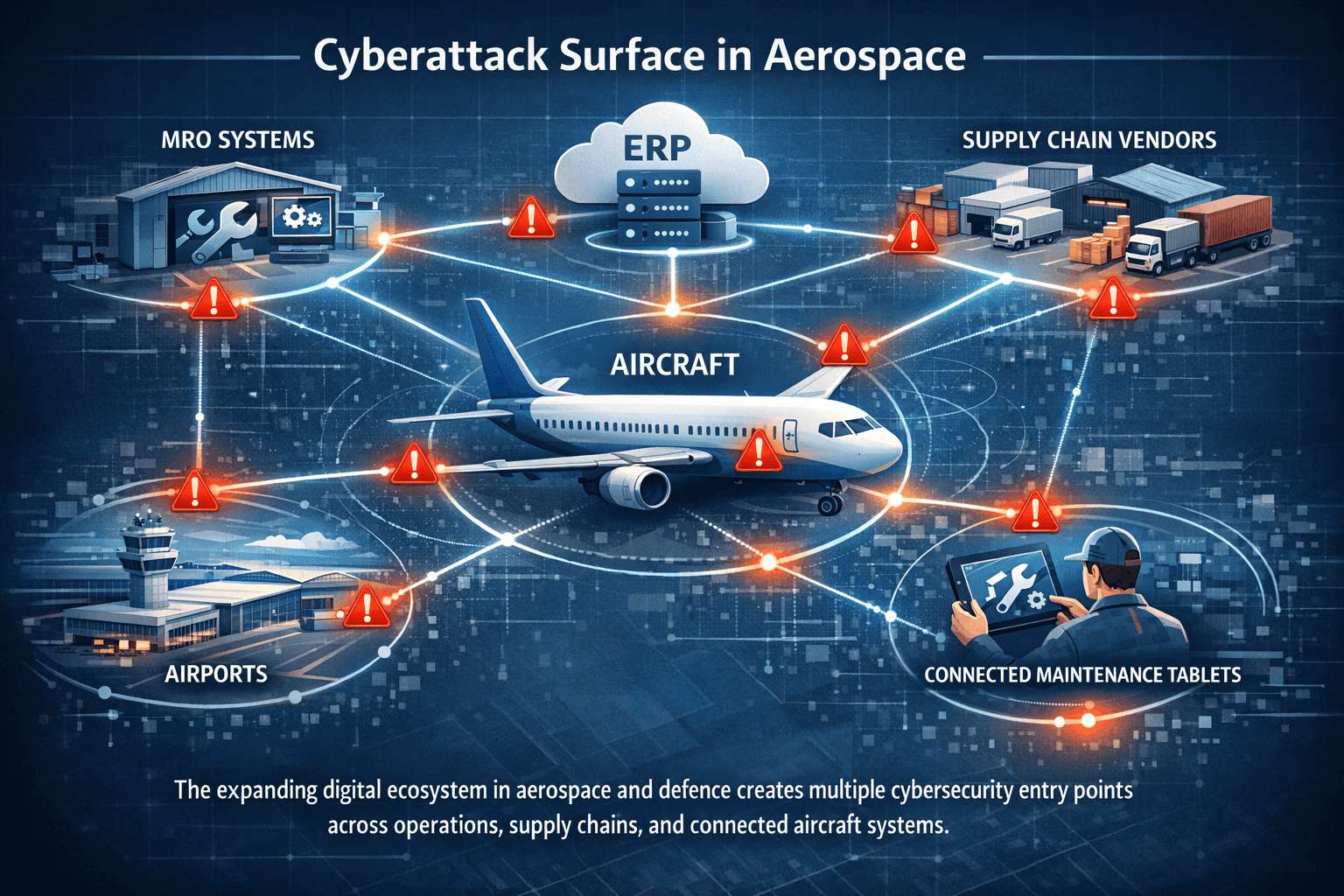
The aerospace and defence (A&D) sector is undergoing a rapid digital transformation. From cloud-based ERP systems and IoT-enabled maintenance platforms to digital supply chains and connected fleet operations, A&D organizations are more digitally dependent than ever. But with this transformation comes an expanding attack surface, and threat actors have taken notice.
Cyberattacks targeting aerospace and defence companies have surged in recent years, with nation-state actors, ransomware groups, and insider threats all exploiting vulnerabilities across supply chains, operational technology (OT), and enterprise IT environments. For an industry where safety, compliance, and operational continuity are non-negotiable, the stakes could not be higher.
Why Aerospace & Defence Is a Prime Target
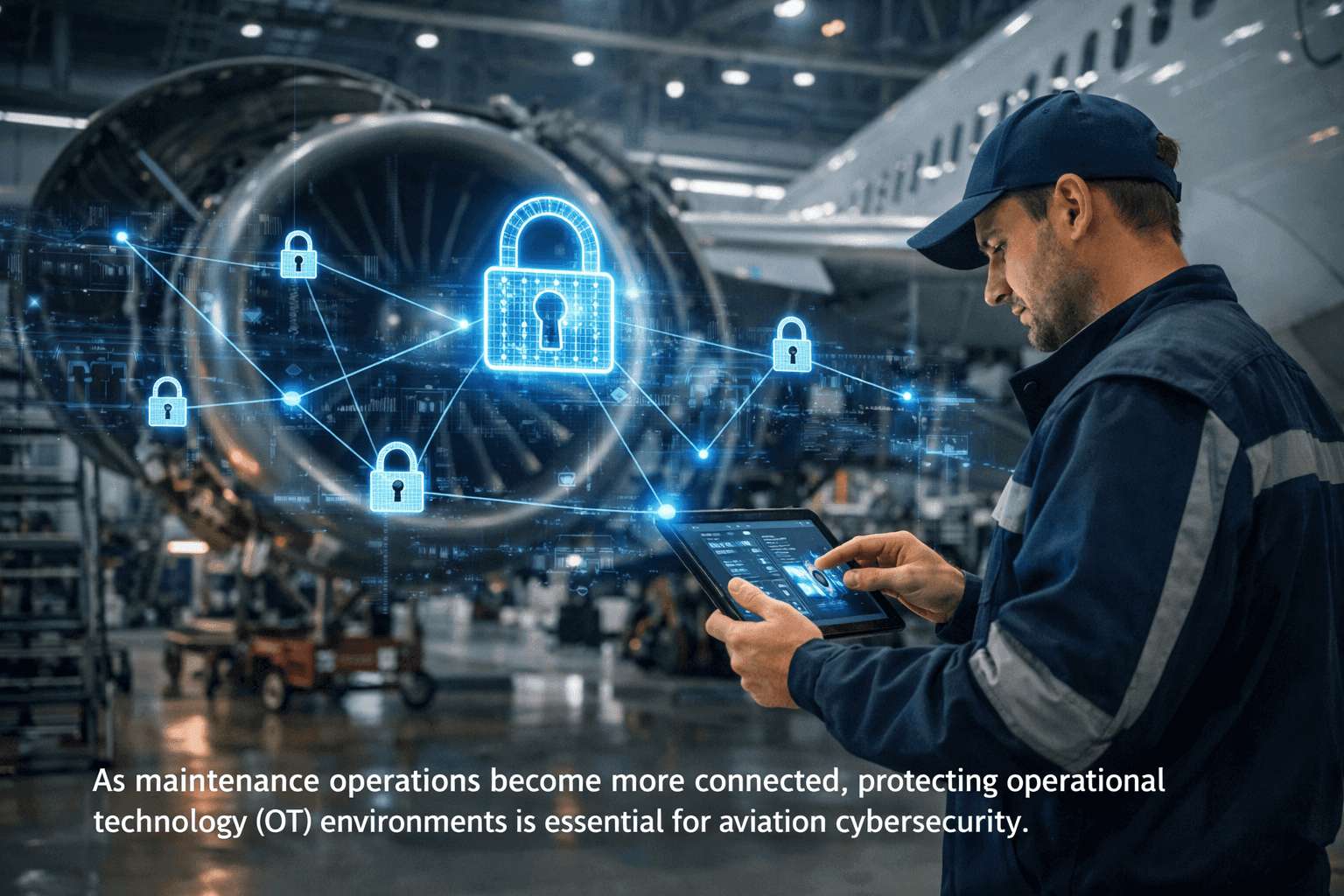
A&D organizations handle classified data, proprietary designs, sensitive supply chain information, and regulated maintenance records. The convergence of IT and OT systems in manufacturing, MRO operations, and fleet management creates multiple entry points for attackers. Key risk factors include legacy systems that were never designed with cybersecurity in mind, complex multi-tier supply chains with varying levels of security maturity, increasing reliance on cloud-based platforms and remote access, regulatory mandates like EASA Part-IS and CMMC 2.0 that demand higher security standards, and a shortage of dedicated cybersecurity talent within A&D organizations.
The threat landscape is not uniform. According to GoSecure, smaller A&D organizations tend to be targeted by opportunistic ransomware groups operating on double extortion models, encrypting data while simultaneously threatening to leak sensitive information. Companies working with cutting-edge technologies face industrial espionage, including cases where threat actors have paid insiders to collect proprietary intelligence. And organizations with defence sector ties or operating near conflict zones can become targets of state-sponsored actors seeking strategic advantage.
The reality is stark: most A&D companies, particularly mid-market MROs, OEMs, and defence contractors, lack the in-house resources to build and maintain a 24/7 cybersecurity operation. This gap between digital adoption and security readiness is where the greatest risk lies.
The Cost of Inaction
A single breach in the A&D sector can result in grounded fleets, halted production lines, compromised intellectual property, regulatory penalties, and irreversible reputational damage. Ransomware attacks have disrupted major defence suppliers and aviation service providers, causing cascading delays across entire supply chains. With the average cost of a cyber breach in an aviation environment estimated at $5 million when downtime, regulatory consequences, and reputational damage are factored in, A&D leaders can no longer treat cybersecurity as an IT afterthought, it must be a boardroom priority.
Why Many A&D Organizations Remain Underprepared
The aerospace sector has long been a leader in continuous improvement, the industry’s safety record is built on learning from every incident. But that same rigour introduces complexity when it comes to cybersecurity. Every change to an OT environment must be weighed against a long list of potential safety outcomes, often requiring major recertification and extended execution timelines.
The regulatory burden adds another layer. Technologies like GPS, for example, present documented attack surfaces that manufacturers must accept because broader regulatory frameworks require specific implementations. As GoSecure notes, the combination of these factors often creates a chilling effect for companies in the sector, increasing cybersecurity costs and slowing the adoption of critical protections.
Managed Detection and Response: A Force Multiplier for A&D
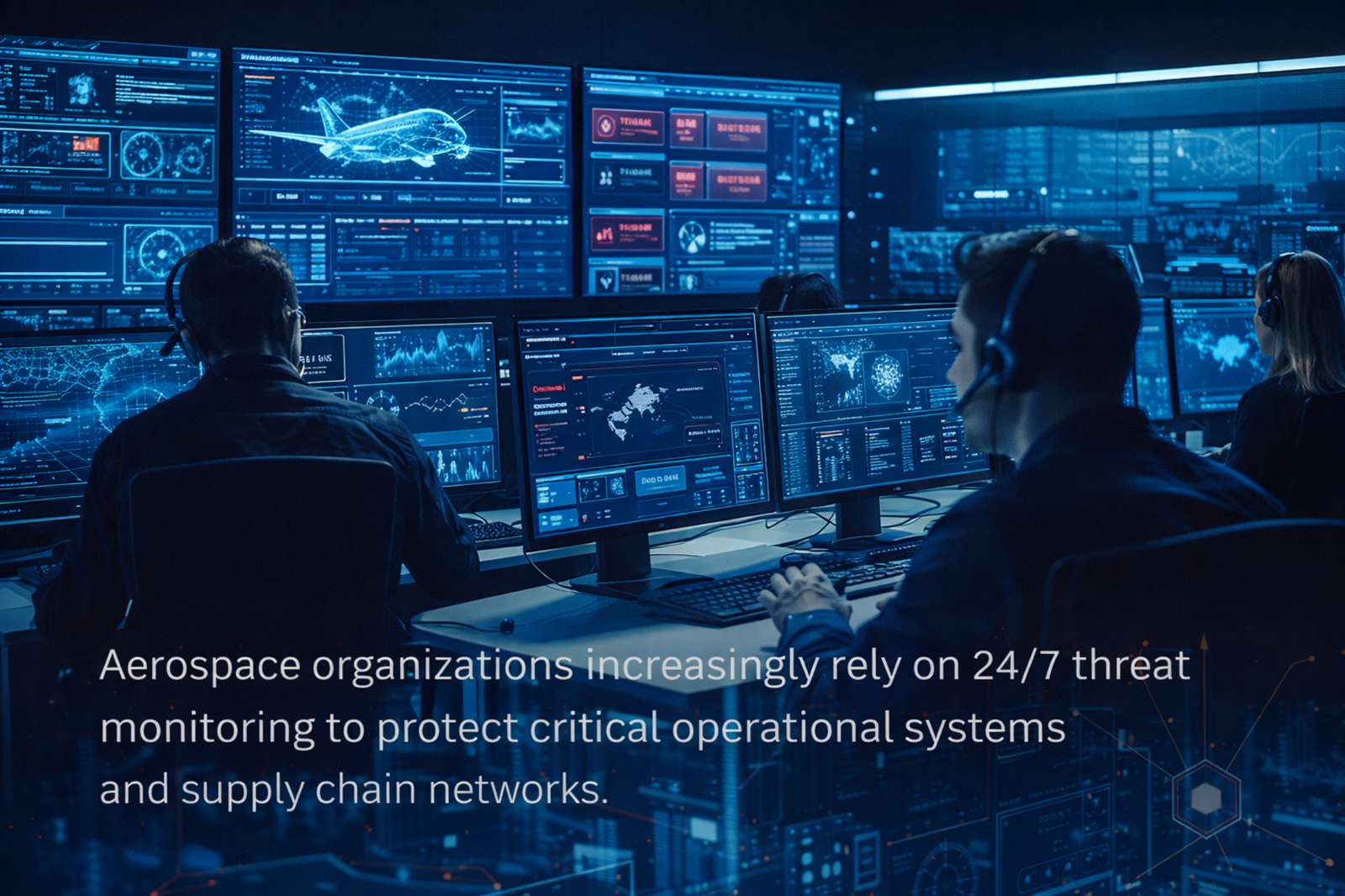
This is where Managed Extended Detection and Response (MXDR) becomes critical. Rather than building an expensive in-house Security Operations Center (SOC), A&D organizations can partner with specialized cybersecurity providers to gain 24/7 threat monitoring, rapid incident response, and proactive threat hunting.
A ransomware event in an MRO is not just a data problem, it is a grounded aircraft, a missed maintenance window, and a cascade of contractual consequences. Phishing hits procurement teams handling sensitive supplier contracts. Supply chain intrusions enter through less-protected partners and operate undetected for weeks. These are not hypothetical scenarios; they are the incidents that cybersecurity teams respond to regularly.
GoSecure Titan® MXDR was built for exactly this gap. It integrates endpoint, network, and email threat detection into a single managed service, operated by a Security Operations Center around the clock. Most organizations address these threat vectors separately, with different vendors and disconnected alert queues, which is precisely where attackers find room to operate. GoSecure closes that gap by managing all three under one team, with one unified view of the environment.
The results speak for themselves: organizations implementing GoSecureTitan® MXDR report a reduction in security incidents of up to 60%, with a mean time from threat detection to active mitigation of under 15 minutes. In operational environments where continuity is measured in aircraft on the ground, that speed translates directly into business value.
What makes this model particularly relevant for regulated industries is what it replaces: the need to hire, train, and retain a 24/7 internal security team. Organizations choosing GoSecureTitan® MXDR can achieve cost savings of up to 35%, with a positive ROI achievable within the first year. GoSecureis already the cybersecurity partner of choice for more than 20 airports across North America, providing penetration testing, incident response, and continuous protection across the same technology surface that defines modern MRO and A&D environments.
Compliance and Regulatory Readiness
For organizations with U.S. DoD supply chain relationships, CMMC 2.0 requirements are now embedded in contract award criteria. The continuous monitoring, logging, and incident response capabilities that certification demands are delivered as standard outputs of Titan® MXDR, not a separate compliance project. GoSecurealso supports organizations pursuing alignment with NIST SP 800-171, CIS Controls, and ISO 27001, generating the audit trails and incident response documentation that certification assessors require.
For Canadian suppliers, GoSecureprovides the same readiness approach for Canada’s CPCSC, including ITSP.10.171 gap assessment support. And with EASA Part-IS mandating information security management systems across the European aviation ecosystem from October 2025 and February 2026 onwards, the compliance pressure is only increasing.
What A&D Leaders Should Do Now
Aerospace and defence leaders should start by assessing the cybersecurity maturity of their organization and supply chain partners. Prioritizing the protection of critical operational systems, not just corporate IT, is essential. Evaluating MXDR solutions that deliver 24/7 monitoring without the overhead of building an internal SOC should be a near-term action. Ensuring compliance with emerging standards such as EASA Part-IS and CMMC 2.0 is non-negotiable.
GoSecure’s advice to A&D leaders: treat compliance as a catalyst, not a burden. Mapping cybersecurity requirements to existing initiatives, rather than fitting them into an already full roadmap, can help ensure that the organization is actually secure, instead of simply checking a box on an auditor’s questionnaire.
Secure Your Operations with the Right Partners
As the aerospace industry accelerates its digital transformation, cybersecurity must move at the same pace. GoSecure delivers the managed security expertise that A&D organizations need to stay protected, compliant, and operationally resilient. Start with a complimentary scoping session, GoSecure’s cybersecurity experts will assess your environment, identify your highest-priority risks, and outline a clear path to a stronger security posture at a pace that works for your organization.
Looking for the right cybersecurity solution for your aerospace operations? Take the Aero NextGen Solution Finder Quiz to get matched with vetted providers like GoSecure, tailored to your operational profile, business type, and security requirements.
Sources & References
EASA Part-IS, Easy Access Rules for Information Security (Regulations (EU) 2023/203 and 2022/1645)
CMMC 2.0, U.S. Department of Defense Cybersecurity Maturity Model Certification
GoSecure Titan® MXDR, Managed Extended Detection and Response Platform (gosecure.ai)
NIST SP 800-171, Protecting Controlled Unclassified Information in Nonfederal Systems
Canada CPCSC, Canadian Program for Cyber Security Certification (ITSP.10.171)