
Big Data Analytics for Aviation & MRO
Big data analytics turns the maintenance records, parts movements, flight data and finance numbers your team already collects into clear answers. Where is turn time leaking? Which customers actually make you money? What is likely to break next? We help airlines, MROs, OEMs and distributors find the analytics platform that fits how they really work.
- Vendor-neutral matching
- 600+ aviation-only providers
- Free 3-minute Solution Finder

What is big data analytics in aviation?
Big data analytics in aviation is the practice of pulling data from maintenance, flight operations, supply chain, commercial and finance systems, cleaning it into one trusted source, and turning it into KPIs, dashboards and forecasts that people can act on. For an MRO, airline or parts business, it replaces spreadsheet reporting with a live, shared view of how the operation is really performing.
Here is the honest truth we hear in almost every conversation: most aviation companies do not have a data problem. They have a visibility problem. The data is already there. It lives in your MRO or ERP system, in the parts platform, in flight data monitoring exports, in the finance package and in a dozen spreadsheets saved on someone’s desktop. What is missing is a way to see it together, trust it, and use it before the moment has passed.
That is the job big data analytics does. It connects those sources, standardizes the records, and puts the numbers that matter in front of the people who make decisions, refreshed automatically instead of rebuilt by hand every Monday morning. Planners see what is coming. Purchasing sees what to buy and when. Leadership sees which customers, capabilities and contracts drive profit, and which quietly drain it.
- It works on data you already own; the first step is mapping and cleansing it, not buying more of it.
- The fastest wins usually come from replacing manual reporting and exposing bottlenecks in turn time and purchasing.
- Value grows when every function owns its own KPIs, from the hangar floor to finance.
- Choosing a vendor that already understands aviation data models saves months of setup.
On this page
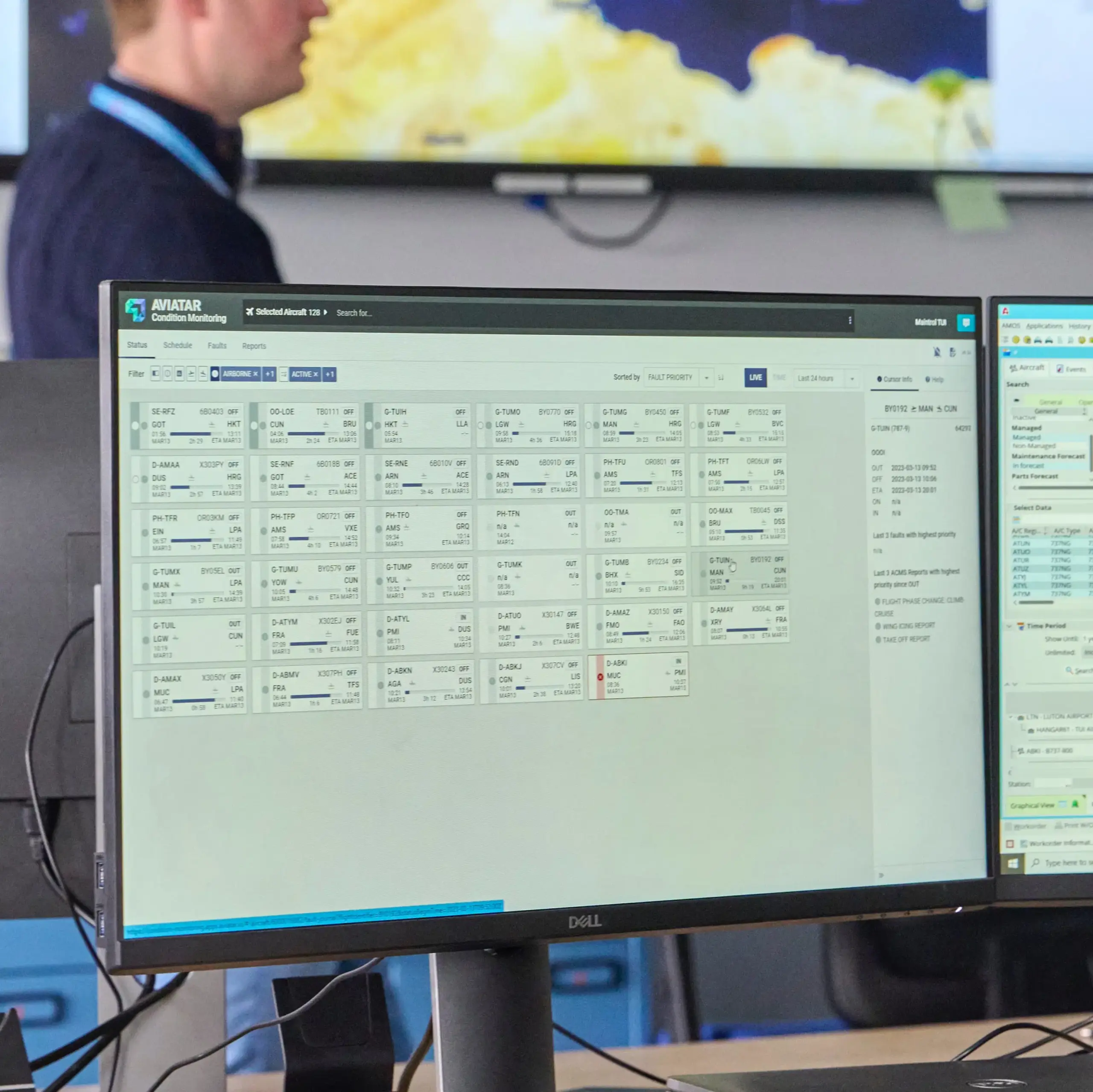
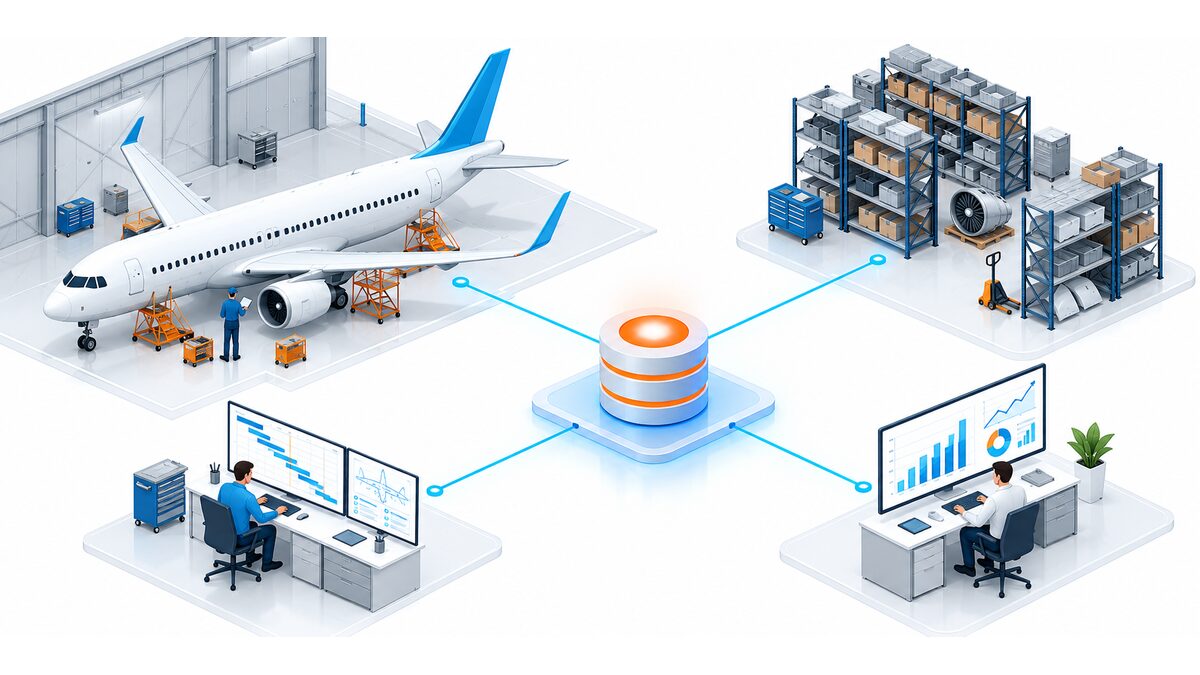
One trusted view: maintenance, parts, flight and finance data side by side instead of in six separate reports.
Where aviation big data analytics gets its data
An aircraft generates data from the moment it is built to the day it is parted out. So does every work order, purchase order and invoice around it. These are the six streams a good big data analytics setup brings together.
Maintenance and engineering
Work orders, task cards, findings, labor hours, deferrals and component histories from your MRO or maintenance tracking system.
Flight and sensor data
Flight data monitoring, engine health trends and utilization that show how each tail is actually being flown.
Inventory and supply chain
Stock levels, lead times, repair loops, rotables and vendor performance across every warehouse and station.
Commercial and customer
Quotes, contracts, win rates and customer history that reveal who your most profitable accounts really are.
Finance and procurement
Margins by job, cost drivers, spend by supplier and the rebates you qualify for but rarely claim.
People and workforce
Skills, certifications, shift capacity and overtime, so planning reflects the team you actually have.
Why aviation teams are investing in analytics now
More aircraft, fewer experienced hands and a supply chain that still has not recovered. That combination leaves very little room for decisions made on gut feel.
Global MRO demand keeps climbing while the workforce that carries decades of know-how heads toward retirement. When the people who “just knew” which supplier runs late or which check package always overruns are no longer on the floor, that knowledge has to live somewhere. Big data analytics is how it gets captured, shared and used by the next generation of planners and managers.
Supply chain strain makes the point sharper. When parts are scarce and lead times are long, the operators who use big data analytics to see shortages coming weeks ahead are the ones who keep aircraft flying.
Global MRO demand in 2025, up 8% on the year before.
Commercial aircraft in service in early 2026, with roughly 41,000 forecast by 2036.
Share of certified US aviation mechanics who are over 60.
Six proven gains big data analytics brings to aviation and MRO teams
These are the improvements we see most often once an operation stops reporting by hand and starts working from shared, trusted numbers.

“Green is good, red is great. You can only fix what you can see.”
The Aero NextGen advisory principle
Decisions based on evidence, not hunches
When everyone looks at the same numbers, meetings stop being debates about whose spreadsheet is right. Capacity, pricing and hiring calls get made on what is actually happening, and you can explain the reasoning to your board, your customers and your auditors.
Bottlenecks surface before they cost you
Big data analytics shows where work waits: parts kitting, inspection sign-off, engineering queries, customer approvals. Once you can see the queue, you can staff it, reroute it or fix the process behind it. Turn time comes down because the slowest step finally has a name.
KPI reporting that runs itself
Dashboards refresh around the clock, so the weekly reporting scramble disappears. Each function gets its own targets, from on-time delivery to labor utilization to days of inventory, and everyone can check progress without waiting for a report to land in their inbox.
Risk spotted early, not after the fact
Repeat defects, slipping suppliers, contracts trending into loss and compliance gaps all leave traces in the data long before they become a crisis. Analytics flags those red flags early, moving your team from reactive firefighting to proactive management.
Purchasing with the full picture
Buying order by order hides the bigger pattern. With a view of total parts demand and true lead times, purchasing can negotiate volume rebates, consolidate suppliers and order ahead of shortages instead of paying AOG premiums when something runs out.
Commercial focus on the right customers
The 80/20 rule is alive and well in aviation. Analytics shows which customers, aircraft types and repair capabilities drive most of your profit, where dormant capabilities could be revived, and where the real whitespace sits across airlines, OEMs, lessors and brokers.
How big data analytics works for your side of aviation
An engine shop and a regional airline ask very different questions of their data. Pick your type of operation to see where analytics usually pays off first.
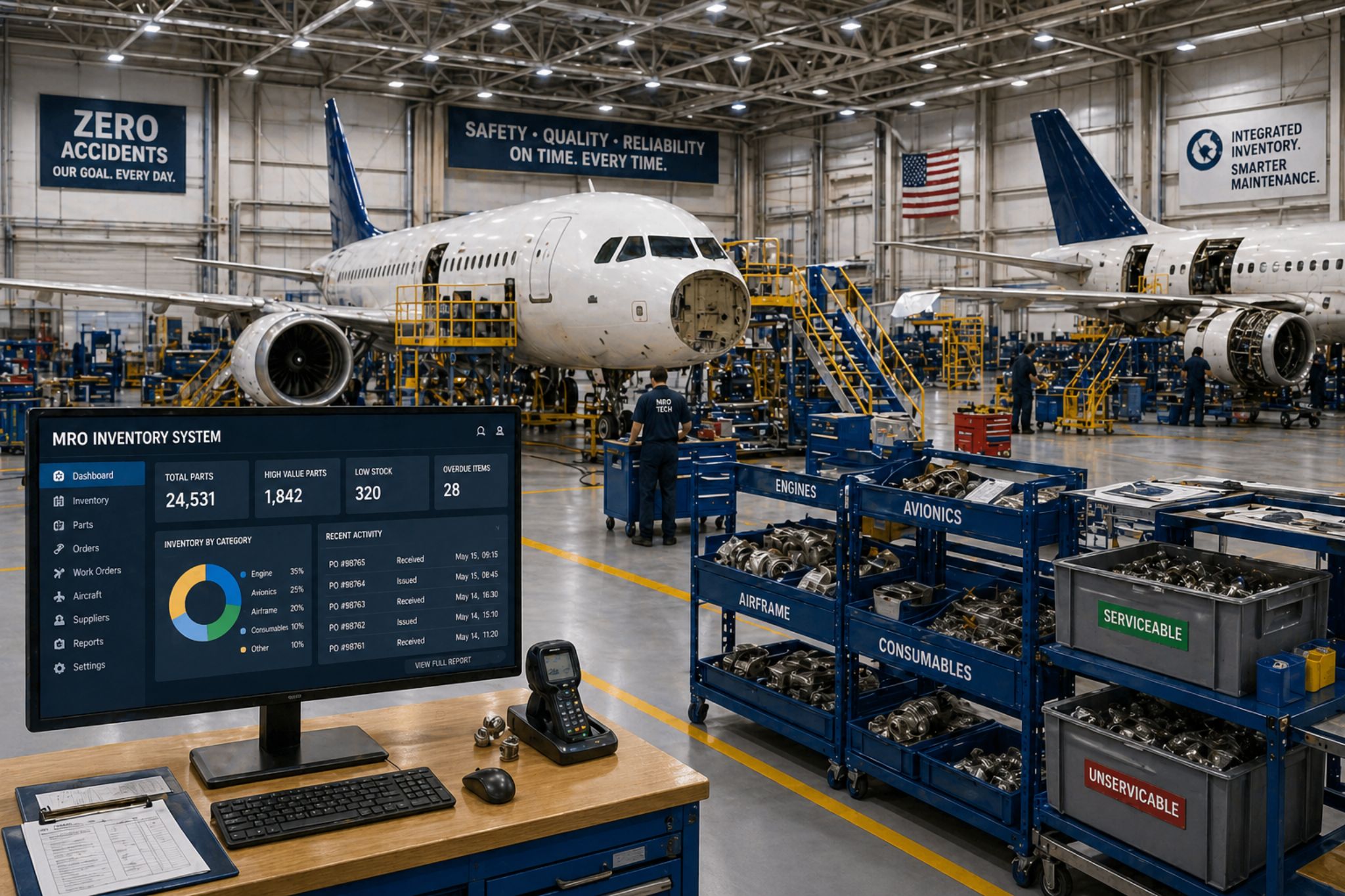
For MROs and repair stations
Your margin is decided by turn time, labor efficiency and how well you quote. Big data analytics connects work orders, labor bookings and parts usage so you can see exactly where each check or shop visit gains or loses time and money, and quote the next one with real history behind it.
- Turn time by work package, station and customer
- Quoted versus actual hours on every job
- Capability utilization, including dormant repair capabilities
- Profit by customer, so the 80/20 is no longer a guess
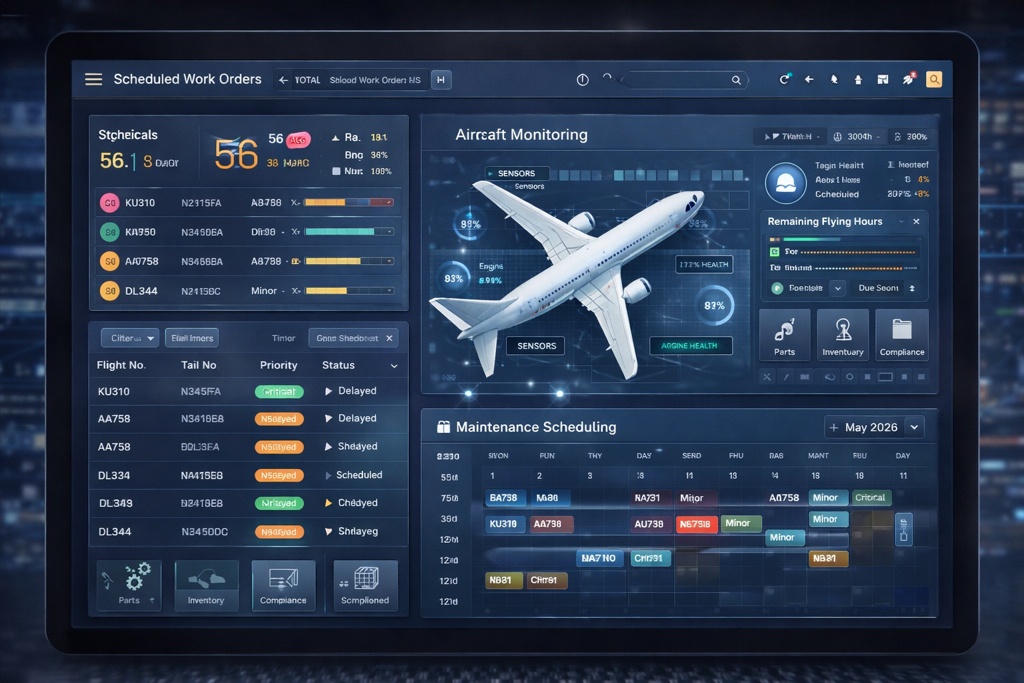
For airlines and operators
Every unplanned removal ripples through the schedule. Airlines use analytics to join reliability data, flight data monitoring and maintenance history, so engineering can spot repeat defects early and operations can plan around the aircraft most likely to cause trouble.
- Fleet reliability and repeat defect trends by tail
- Fuel and performance insights from flight data
- Maintenance cost per flight hour by fleet type
- Early warnings that feed predictive maintenance
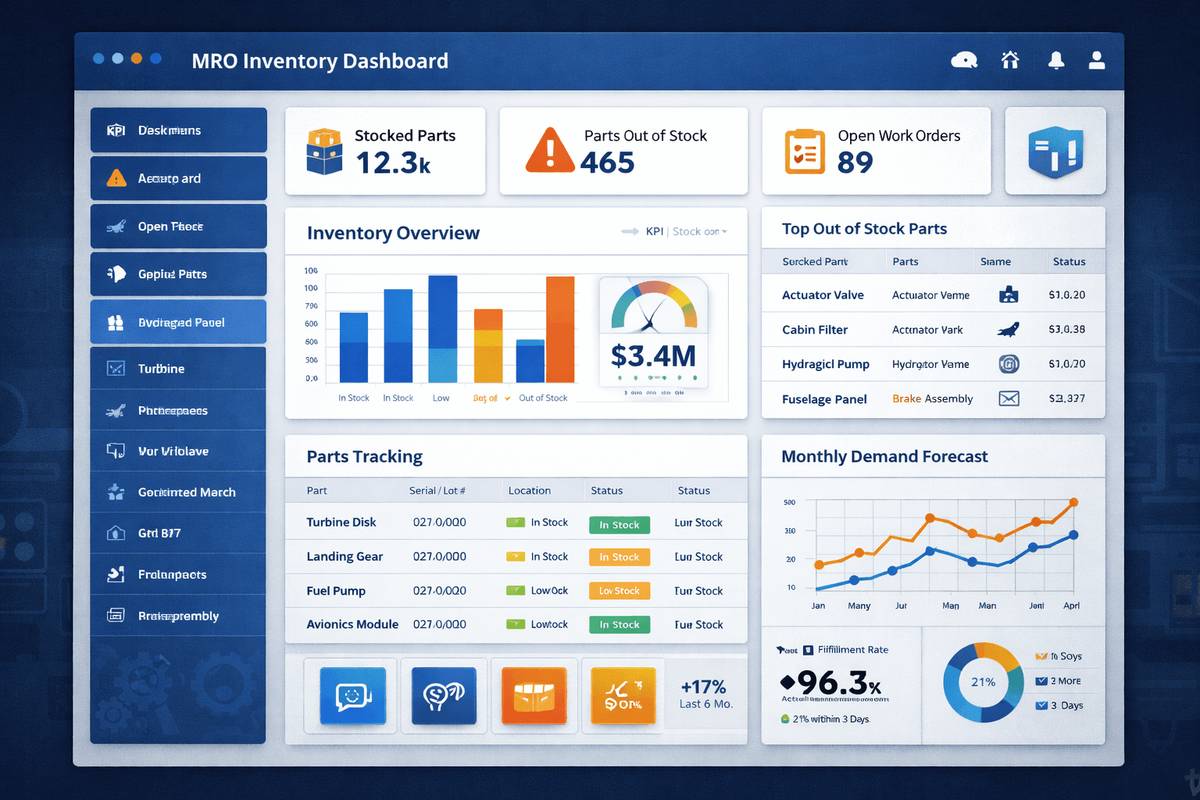
For parts distributors and suppliers
In parts, cash sits on the shelf. Big data analytics shows which stock turns, which sits for years, and which part numbers customers keep asking for that you do not carry. Pricing, purchasing and sales finally work from the same demand picture.
- Inventory turns and aging by part number
- Quote win rates and lost demand you can recover
- Supplier lead time and quality performance
- Margin by customer, channel and product line

For OEMs and lessors
OEMs and lessors care about the life of an asset across many operators. Big data analytics brings together component health, utilization and maintenance records so you can protect asset value, plan transitions with confidence and design better aftermarket services.
- Asset condition and records completeness by tail
- Component reliability across the operator base
- Return condition and transition risk forecasting
- Aftermarket demand signals by region and type
Spreadsheets versus a real analytics setup
Excel is a brilliant tool. It just was never meant to run the governance and reporting of an aviation business. Here is what changes when big data analytics takes over the heavy lifting.
| Area | Spreadsheet reporting | Big data analytics |
|---|---|---|
| Reporting cycle | ✕ Weekly or monthly, rebuilt by hand | ✓ Refreshed automatically, available 24/7 |
| Source of truth | ✕ Many versions, emailed back and forth | ✓ One governed dataset everyone trusts |
| Data quality | ✕ Copy and paste errors go unnoticed | ✓ Cleansing rules catch gaps and duplicates |
| KPI ownership | ✕ A few people own the numbers | ✓ Every function owns its targets |
| Purchasing | ✕ Order by order, rebates missed | ✓ Total demand visible, volume deals negotiated |
| Risk | ✕ Found after it becomes a problem | ✓ Flagged early with alerts and trends |
"We treat every customer the same."
The fix: analyze internal data to rank customers by real profit, then tailor service levels and incentives to the accounts that matter most and grow the ones with untapped potential.
"Governance lives in Excel."
The fix: modern financial dashboards automate governance and reporting, cut admin hours and present KPIs clearly enough that the board reads them without a translator.
"Purchasing is all firefighting."
The fix: a strategic view of parts requirements lets buyers plan around lead times, negotiate volume rebates and stop paying premiums for urgent orders.
"Some capabilities just sit there."
The fix: assess every repair capability, find the dormant ones and why, gauge market demand, then revive them with targeted campaigns and MRO partnerships.
What big data analytics is worth to an aviation business
Big data analytics is not a science project. Scoped well, it pays for itself through efficiency, focus and cost control.
$200K to $1M
Typical annual return on value we see from a well-scoped program
$60K to $120K
Typical annual cost, depending on scope, data sources and users
Results depend on your size, the quality of your data and how widely the dashboards are used. The cheapest place to start is often the most overlooked: the hours your team spends building reports by hand. Use the calculator to put a number on it.

How to get started with big data analytics
Understanding your current state is step one of any digital transformation. These five stages keep the project grounded and the early wins coming.
Map your current state
List every system and spreadsheet that holds operational data, who owns it and how often it changes. Most teams are surprised by how many sources they have.
Cleanse and connect the data
Standardize part numbers, customer names and dates, remove duplicates and connect the sources. Clean data is what makes people trust the dashboards later.
Define KPIs and targets per function
Agree on a short list of measures for each team, from turn time and labor utilization to inventory days and margin, each with an owner and a target.
Build dashboards people will use
Design views for the hangar floor, purchasing and leadership, not one giant report. If a manager cannot read it in thirty seconds, it needs another pass.
Act, review and expand
Hold short weekly reviews around the numbers, act on the red, then add new data sources and use cases like predictive maintenance as confidence grows.

Not sure which stage you are at, or which platform fits? The Solution Finder scopes it in about three minutes and matches you with vetted vendors.
How to choose a big data analytics vendor for aviation
Generic business intelligence tools can draw a nice chart. The right partner for aviation also understands tail numbers, task cards, back-to-birth traceability and the systems you already run. Use these criteria to compare options.
Aviation data models out of the box
Ask whether the platform already understands fleets, components, work packages and part numbers, or whether you will be building that from scratch.
Connectors to your current systems
Check for proven integrations with your MRO, ERP, flight data and finance tools. Every custom connector adds cost and risk.
Data governance and security
Look for role-based access, audit trails and clear answers on where your data is hosted and who can see it.
Self-serve dashboards
Your managers should be able to filter, drill down and build simple views without opening a ticket every time.
Room to grow
Make sure it scales to more sites, more users and advanced use cases such as predictive maintenance and digital twins.
Total cost, not just licenses
Add implementation, data preparation, training and ongoing support so the comparison is honest.
Adoption support
The best tool fails if nobody uses it. Ask how the vendor trains teams and measures adoption after go-live.
Analytics and data platforms in the Aero NextGen network
A sample of the providers listed under Data Analytics and Reporting, shown alphabetically. A listing is not an endorsement; the Solution Finder matches you on fit.









Monica Badra
Founder and CEO, Aero NextGen
Guidance from people who have run aviation operations
Aero NextGen was founded by Monica Badra, who has spent more than a decade inside aviation translating real business needs into the right technology. That experience shapes how we approach big data analytics: start with the decisions your team needs to make, then find the data and the platform that support them, never the other way around.
We are vendor-neutral. We do not resell software, and our matching is based on your operation, your systems and your budget. Our perspective on digital MRO and aviation analytics has been featured across the industry press.

Big data analytics FAQs
The questions aviation leaders ask us most before they start. Have one we did not cover? The Solution Finder routes it to the right expert.

What is big data analytics in aviation MRO?
It is the practice of collecting, cleansing and interpreting large volumes of operational, financial and customer data to surface trends and KPIs. In MRO, it replaces spreadsheets with dashboards that give a 360 degree view of turn time, labor, parts, customers and profit.
How does big data analytics improve MRO operations?
It shows where work waits, which jobs overrun their quotes, which parts cause delays and which customers drive profit. With that visibility, teams fix bottlenecks, quote more accurately, plan purchasing around real lead times and cut the hours spent on manual reporting.
What is the difference between big data analytics and business intelligence?
Business intelligence usually reports on what already happened using structured data from a few systems. Big data analytics works across larger and messier sources, including sensor and flight data, and adds trend analysis and forecasting. In practice, most aviation platforms combine both.
What ROI can big data analytics deliver?
For a well-scoped program, we typically see $200K to $1M in annual value against an annual cost of roughly $60K to $120K. Returns come from efficiency, better purchasing, recovered revenue and fewer reporting hours. Your result depends on data quality, scope and adoption.
How long does it take to implement?
A focused first phase covering one or two functions often goes live in weeks rather than months, especially when the vendor already supports your MRO or ERP system. Larger programs that connect many sources roll out in stages, with each stage delivering usable dashboards.
Do we need clean data before we start?
No, but cleansing is part of the work. Most projects begin by mapping sources and standardizing key records such as part numbers and customer names. Starting with data cleansing and management makes every dashboard after it more trustworthy.
Can small operators and repair stations benefit?
Yes. Smaller teams often feel the reporting burden the most because the same people who fix aircraft also build the spreadsheets. Cloud analytics tools with aviation templates make a lean setup affordable, and the time saved goes straight back into the shop.
How do I get started?
Take the free Solution Finder. In about three minutes it captures your operation type, systems and goals, then matches you with vetted big data analytics vendors from our aviation-only network.
Technologies that work hand in hand with analytics

Clean, standardized records are the foundation every dashboard depends on.
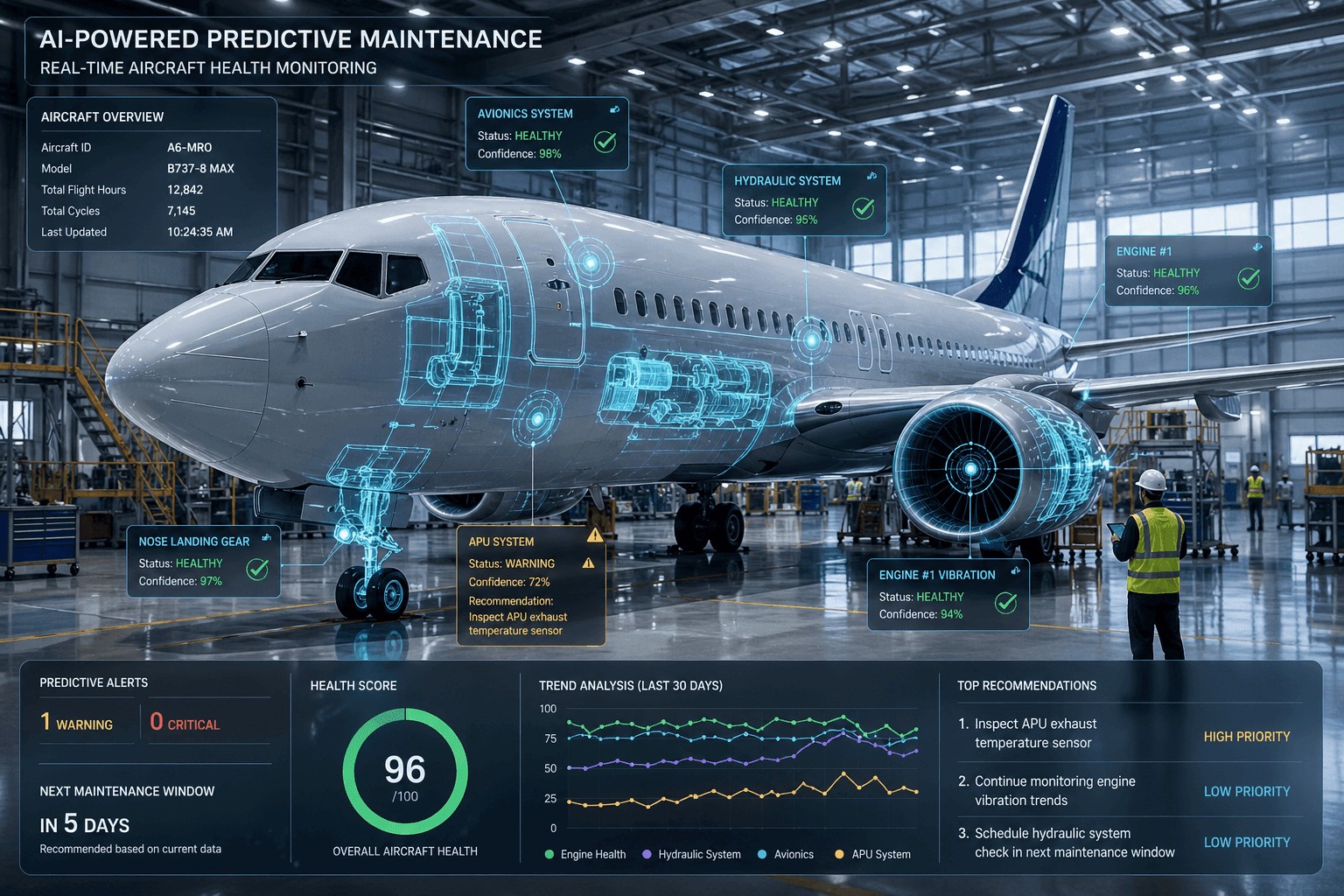
Use the trends analytics uncovers to fix components before they fail.
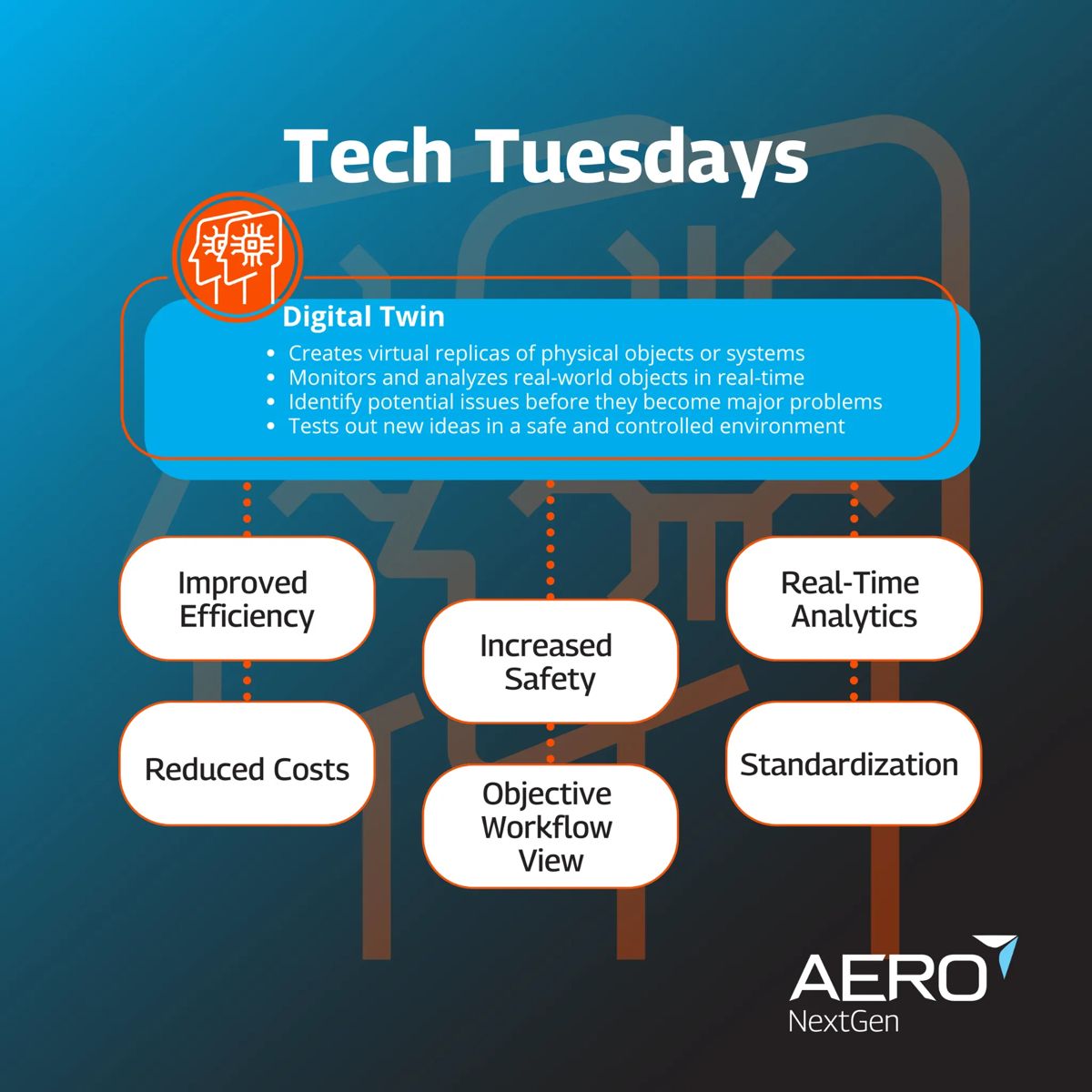
Model aircraft and processes virtually to test decisions before acting.
Give analytics a connected core system to draw from in real time.



See what your data has been hiding
Map your data, define the KPIs that matter and replace spreadsheets with live dashboards. Start with the free Solution Finder to scope your big data analytics roadmap and meet the vendors built for it.