
Home / Technologies / Cloud Computing and ERP
Aviation Cloud ERP for MROs and Operators
An aviation cloud ERP connects maintenance, inventory, procurement, finance and HR on one secure platform, so every team works from the same, current data. Siloed systems and on-premise servers give way to standardized workflows, compliant record keeping and real performance management. We help MROs, airlines and parts businesses compare more than 80 aviation ERPs and find the one that fits.
- Vendor-neutral matching
- 600+ aviation-only providers
- Free 3-minute Solution Finder
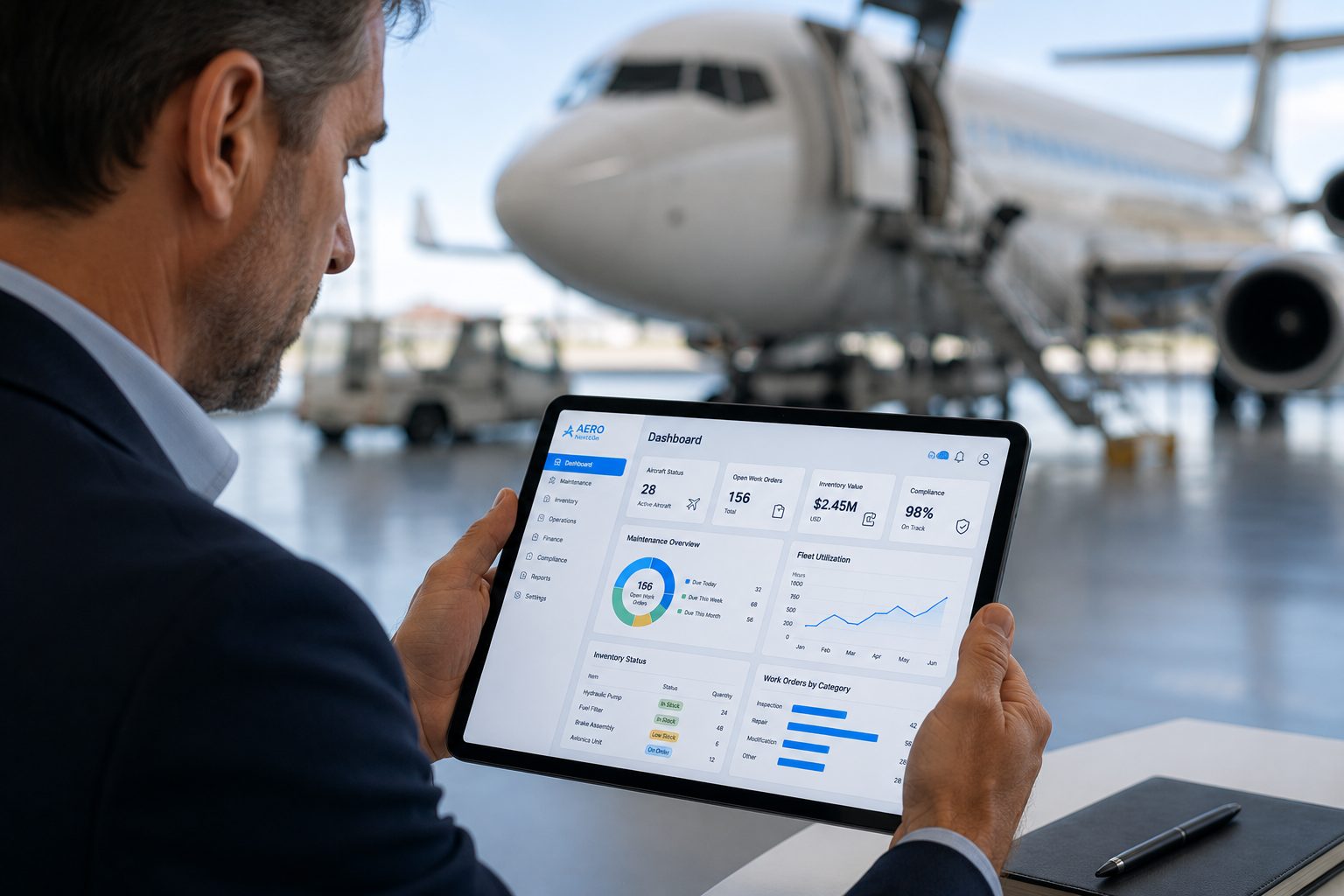
Illustrative dashboard, sample values
What is an aviation cloud ERP?
An aviation cloud ERP is enterprise resource planning software, hosted in the cloud, that integrates maintenance and engineering, inventory, procurement, sales, finance and HR into one platform built around aviation requirements. It standardizes workflows, keeps a single source of truth and stores records securely and accessibly to meet regulatory retention rules.
Many aviation businesses run on a patchwork: a maintenance tracking tool, an accounting package, a spreadsheet for inventory, another for quotes and a shared drive full of scanned certificates. Each one works on its own. Together they create rekeying, conflicting numbers and gaps that show up in audits and at month end.
An aviation cloud ERP replaces the patchwork with one connected system. A work order consumes parts from inventory, triggers procurement, books labor and flows into invoicing without anyone retyping it. Certificates and records are stored securely in the cloud, accessible from any station. Leadership finally gets real-time performance data instead of reports assembled by hand.
- It replaces siloed tools with one source of truth across the business.
- Cloud hosting keeps mandated records accessible, secure and backed up.
- Aviation-specific ERPs handle traceability, certificates and approvals out of the box.
- Clean data and a clear process map are the foundation of a successful rollout.
On this page
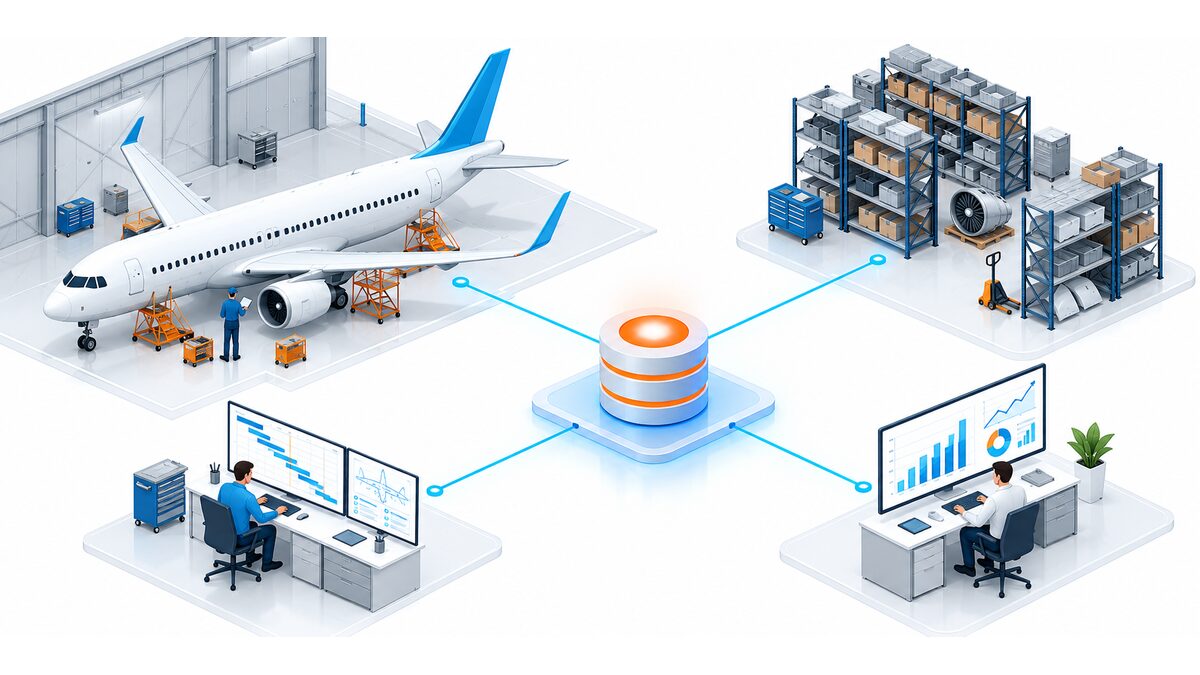
One connected core: maintenance, inventory, procurement and finance working from the same record.
What an aviation cloud ERP covers
A modern aviation ERP connects these six areas so information flows from the hangar to the general ledger.
Maintenance and engineering
Work orders, task cards, maintenance programs and airworthiness tracking connected to parts and labor.
Inventory and supply chain
Stock, rotables, consignment, repairs and traceability with certificates attached to every part.
Procurement
Purchase orders, repair orders, vendor approval and performance in one workflow.
Finance
Invoicing, costing, accounting and month-end built on the same data as operations.
HR and workforce
Staff, qualifications, authorizations and time linked to the work being done.
Secure cloud platform
Encrypted, access-controlled hosting with retention policies that meet aviation authority mandates.
Why aviation businesses are moving to cloud ERP now
Growth, regulation and the end of on-premise servers are pushing the decision.
Aviation authorities require critical records such as certifications to be retained for years, yet many shops still keep them on local servers or in filing cabinets. That makes compliance harder, remote access impossible and disaster recovery a worry.
At the same time, MRO demand is growing quickly. Businesses that want to scale need systems that grow with them, connect every department and give leaders real-time visibility. That is what a cloud ERP is built for.
Global MRO demand in 2025, up 8% on the year before.
Commercial aircraft in service in early 2026, with roughly 41,000 forecast by 2036.
Share of certified US aviation mechanics who are over 60.
Six gains an aviation cloud ERP delivers
These are the improvements we see most often once a business moves from disconnected tools to one cloud platform.
“Pick the ERP that fits your exceptions, not the one with the longest feature list.”
The Aero NextGen advisory principle
Higher efficiency
One platform replaces disconnected tools and rekeying, so work flows from the hangar to the invoice without manual steps.
Accurate, consistent data
A single source of truth across every department means everyone sees the same numbers and decisions are made on facts.
End-to-end workflow
Finance, HR, procurement and operations connect, so a change in one area updates the others automatically.
Standardized processes
Consistent workflows mean every station and team works the same way, which simplifies training and audits.
Compliance and risk control
Built-in controls, traceability and secure records support aviation mandates and reduce audit risk.
Optimized supply chain
Visibility from order to delivery helps plan purchasing, manage repairs and keep the right parts in stock.
How an aviation cloud ERP works for your side of aviation
The right ERP depends heavily on your business model. Pick your operation to see what usually matters most.

For MROs and repair stations
MROs need work orders, capabilities, quoting, repair orders, traceability and invoicing in one flow. The best fit depends on whether you are a component, engine or airframe shop.
- Work orders linked to parts and labor
- Capabilities and quoting
- Repair order and vendor management
- Traceability and certificates

For airlines and operators
Operators need maintenance programs, airworthiness tracking, techlog integration and stores across stations, connected to finance and procurement.
- Maintenance program and forecasting
- Airworthiness and component tracking
- Multi-station stores and logistics
- Link to electronic techlog
For parts distributors and suppliers
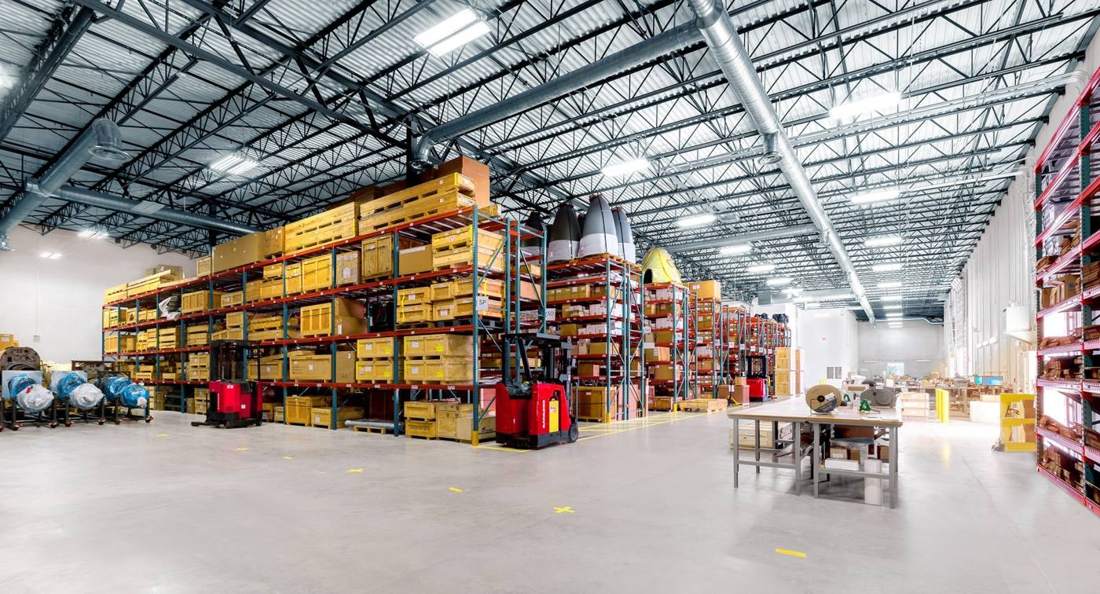
Distributors need fast quoting, inventory with certificates, consignment and exchange handling and marketplace integrations, tied to accounting.
- Quote to order to invoice
- Inventory with trace documents
- Consignment and exchange programs
- Marketplace integrations

For OEMs and lessors
Manufacturers need production, quality and aftermarket in one system, while lessors need asset, lease and records management across many operators.
- Production and quality integration
- Aftermarket and spares management
- Lease and asset management
- Records across the portfolio
Disconnected systems versus an aviation cloud ERP
Here is what changes when a patchwork of tools and on-premise servers becomes one cloud platform.
| Area | Disconnected systems | Aviation cloud ERP |
|---|---|---|
| Data | ✕ Rekeyed between tools | ✓ Entered once, shared everywhere |
| Records | ✕ On local servers and paper | ✓ Secure, accessible cloud storage |
| Processes | ✕ Each team does it differently | ✓ Standardized workflows |
| Month-end | ✕ Days of reconciliation | ✓ Built on operational data |
| Visibility | ✕ Reports assembled by hand | ✓ Real-time dashboards |
| Growth | ✕ More tools, more gaps | ✓ Scales with the business |
"Our systems are siloed."
The fix: an integrated ERP connects all processes, departments and stakeholders, giving consistent, accessible data and streamlined operations.
"Our records sit on local servers."
The fix: secure cloud storage that meets aviation authority mandates, with encryption, access controls and retention policies to protect sensitive data.
"We have no integrated ERP at all."
The fix: build a robust IT base, with data cleansing, data management, streamlined processes and the right integrations, as the foundation for efficient systems.
"Month-end takes forever."
The fix: when operations and finance share one system, invoicing and costing come straight from the work, and the close gets shorter.
What an aviation cloud ERP is worth
A connected ERP pays back through rekeying eliminated, faster closes and better control.
- Hours of double entry removed across departments
- Faster invoicing and a shorter month-end
- Lower IT and server maintenance costs
- Fewer audit findings on records and traceability
Double entry between disconnected systems is usually the biggest hidden cost. Use the calculator to estimate it; your ERP shortlist will add licensing and implementation costs to the other side of the business case.

How to get started with an aviation cloud ERP
ERP projects are won or lost on preparation. These five stages reduce the risk.
Map processes and exceptions
Document how work really flows, especially the exceptions, since that is where ERPs succeed or fail.
Cleanse your data
Clean part numbers, customers, vendors and history before migration, not after.
Shortlist on fit
Compare aviation ERPs on your business model, approvals and integrations, not feature counts.
Plan the cutover
Agree a realistic go-live, train key users and run parallel checks on critical processes.
Optimize after go-live
Use the ERP's data to measure performance and keep improving processes.
Not sure which of 80+ aviation ERPs fits you? The Solution Finder scopes it in about three minutes and matches you with vetted vendors.
How to choose an aviation cloud ERP
There are more than 80 aviation ERPs. The right one depends on your shop type, approvals and the exceptions your team handles every day.
Fit for your business model
Component shops, engine centers, airlines and distributors need very different ERPs.
Handles your exceptions
Test the scenarios that break things today: exchanges, warranty, AOG, split shipments.
Integrations
Check connections to marketplaces, accounting, techlog, CRM and customer systems.
True cloud and security
Ask about hosting, encryption, backups, uptime and data retention.
Migration support
Data migration is the riskiest phase. Ask how the vendor handles it.
Total cost of ownership
Include licenses, implementation, training, integrations and support over five years.
Implementation partner
Ask who actually implements it and talk to their aviation references.
Aviation ERP providers in the Aero NextGen network
A sample of providers listed under ERP, M&E and core operating systems, shown alphabetically. A listing is not an endorsement; the Solution Finder matches you on fit.






Monica Badra
Founder and CEO, Aero NextGen
Guidance from people who have run aviation operations
Aero NextGen was founded by Monica Badra, who has spent more than a decade inside aviation translating real business needs into the right technology. That experience shapes how we approach aviation cloud ERP: match the system to your business model and your exceptions, and clean the data before you move it.
We are vendor-neutral. We do not resell software, and our matching is based on your operation, your systems and your budget. Our perspective on digital MRO and aviation technology has been featured across the industry press.
Aviation cloud ERP FAQs
The questions aviation leaders ask us most before they start. Have one we did not cover? The Solution Finder routes it to the right expert.

What is cloud computing and ERP for aviation MRO?
It is an integrated software backbone that unifies finance, HR, procurement and maintenance in the cloud, replacing siloed tools and spreadsheets with one source of truth.
How does an ERP system help MROs?
It standardizes workflows, improves data accuracy and cross-functional collaboration and enables real performance management with built-in data and analytics.
Why move MRO data to the cloud?
Cloud storage keeps mandated records, such as certifications retained for years, accessible, scalable and secure with encryption, access controls and retention policies, unlike on-premise servers.
How many aviation ERPs are there?
Aero NextGen indexes more than 80 aviation ERPs, ranging from tools for small repair stations to enterprise suites for airlines and OEMs.
How long does an ERP implementation take?
Smaller shops can go live in a few months. Larger, multi-site implementations often take a year or more, depending on data, integrations and scope.
What is the biggest risk in an ERP project?
Data migration and unhandled exceptions. Clean your data first and test the scenarios your team handles every day. See data cleansing.
Do we need to replace everything at once?
No. Many businesses phase the rollout by module or site, keeping critical processes stable while they move.
How do I get started with cloud ERP?
Start with the free Solution Finder. It maps your siloed systems and infrastructure gaps and matches you to the right cloud ERP for your operation.
Technologies that work hand in hand with cloud ERP
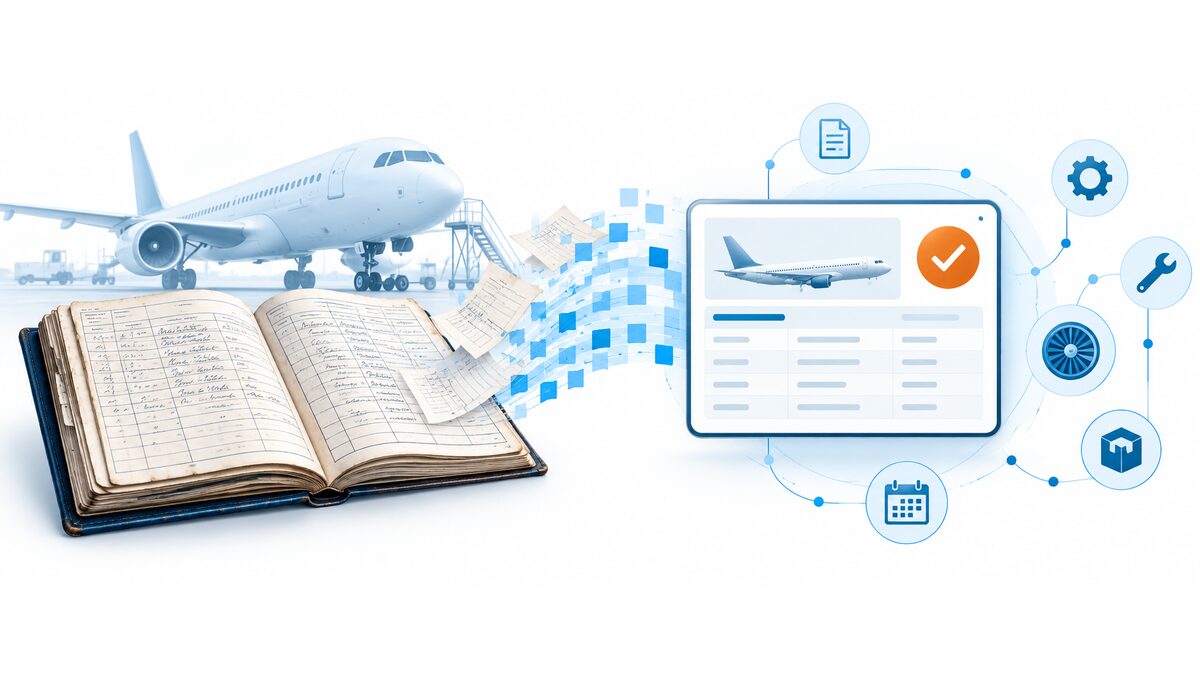
Clean, standardized records are the foundation every system depends on.
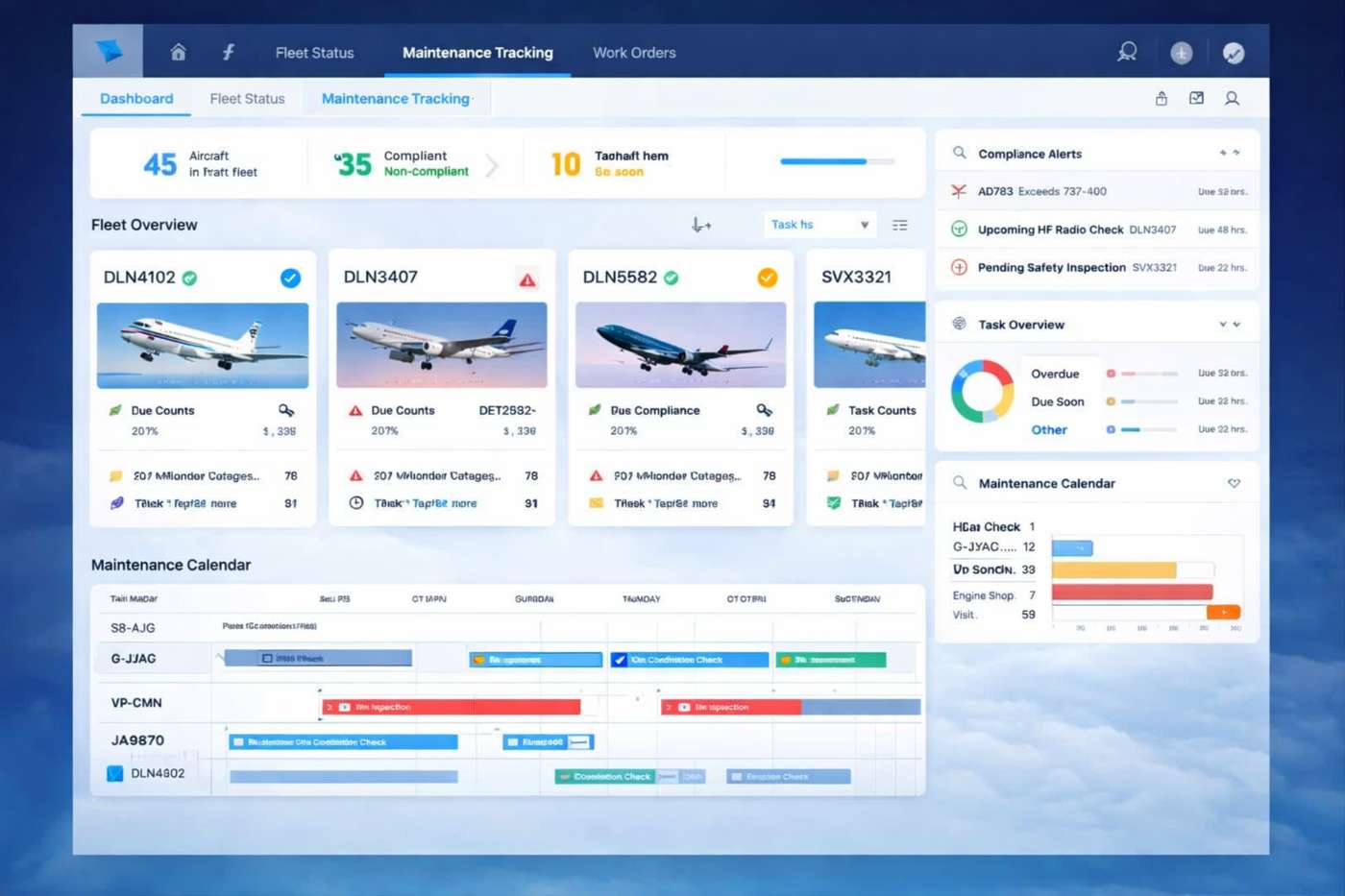
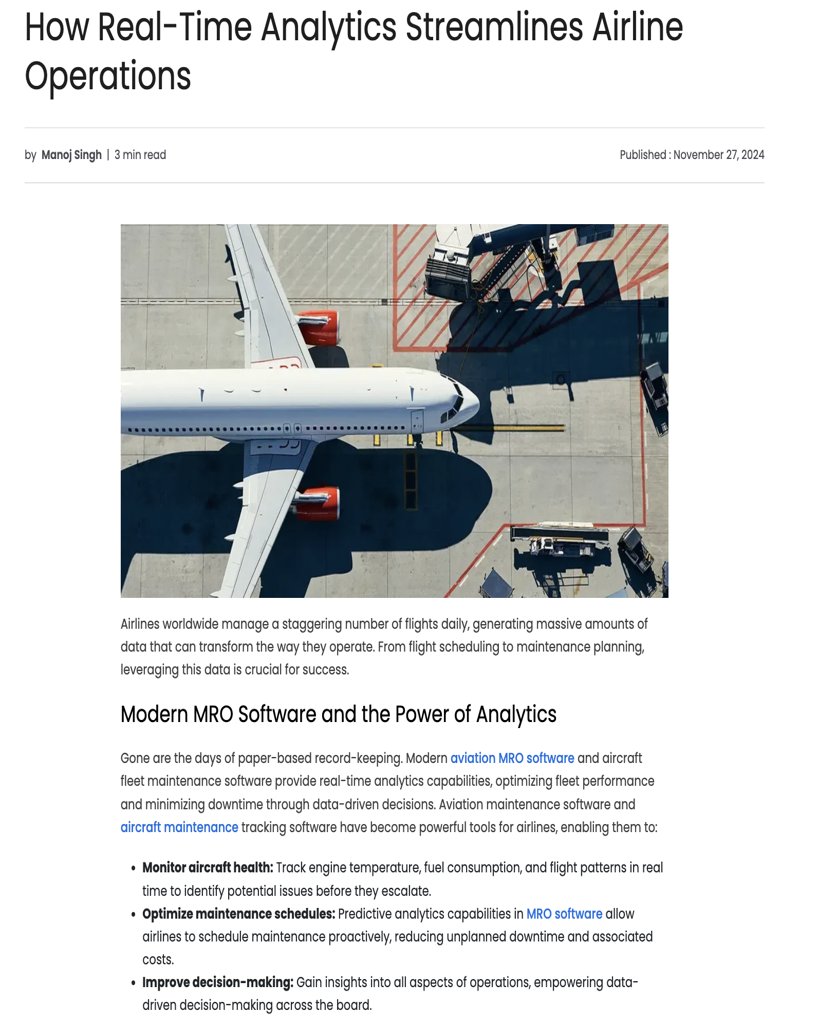
Turn maintenance, parts and finance data into live KPIs and forecasts.
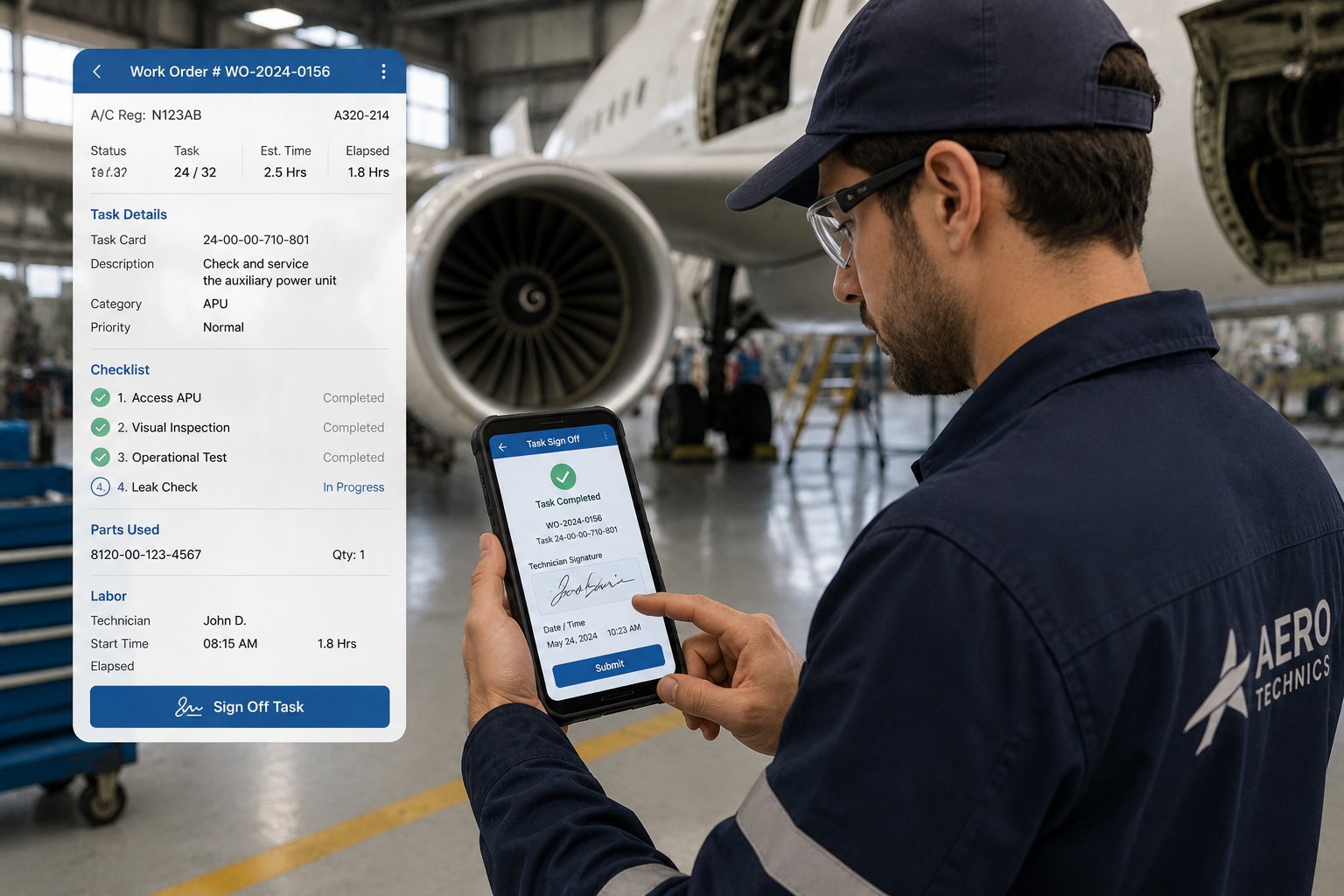
Replace paper task cards, photos and pick tickets with digital tools.
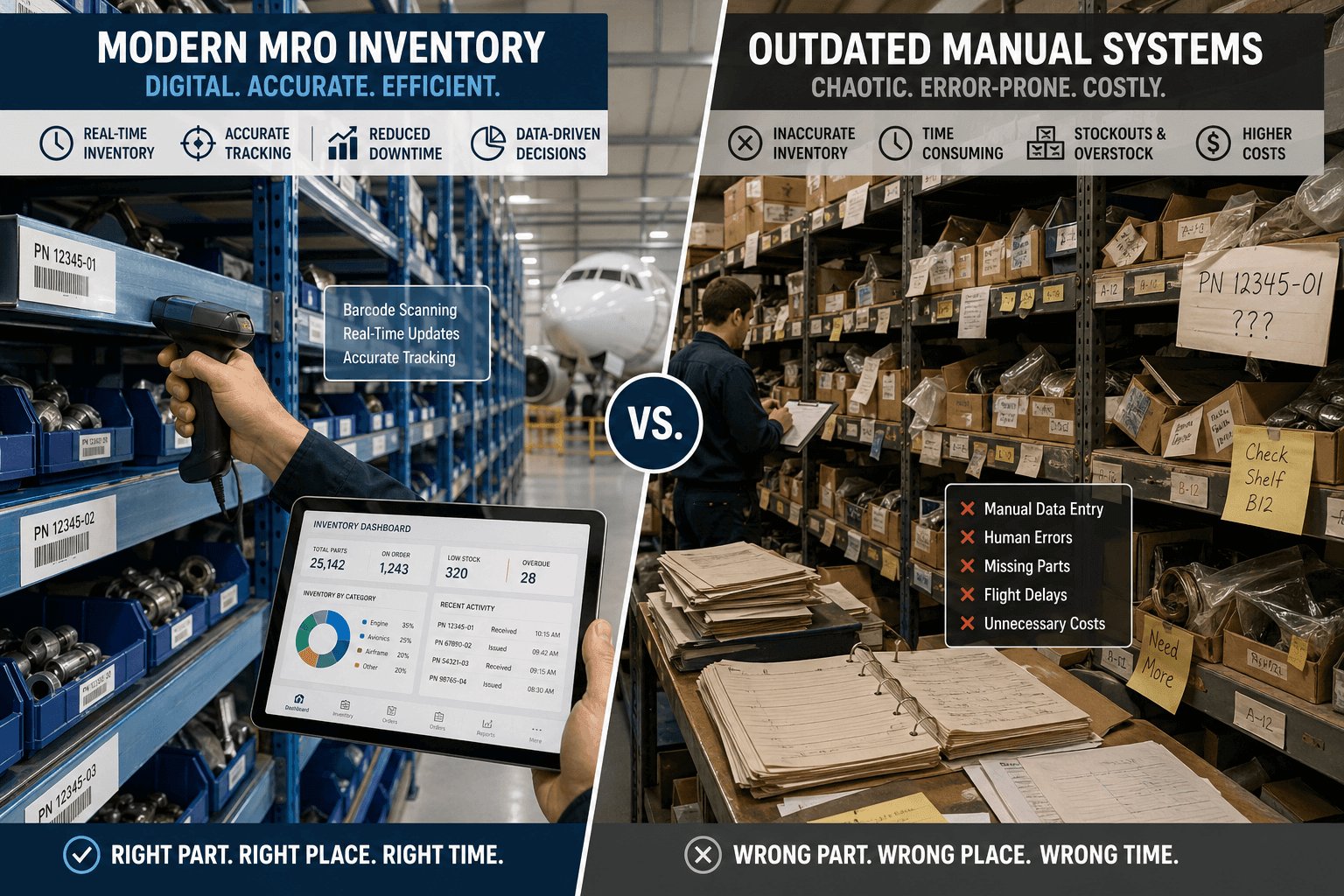
Right-size stock with forecasting and automated replenishment.



Connect your whole operation
Unify maintenance, inventory, procurement, finance and HR on a secure cloud platform built for aviation. Start with the free Solution Finder to compare 80+ aviation ERPs and find your fit.