
Home / Technologies / Parts Traceability
Aircraft parts traceability proves where every part came from, what has happened to it and whether it is fit to fly. A complete chain of custody and back-to-birth history protects airworthiness, asset value and your reputation. We help MROs, distributors, operators and lessors find traceability tools that make provenance easy to prove.
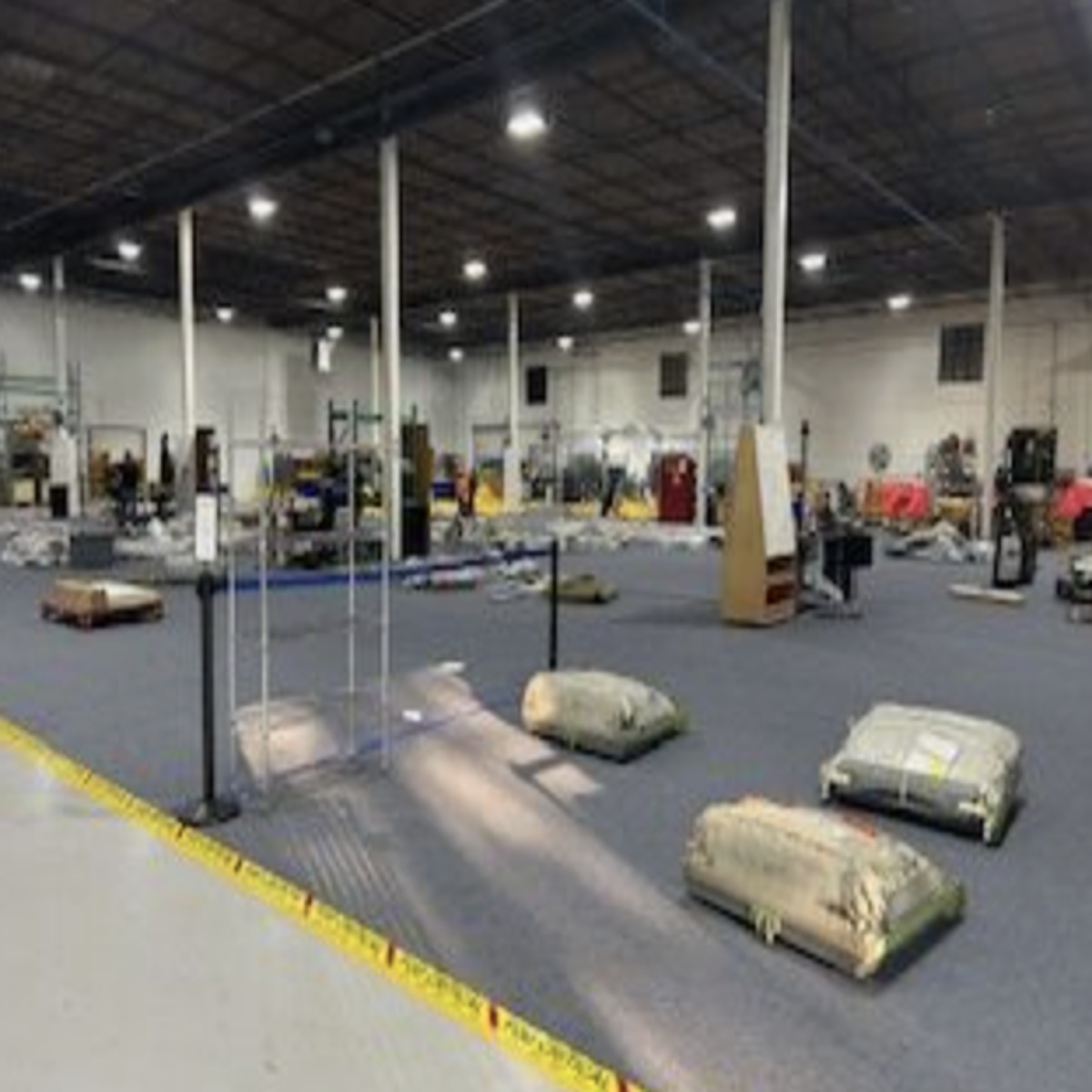
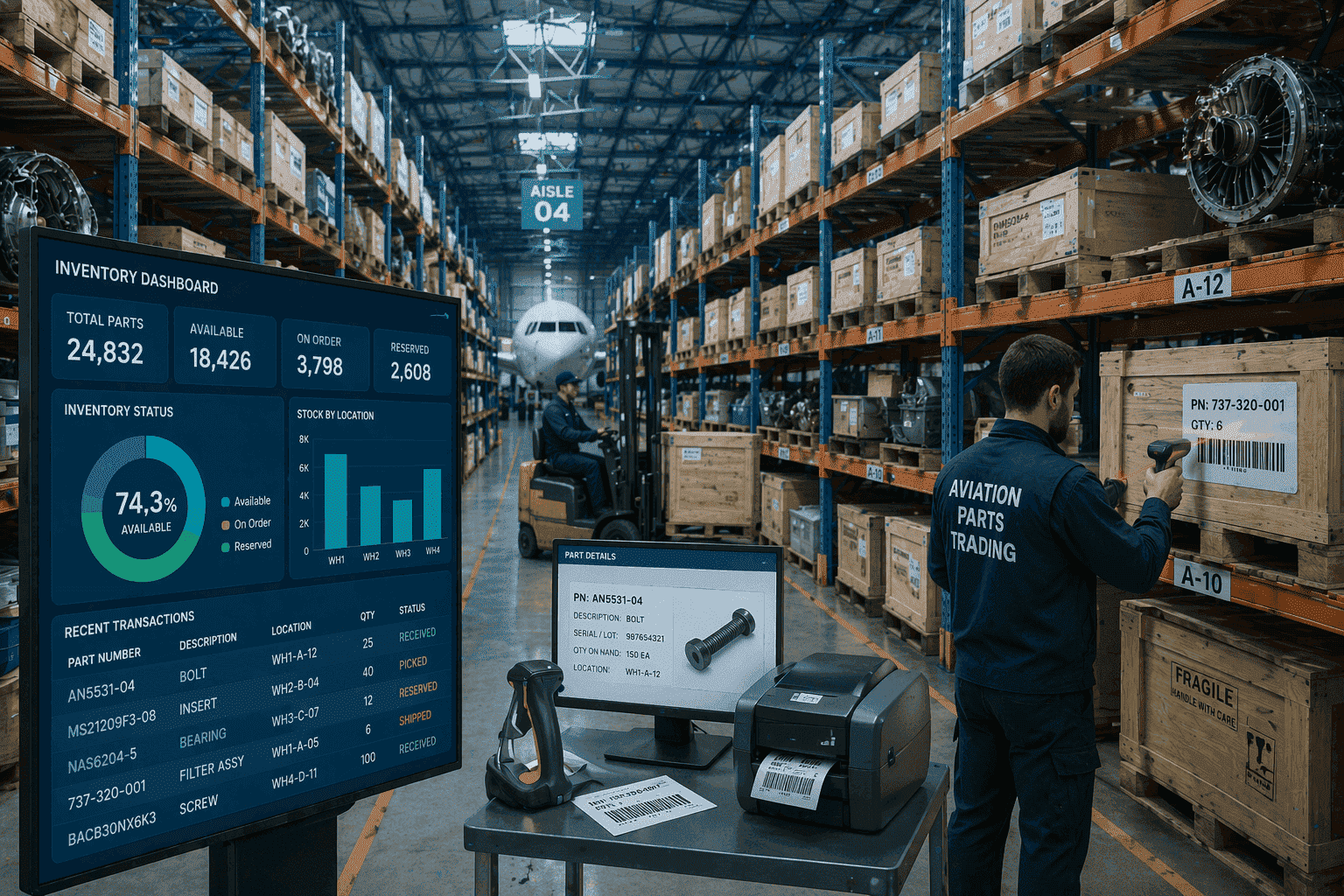
Illustrative dashboard, sample values
Aircraft parts traceability is the ability to verify a part’s identity, origin and complete history, including manufacture, ownership, repairs, installations and removals, through certificates and records. Back-to-birth traceability links a life-limited or serialized part all the way back to its original manufacture.
A part is only as airworthy as its paperwork. Release certificates, back-to-birth traces, repair histories and non-incident statements are what allow a part to be installed with confidence. Yet that paperwork often crosses many companies and systems, and gaps or falsified documents can slip through, as the 2023 discovery of parts sold with falsified certificates showed.
Traceability tools bring the evidence together and make it verifiable. Certificates are captured and linked to the serial number at receiving. Every movement, repair and installation is recorded. Back-to-birth histories are generated and checked for gaps. Some solutions add blockchain or shared databases so multiple companies can verify the same history. The result is faster, safer decisions about every part that enters your operation.
Every part, provable: certificates and history linked to the serial number from receiving onward.
These six capabilities make traceability provable, not just paperwork in a folder.
Release certificates captured at receiving and checked against the physical part.
Complete histories for life-limited parts, with gaps identified automatically.
Every owner, location, repair and installation recorded against the serial number.
Suspect or unverified parts quarantined until documents are resolved.
Shared databases or blockchain so partners can verify the same history.
Find any part's history in seconds for customers, audits and investigations.
Falsified paperwork and supply chain pressure have made provenance a board-level issue.
In 2023, investigators found parts sold with falsified paperwork by a single supplier installed in more than 100 engines worldwide, forcing inspections across many airlines. With supply chain limits holding back thousands of new aircraft, more used and repaired parts are in circulation than ever.
Regulators, customers and lessors now expect stronger proof of provenance. Traceability tools turn that expectation into a routine part of receiving, stores and maintenance.
Engines found worldwide with parts sold under falsified paperwork by a single supplier in 2023.
Aircraft held back by supply chain limits through at least 2030.
Global MRO demand in 2025, up 8% on the year before.
These are the benefits MROs, distributors and operators report most often.
“If you cannot prove where a part came from, you should not be installing it.”
The Aero NextGen advisory principle
Certificate checks and quarantine rules stop unverified parts before they are installed.
Customer and auditor questions about a part are answered in seconds, not days.
Complete histories support the value of parts and aircraft at sale or lease return.
Organized trace records satisfy regulators, accreditation bodies and customer audits.
If a supplier or batch is questioned, affected parts can be found quickly.
Verifiable provenance becomes a selling point for distributors and MROs.
Traceability matters to everyone in the parts chain. Pick your operation.
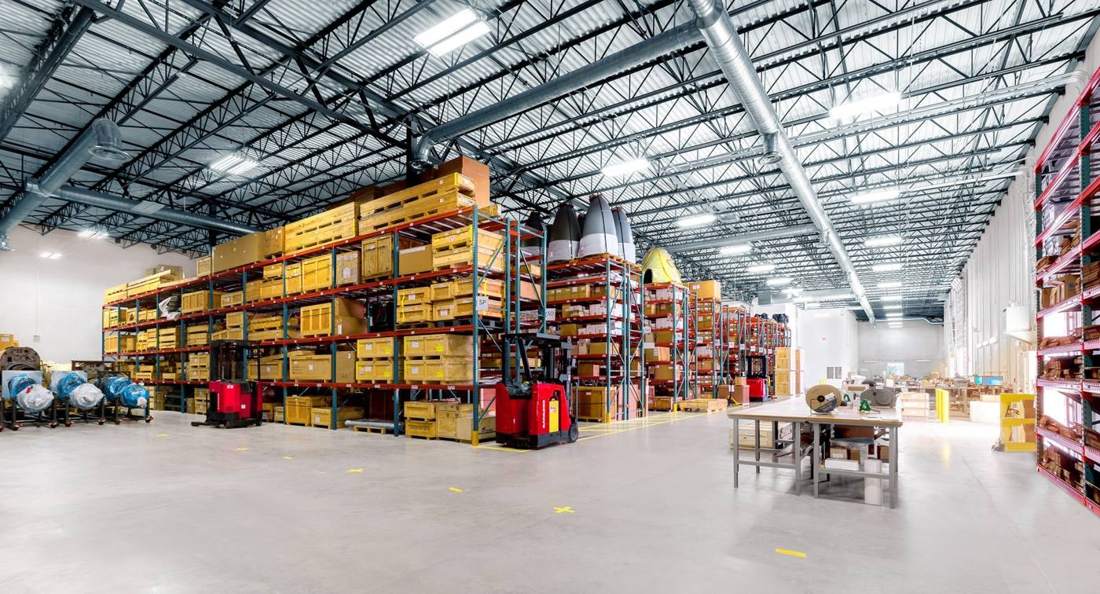
Distributors capture and verify trace documents at receiving and share them with buyers, supporting accreditation and customer confidence.

MROs verify incoming parts, record repair history and issue release certificates that carry the trace forward.

Operators track installed parts, life-limited components and removals, and need complete histories for audits and transitions.
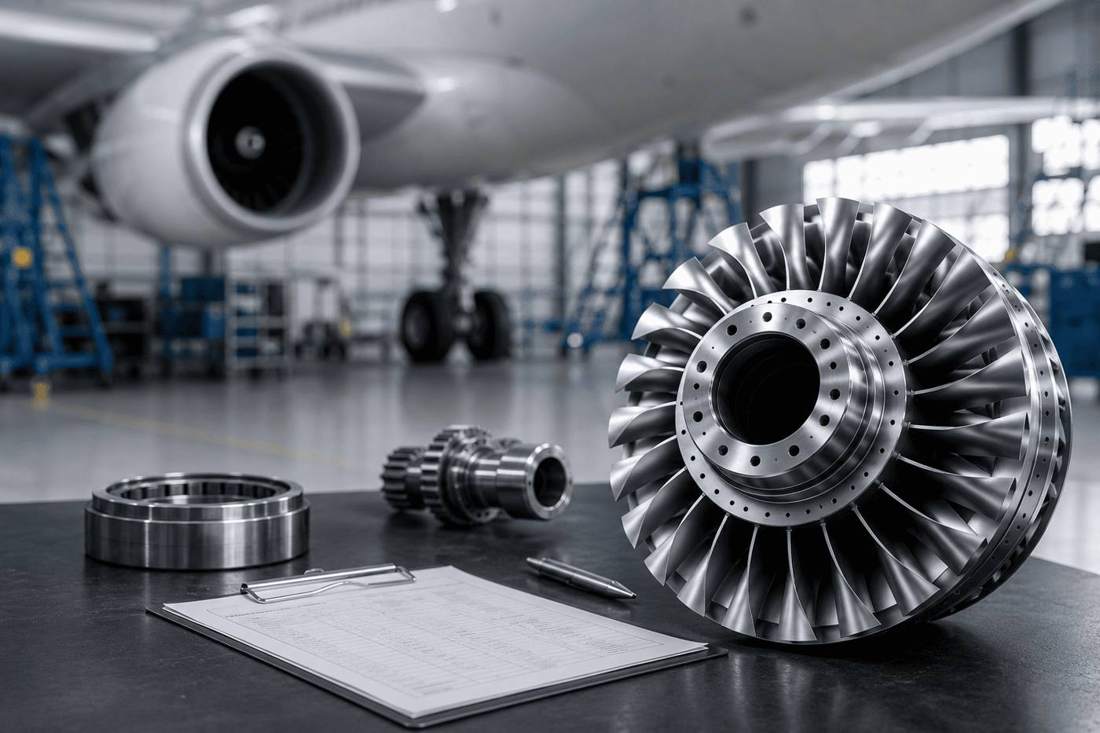
OEMs create digital identities for parts at manufacture, while lessors verify histories to protect asset value and plan part-outs.
Here is what changes when trace documents move from folders to a connected traceability system.
| Area | Paper trace files | Digital parts traceability |
|---|---|---|
| Certificate checks | ✕ Visual, inconsistent | ✓ Structured and recorded |
| Finding a history | ✕ Days of searching folders | ✓ Seconds by serial number |
| Back-to-birth | ✕ Assembled by hand | ✓ Generated and gap-checked |
| Suspect parts | ✕ Hard to locate | ✓ Found and quarantined fast |
| Sharing | ✕ Scanned and emailed | ✓ Shared and verifiable |
| Audits | ✕ Folder-by-folder review | ✓ Organized digital evidence |
The fix: structured certificate capture at receiving checks documents against the part before it is accepted.
The fix: traceability tools generate histories from recorded events and flag gaps automatically.
The fix: serial-level tracking shows where every part from a supplier or batch is, in seconds.
The fix: shareable, verifiable trace records build confidence and shorten due diligence.
Traceability pays back through time saved, risk avoided and value protected.
Use the calculator to estimate the time your team spends finding and assembling trace documents for customers, audits and sales.
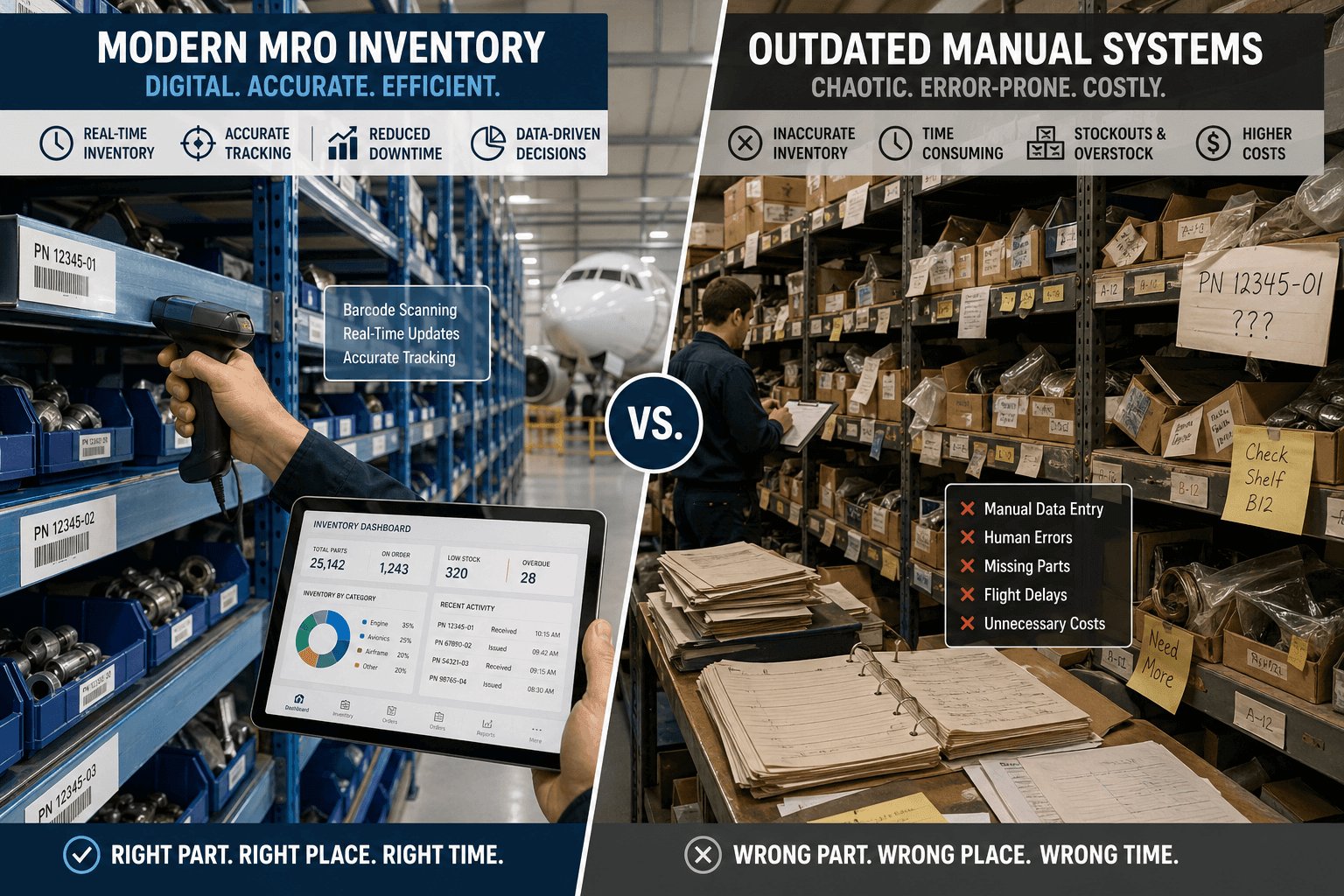
These five steps build traceability into how parts move through your business.
Define what documents each part type needs and check them at receiving.
Label and record parts by serial number, with certificates attached digitally.
Capture repairs, installations, removals and transfers against the serial.
Review life-limited parts for back-to-birth gaps and resolve them early.
Agree how trace records will be shared and verified with customers and suppliers.
Not sure which traceability approach fits your business? The Solution Finder scopes it in about three minutes and matches you with vetted vendors.
Traceability solutions range from ERP modules to shared platforms. Use these criteria to compare.
Ask whether the tool understands release certificates, back-to-birth and LLP records.
Trace data should flow with inventory and maintenance records, not live separately.
Check whether customers and suppliers can verify histories on a shared platform.
AI document reading can speed up certificate capture and gap checks.
Records must be protected from alteration, with full audit trails.
Include licenses, labeling, integration and partner onboarding.
Ask how existing trace files will be digitized and linked.
A sample of providers listed under parts traceability, shown alphabetically. A listing is not an endorsement; the Solution Finder matches you on fit.

Monica Badra
Founder and CEO, Aero NextGen
Aero NextGen was founded by Monica Badra, who has spent more than a decade inside aviation translating real business needs into the right technology. That experience shapes how we approach aircraft parts traceability: verify at the door, record every step and make provenance easy to prove.
We are vendor-neutral. We do not resell software, and our matching is based on your operation, your systems and your budget. Our perspective on digital MRO and aviation technology has been featured across the industry press.

The questions aviation leaders ask us most before they start. Have one we did not cover? The Solution Finder routes it to the right expert.
It is the ability to verify a part’s identity, origin and complete history through certificates and records, from manufacture through every owner, repair and installation.
Back-to-birth traceability links a life-limited or serialized part all the way back to its original manufacture, with no gaps in its history.
Without it, there is no proof a part is airworthy. Gaps or falsified records can ground aircraft and damage reputations.
Structured certificate checks at receiving, verification with the issuing organization and shared databases all help identify inconsistencies.
No. Many solutions use conventional databases. Blockchain helps when several companies need to verify one shared history.
RFID automates identification and movement records, reducing manual scans and errors.
Everyone in the chain: manufacturers, distributors, MROs and operators each record and pass on their part of the history.
Start with the free Solution Finder. It maps your parts and records pain points and matches you to the right traceability tools.
Tamper-proof part histories and agreements that enforce themselves.
Right-size stock with forecasting and automated replenishment.

Find every tool, part and asset on the shopfloor in seconds.
Scan, index and search aircraft records for audit-ready retrieval.
Verify certificates at the door, record every movement and share trace histories partners can trust. Start with the free Solution Finder to find the right aircraft parts traceability tools.