
Home / Technologies / Blockchain and Smart Contracts
Blockchain in Aviation and Smart Contracts
Blockchain in aviation creates a shared, tamper-proof record of parts, transactions and agreements that every party can trust. Smart contracts enforce supplier terms, warranty rules and customer commitments automatically. We help MROs, airlines, distributors and lessors find blockchain and smart contract partners focused on real traceability and contract problems.
- Vendor-neutral matching
- 600+ aviation-only providers
- Free 3-minute Solution Finder
Illustrative dashboard, sample values
What is blockchain in aviation?
Blockchain in aviation is the use of a distributed, tamper-proof ledger, shared and verified across many participants, to record parts histories, transactions and agreements. Smart contracts are programs on that ledger that execute agreed terms automatically, such as applying a supplier penalty or approving a warranty claim when conditions are met.
Aviation runs on trust in paperwork. A part is only as good as its certificates and the chain of custody behind it. That chain often crosses many companies, each with its own system, and gaps or forgeries can slip through. Contracts have the same problem: terms are agreed, but monitoring adherence is manual, so disputes, delays and excessive goodwill follow.
Blockchain gives every party the same record. Once a transaction or certificate is written to the ledger, it cannot be quietly changed, and everyone with access can verify it. Smart contracts sit on top, automating the follow-through: milestones tracked in real time, penalties applied when lead times slip and warranty claims processed under clear rules. The technology is still maturing, but the problems it targets are real and costly.
- It creates immutable, back-to-birth histories for serialized parts.
- It gives every party one shared source of truth instead of competing records.
- Smart contracts automate milestone, penalty and warranty enforcement.
- Value depends on partners joining the network, so start with willing collaborators.
On this page
One record, many parties: each transaction verified across the network and impossible to quietly change.
What blockchain and smart contracts cover in aviation
These are the use cases where blockchain is delivering value for aviation businesses today.
Back-to-birth traceability
Immutable part histories from manufacture through every repair, owner and installation.
Smart contracts
Self-executing terms for milestones, penalties, rebates and warranty rules.
Supplier performance enforcement
Real-time tracking of supplier adherence with automatic penalty or bonus enforcement.
Warranty automation
Claims tracked, approved and resolved under standardized rules, cutting goodwill and admin.
Part behavior and value
Part-unique behavior patterns and fair market value insight built from shared histories.
First-mover brand value
Trusted, verifiable records that differentiate early adopters with customers and lessors.
Why trusted records matter more than ever
Paperwork fraud and long supply chains have shown how fragile part histories can be.
In 2023, investigators found engine parts sold with falsified paperwork by a single supplier installed on engines around the world, triggering inspections across many operators. The case showed how hard it is to verify part histories that cross many companies and systems.
With the supply chain under pressure and more used and repaired parts in circulation, buyers, regulators and lessors want stronger proof. Shared, tamper-proof records are one of the most promising ways to provide it.
Engines found worldwide with parts sold under falsified paperwork by a single supplier in 2023.
Aircraft held back by supply chain limits through at least 2030.
Global MRO demand in 2025, up 8% on the year before.
Six gains blockchain and smart contracts bring to aviation
These are the benefits that matter most when blockchain is applied to real aviation problems.
“A part is only as trustworthy as the record behind it.”
The Aero NextGen advisory principle
Shared transparency
Every authorized party sees the same immutable ledger, so disputes about what happened and when become much rarer.
Less manual paperwork
Automated processes replace chasing signatures, reconciling records and checking contract terms by hand.
Accurate part histories
Back-to-birth records with no tampering or gaps give buyers and installers confidence in every part.
Security by design
Distributed verification across many nodes makes fraud and quiet edits extremely difficult.
Trust across the supply chain
One source of truth across OEMs, MROs, distributors, operators and lessors improves interoperability.
Contracts that enforce themselves
Smart contracts apply agreed terms automatically, cutting administration and arguments.
How blockchain in aviation works for your side of the industry
Each part of aviation uses shared ledgers differently. Pick your operation to see where blockchain usually helps first.

For MROs and repair stations
MROs use blockchain to monitor customer and supplier contract adherence, automate warranty claims and add verifiable repair history to every part they release.
- Customer contract adherence in real time
- Supplier penalties via smart contracts
- Warranty claim automation
- Verifiable release records

For airlines and operators
Operators use shared ledgers to verify incoming parts, share component histories with MROs and lessors and simplify records for transitions.
- Incoming part verification
- Shared component histories
- Records ready for redelivery
- Supplier performance tracking
For parts distributors and suppliers
Distributors and marketplaces use blockchain to prove provenance, reduce trace document fraud and give buyers confidence in used serviceable material.
- Provenance for used serviceable material
- Fraud-resistant trace documents
- Marketplace trust signals
- Faster buyer due diligence

For OEMs and lessors
OEMs create digital identities for parts from manufacture, while lessors use shared records to protect asset value and simplify transitions between operators.
- Digital part identity from manufacture
- Asset records across operators
- Fair market value insight
- Smoother lease transitions
Paper records versus blockchain and smart contracts
Most part histories and contract terms still live in documents and individual systems. Here is what changes with a shared ledger.
| Area | Paper and siloed systems | Blockchain and smart contracts |
|---|---|---|
| Part history | ✕ Scattered across companies | ✓ One shared, immutable trail |
| Certificates | ✕ Can be forged or lost | ✓ Verifiable by every party |
| Contract terms | ✕ Monitored manually | ✓ Enforced automatically |
| Supplier penalties | ✕ Rarely applied | ✓ Applied by rule |
| Warranty claims | ✕ Slow, admin heavy | ✓ Tracked and resolved by rule |
| Disputes | ✕ Frequent, hard to settle | ✓ Rare, records agree |
"We cannot monitor customer contract adherence."
The fix: track and report adherence in real time on blockchain, with automated milestone alerts and shopfloor countdowns before units run late on contract.
"Supplier performance is hard to enforce."
The fix: a supplier relationship system tracks performance and contract terms and enforces penalties automatically through smart contracts.
"Warranty takes forever and costs goodwill."
The fix: a warranty module automates tracking, approval and resolution under standard policies, with predictive data to flag likely failures early.
"We cannot fully trust incoming paperwork."
The fix: shared, tamper-proof part records let you verify provenance before a part is accepted or installed.
What blockchain in aviation is worth
The return comes from disputes avoided, goodwill reduced and trust that wins business.
- Less goodwill paid on unclear warranty claims
- Supplier penalties actually recovered
- Faster due diligence on parts and assets
- Lower risk of accepting bad paperwork
Warranty and goodwill are often the easiest costs to quantify. Use the calculator to estimate what clearer, automated warranty handling could be worth.
How to get started with blockchain in aviation
Blockchain works when it targets a specific problem with partners willing to share. These five stages keep it practical.
Pick a concrete problem
Choose one: part provenance, supplier contract adherence or warranty. Avoid "blockchain for everything".
Bring partners in early
Shared ledgers need participants. Start with suppliers or customers who want the same outcome.
Clean the source data
A ledger preserves whatever you write to it, so clean the records first.
Pilot one smart contract
Automate one set of terms, such as late-delivery penalties, and measure the effect.
Scale the network
Add more parts, partners and contract types as trust and value grow.
Not sure if blockchain fits your problem? The Solution Finder scopes it in about three minutes and matches you with vetted vendors.
How to choose a blockchain partner for aviation
The technology matters less than the network and the problem. Use these criteria to separate real aviation solutions from hype.
Aviation use case
Ask for live aviation deployments in traceability, records or contracts, not proofs of concept only.
Network participants
A ledger is only useful if your partners are on it. Ask who already participates.
Integration with your systems
Records should flow from your ERP and quality systems without double entry.
Regulatory acceptance
Ask how records are recognized by regulators and auditors.
Data privacy
Commercial terms must stay private while shared records remain verifiable.
Total cost
Include platform fees, integration and partner onboarding.
Partner onboarding
The vendor should help bring suppliers and customers onto the network.
Blockchain and traceability providers in the Aero NextGen network
A sample of providers listed under smart contracts, back-to-birth trace and parts traceability, shown alphabetically. A listing is not an endorsement; the Solution Finder matches you on fit.






Monica Badra
Founder and CEO, Aero NextGen
Guidance from people who have run aviation operations
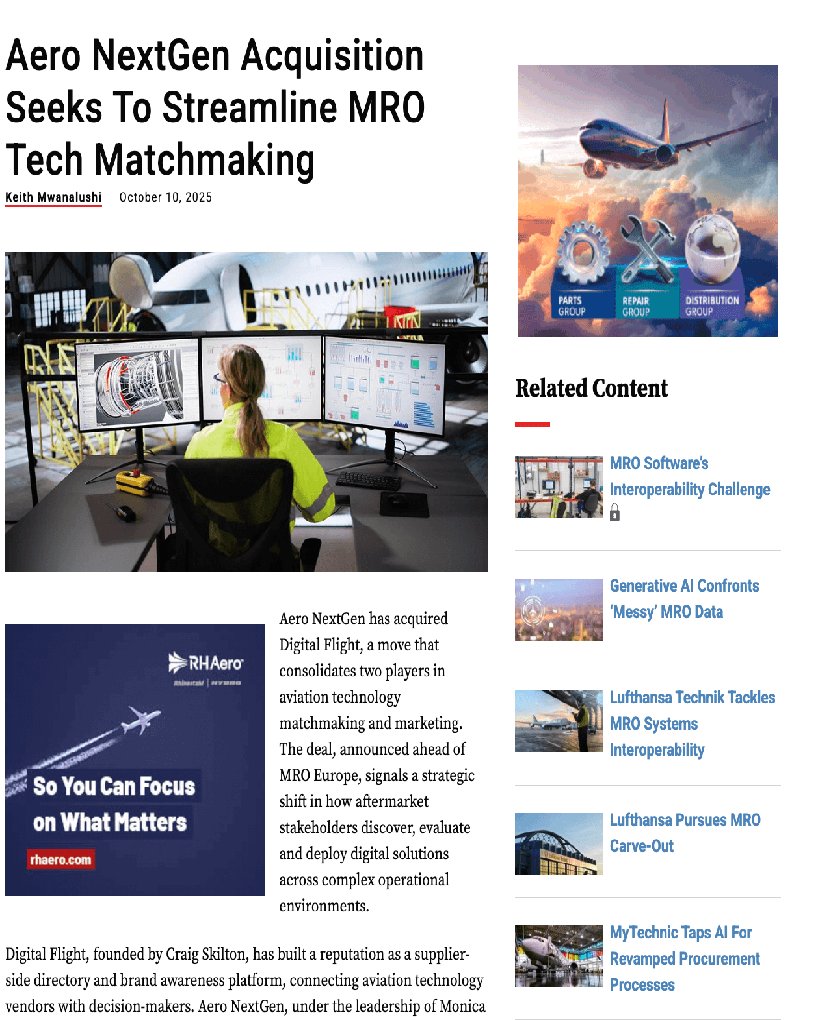
Aero NextGen was founded by Monica Badra, who has spent more than a decade inside aviation translating real business needs into the right technology. That experience shapes how we approach blockchain in aviation: start with a real trust problem and the partners who share it, not with the technology.
We are vendor-neutral. We do not resell software, and our matching is based on your operation, your systems and your budget. Our perspective on digital MRO and aviation technology has been featured across the industry press.
Blockchain in aviation FAQs
The questions aviation leaders ask us most before they start. Have one we did not cover? The Solution Finder routes it to the right expert.
What are blockchain and smart contracts in aviation MRO?
Blockchain is a distributed, tamper-proof ledger of transactions verified across nodes. Smart contracts are self-executing agreements that enforce their terms automatically. Together they give MROs traceability, security and automated enforcement.
How do smart contracts help MROs?
They automate processes like supplier penalty enforcement, warranty claims and contract milestones, reducing disputes, paperwork and administrative delays.
What problems does blockchain solve for MROs?
It enables monitoring of customer and supplier contract adherence, immutable back-to-birth part records and streamlined warranty management, cutting disputes, lead times and excessive goodwill.
Is blockchain the same as cryptocurrency?
No. Cryptocurrencies are one application. Aviation uses permissioned ledgers focused on records and contracts, not currency.
Do regulators accept blockchain records?
Acceptance is evolving. Most programs use blockchain to strengthen and verify existing required records rather than replace them.
Do all our partners need to join?
The more that join, the more value you get, but pilots often start with a few key suppliers or customers.
How does this relate to parts traceability?
Blockchain is one way to deliver parts traceability, by making each step in a part’s history verifiable and tamper-proof.
How do I get started with blockchain for my MRO?
Start with the free Solution Finder. It maps your contract, supplier and warranty pain points and matches you to the right blockchain and smart contract solutions.
Technologies that work hand in hand with blockchain
Back-to-birth chain of custody for every serialized part.
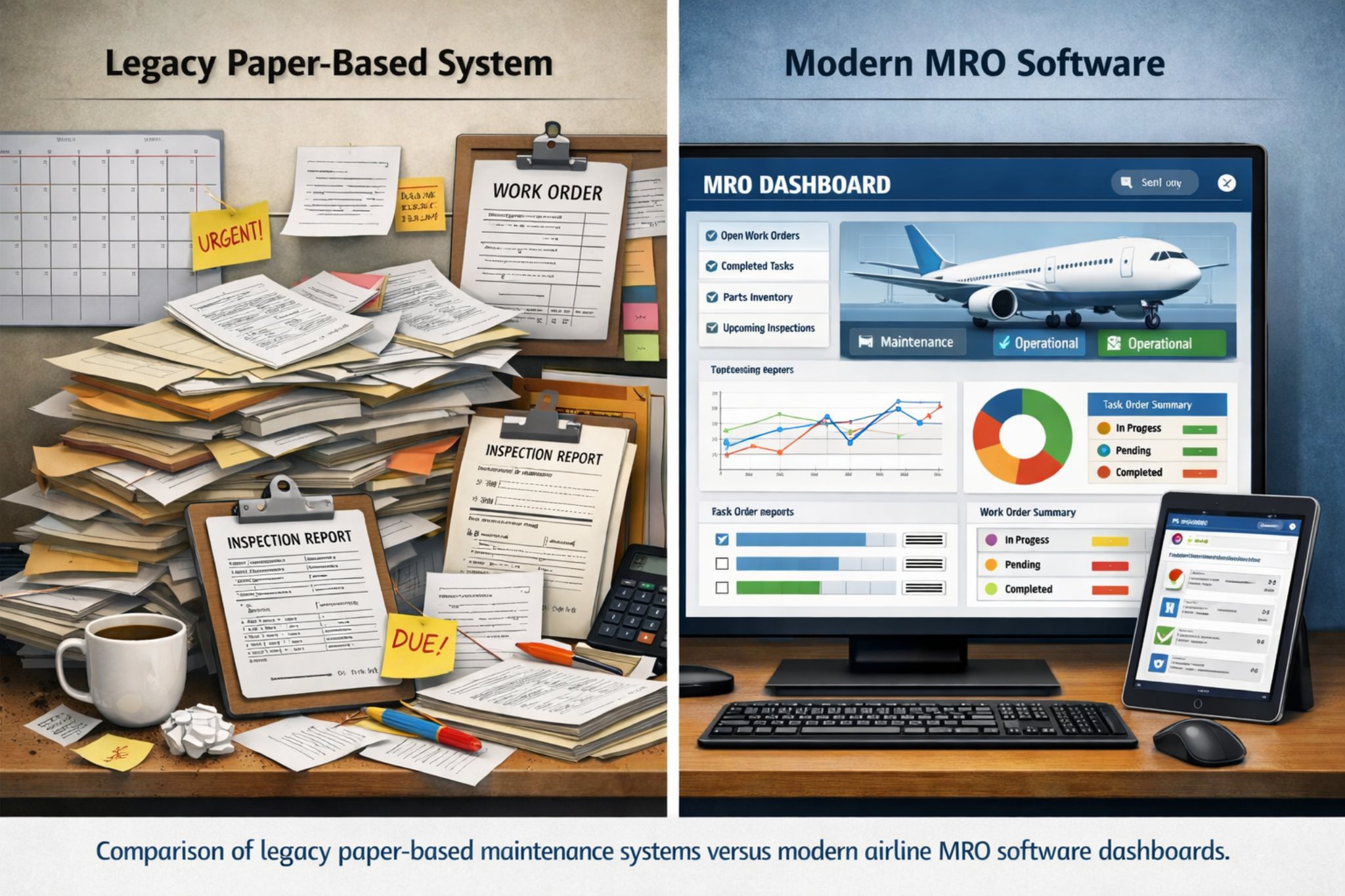
Scan, index and search aircraft records for audit-ready retrieval.

Standardize quality, CAPA and audits across every station.

Reward faster approvals, loyal customers and top technicians.



Build records every party can trust
Create tamper-proof part histories and contracts that enforce themselves across your supply chain. Start with the free Solution Finder to scope the right blockchain and smart contract solution.