
Home / Technologies / Electronic Techlog
An electronic techlog replaces the paper aircraft technical log with digital defect, sector, servicing and release records that reach maintenance control the moment they are entered. No more illegible entries, transcription backlogs or surprises when the aircraft lands. We help airlines, charter operators and CAMOs find ETL solutions approved for their operation.

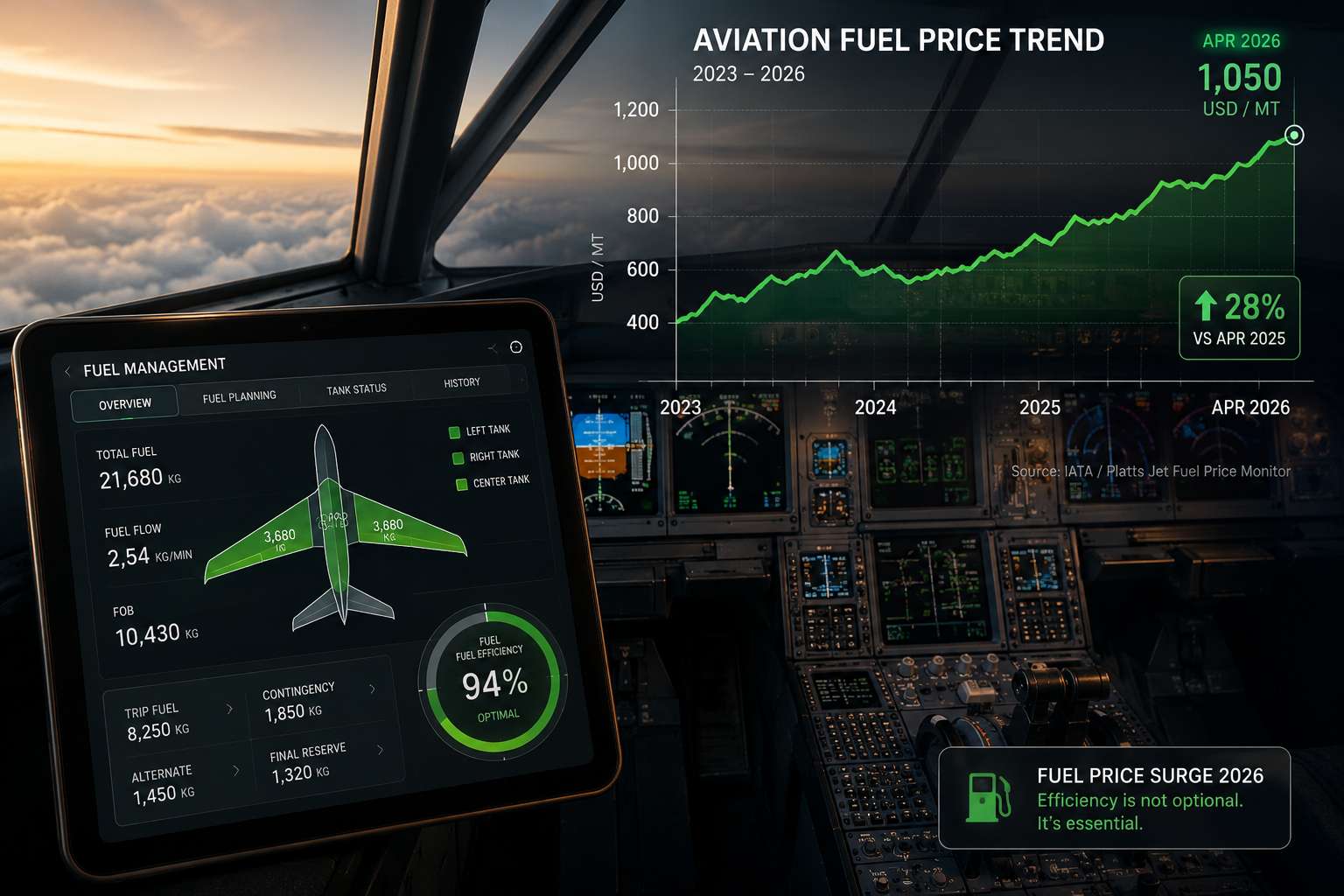
Illustrative dashboard, sample values
An electronic techlog (ETL), also called an electronic logbook or ELB, is an approved digital replacement for the paper aircraft technical log. Crews and engineers record sectors, defects, deferrals, servicing and certificates of release to service on tablets, and the data flows in real time to maintenance control and the maintenance tracking system.
The paper techlog is one of aviation’s most important documents and one of its least efficient. Entries are handwritten in the cockpit or on the ramp, often in poor conditions. Pages are carried, photographed or faxed and then retyped into the maintenance system, sometimes days later. Illegible entries, missing data and transcription errors are common, and maintenance control often learns about a defect only when the aircraft lands.
An electronic techlog changes the flow. Pilots record defects with structured fields as soon as they are noticed. Maintenance control sees them in real time and can stage parts and engineers at the destination. Engineers record rectification and releases digitally with secure signatures. Deferrals and MEL items are tracked automatically, and the maintenance tracking system is always up to date.
Defect raised in the cockpit, seen in maintenance control in minutes: no paper, no retyping.
These six capabilities replace the paper technical log end to end.
Flight times, fuel, oil and sector data captured once and shared automatically.
Structured defect entries with ATA chapters, photos and real-time alerts.
Deferred defects tracked against MEL limits with automatic reminders.
Secure electronic signatures for rectification and certificates of release.
Daily checks, servicing and replenishments recorded with the right authorizations.
Data flows straight into your maintenance tracking or MRO system.
Busier, older fleets make every minute of defect visibility count.
Aircraft are flying more hours and the average fleet is older, which means more defects to manage and less slack to absorb delays. Knowing about a defect while the aircraft is still airborne gives maintenance control time to stage parts and people.
Electronic techlogs also remove a major administrative burden. Transcription teams can be redeployed, records are complete immediately and audits and lease returns benefit from clean, digital history.
Average age of the global fleet in 2025, about a year and a half older than in 2024.
Commercial aircraft in service in early 2026, with roughly 41,000 forecast by 2036.
Share of certified US aviation mechanics who are over 60.
These are the benefits operators report most often after replacing paper techlogs.

“The sooner maintenance knows, the shorter the delay.”
The Aero NextGen advisory principle
Maintenance control knows about defects as soon as they are entered, often before the aircraft lands.
Structured fields and validation eliminate illegible entries and missing data.
Data flows straight to the maintenance system, removing manual retyping entirely.
Parts and engineers can be staged in advance, reducing time on the ground for defects.
Deferral limits, authorizations and signatures are enforced automatically.
Complete digital history supports audits, lease returns and aircraft sales.
ETL needs vary with operation type. Pick yours to see what usually matters most.

Airlines use ETL across large fleets and many stations, integrated with maintenance control, EFB and the maintenance tracking system.

Charter operators and flight departments use cloud ETL apps that are simple for crews and keep owners and CAMOs informed.

Line maintenance providers record rectifications and releases digitally for many customer operators, with each operator’s rules applied.

CAMOs use ETL data to keep airworthiness status current, manage deferrals and plan maintenance with accurate utilization.
Here is what changes when the aircraft technical log goes digital.
| Area | Paper techlog | Electronic techlog |
|---|---|---|
| Defect visibility | ✕ When the aircraft lands | ✓ As soon as it is entered |
| Legibility | ✕ Handwriting in poor conditions | ✓ Structured digital fields |
| Data entry | ✕ Retyped by a transcription team | ✓ Flows to the M&E system |
| Deferrals | ✕ Tracked manually | ✓ Limits enforced automatically |
| Signatures | ✕ Wet ink on paper | ✓ Secure electronic signatures |
| Records | ✕ Pages filed and scanned | ✓ Complete digital history |
The fix: real-time defect reporting lets maintenance control stage parts and engineers before the aircraft arrives.
The fix: structured digital fields with validation make every entry legible and complete.
The fix: data flows directly into the maintenance system, freeing transcription staff for higher-value work.
The fix: automatic MEL and deferral tracking alerts teams before limits are reached.
ETL pays back through transcription saved and technical delays reduced.
Transcription is the easiest saving to estimate. Use the calculator, then add the value of shorter technical delays.
ETL projects involve approval, devices and integration. These five steps keep them on track.
Agree the approval path, evaluation and any parallel paper period.
Make sure the ETL connects to your maintenance tracking or MRO system.
Decide whether ETL runs on EFB devices or dedicated tablets, and how they are managed.
Train everyone who will raise defects, sign releases or review entries.
Start with a sub-fleet, compare with paper, then roll out fleet-wide.
Not sure which ETL fits your fleet and authority? The Solution Finder scopes it in about three minutes and matches you with vetted vendors.
ETL solutions differ in approval track record, integrations and ease of use. Use these criteria to compare.
Ask which authorities have approved the ETL with operators like you.
Check proven integration with your maintenance tracking or MRO system.
Defect entry must be quick and clear in the cockpit and on the ramp.
The ETL must work without connectivity and sync reliably afterwards.
Look for strong authentication and authorization checks for releases.
Include licenses, devices, integration and approval support.
Ask how the vendor supports approval, training and parallel running.
A sample of providers listed under electronic techlog, shown alphabetically. A listing is not an endorsement; the Solution Finder matches you on fit.

Monica Badra
Founder and CEO, Aero NextGen
Aero NextGen was founded by Monica Badra, who has spent more than a decade inside aviation translating real business needs into the right technology. That experience shapes how we approach the electronic techlog: get defect information to maintenance the moment it exists, and the rest of the operation benefits.
We are vendor-neutral. We do not resell software, and our matching is based on your operation, your systems and your budget. Our perspective on digital MRO and aviation technology has been featured across the industry press.
The questions aviation leaders ask us most before they start. Have one we did not cover? The Solution Finder routes it to the right expert.

It is an approved digital replacement for the paper aircraft technical log, recording sectors, defects, deferrals, servicing and releases on tablets, with data shared in real time.
Yes, the terms are often used interchangeably. Some vendors use ELB or eLog for the same concept.
Yes. Operators need authority approval, which usually involves evaluation, procedures and sometimes a parallel paper period.
Often yes. Many operators run ETL and EFB apps on the same device.
Through secure authentication tied to each engineer’s authorizations, creating a verifiable digital signature.
Good ETLs work offline and sync when connectivity returns, with safeguards against data conflicts.
It creates complete digital records from day one. Older paper records can be handled through records digitization.
Start with the free Solution Finder. It maps your fleet and maintenance setup and matches you to the right ETL.
Current charts, manuals and performance data in every cockpit.
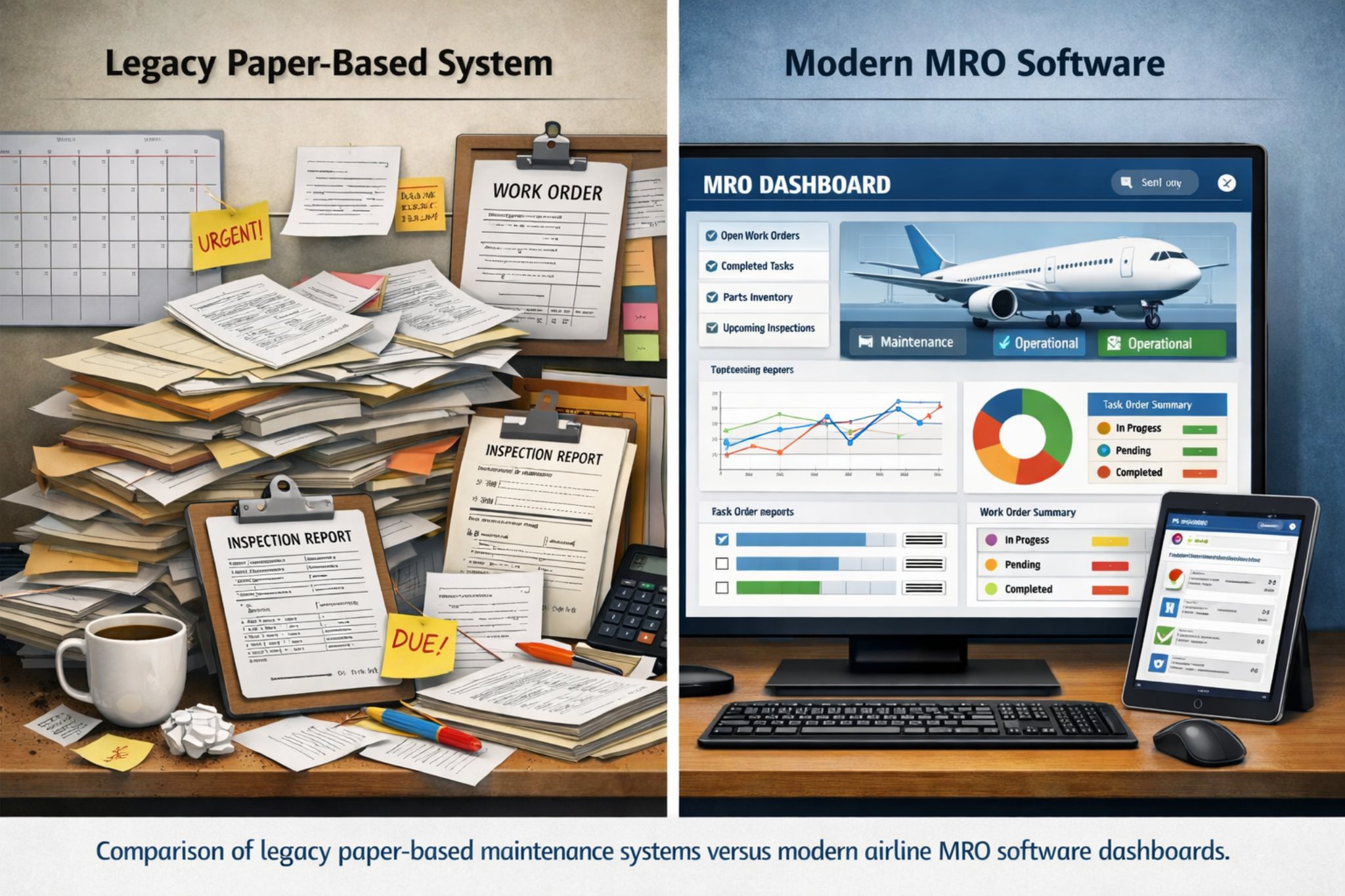
Scan, index and search aircraft records for audit-ready retrieval.
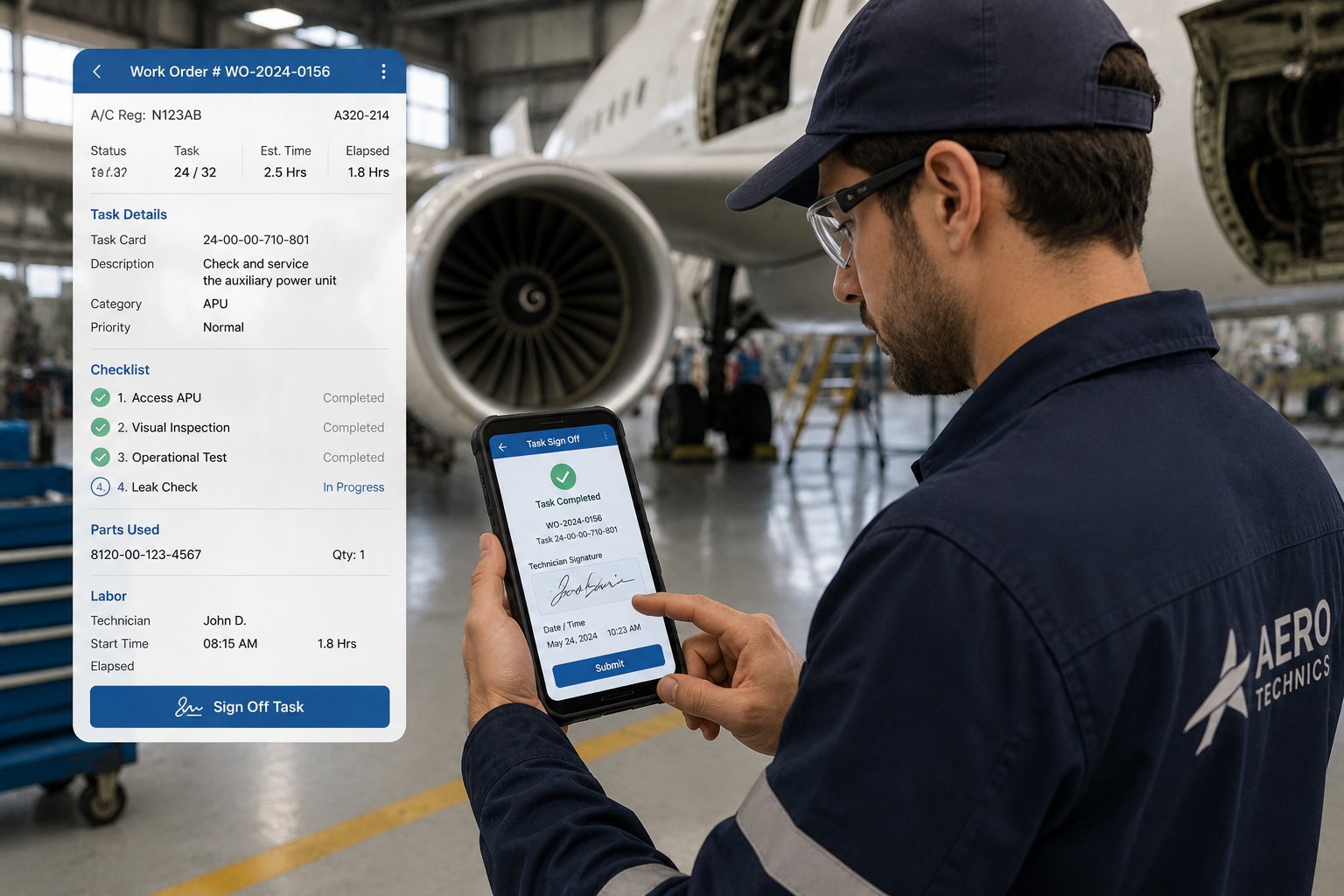
Replace paper task cards, photos and pick tickets with digital tools.

Plan, dispatch and monitor every flight from one connected platform.
Record defects, deferrals and releases digitally and give maintenance control real-time visibility. Start with the free Solution Finder to find the right electronic techlog.