
Home / Technologies / Flight Operations
Flight operations software brings scheduling, dispatch, flight following, crew and maintenance status into one live picture, so the operations control center can see problems early and recover fast. We help airlines, charter operators and business aviation flight departments find flight ops platforms that fit their size, fleet and regulatory regime.

Illustrative dashboard, sample values
Flight operations software is the set of tools airlines and operators use to plan, schedule, dispatch, monitor and recover flights. It typically covers schedule and fleet assignment, dispatch and flight following, crew status, maintenance and MEL items, communication with stations and disruption management, all connected in an operations control view.
An airline’s operations control center juggles weather, slots, crew legality, aircraft status and passenger connections, often across several systems that do not talk to each other. When something goes wrong, controllers piece together the picture from screens, phone calls and spreadsheets, and recovery decisions are made under pressure with partial information.
Modern flight operations software connects those pieces. The schedule, aircraft status, crew legality and maintenance items sit in one view. Alerts flag problems as they develop. Recovery tools propose tail swaps, crew changes and delays that minimize knock-on effects. For charter and business aviation, the same platforms handle quoting, trip planning and owner communication in one place.
One control picture: schedule, aircraft, crew and maintenance status in a single operations view.
These six capabilities make up a connected flight operations platform.
Build and adjust the flying program and assign aircraft by type, availability and maintenance needs.
Release flights, track progress and keep operational control records in one place.
See crew assignments, duty limits and qualifications against the plan in real time.
Aircraft status, deferred defects and planned checks visible to operations control.
Tools that propose tail swaps, crew changes and delays to recover the schedule.
For charter operators: quoting, trip planning, handling, permits and owner updates.
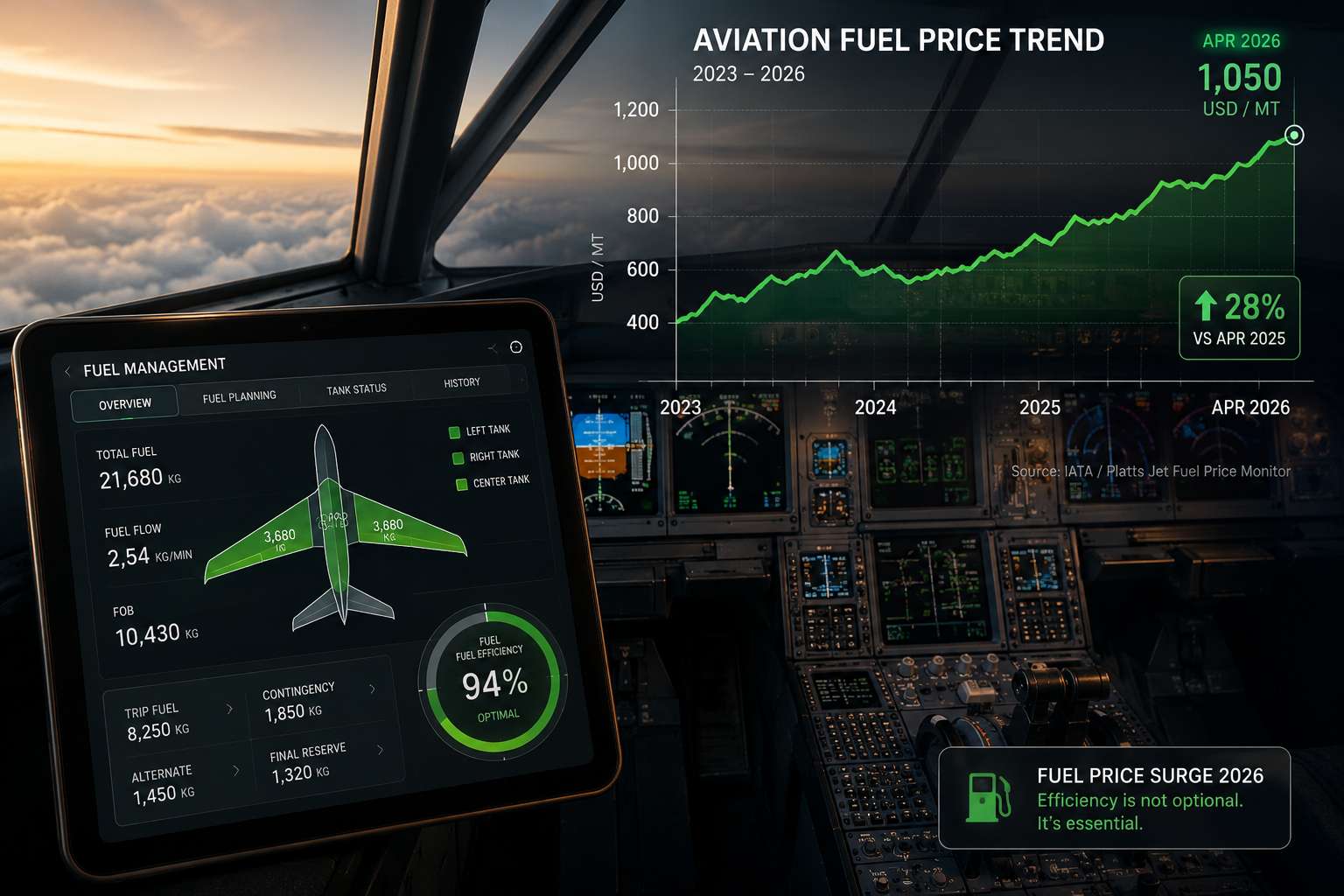
Fuel shocks, tight fleets and crew shortages leave very little slack in today’s schedules.
Airlines are facing a sharp rise in fuel costs in 2026 while fleets are older and new aircraft deliveries are held back. Every disruption is more expensive, and every recovery decision has to protect fuel, crew hours and aircraft availability at the same time.
Flight operations software gives controllers the information and tools to make those decisions quickly and well, instead of reconstructing the picture from many systems while the delay grows.
Forecast airline fuel bill for 2026, up nearly 40% on 2025.
Fuel share of airline operating costs forecast for 2026, up from 25.4%.
New commercial pilots needed worldwide through 2044.
These are the improvements operations teams report most once their tools are connected.
“In operations control, the first good decision is worth more than the perfect one ten minutes later.”
The Aero NextGen advisory principle
Controllers see schedule, aircraft, crew and maintenance status together, without switching between systems.
Alerts for weather, crew legality and aircraft status give time to act before a delay becomes a cancellation.
Recovery tools evaluate options in seconds and show their effect on crew, aircraft and passengers.
Fewer surprises and faster recovery protect punctuality, which customers and regulators measure closely.
Smarter recovery and planning reduce wasted fuel, overtime, hotel costs and compensation.
Dispatch releases, decisions and communications are recorded automatically for compliance and review.
Scheduled airlines, charter operators and flight departments need different things. Pick your type of operation.

Airlines need an operations control platform that connects the schedule with aircraft, crew and maintenance and supports disruption recovery at scale.

Charter operators and flight departments need quoting, trip planning, crew and aircraft availability, handling and owner communication in one system.

Maintenance control needs aircraft status, deferred items and planned checks shared with operations, so the schedule reflects what aircraft can actually fly.

ACMI and wet-lease providers coordinate aircraft, crew and maintenance across many customers and bases, with clear records of every flight.
Many operations still run on separate systems, phone calls and whiteboards. Here is what changes with a connected platform.
| Area | Disconnected tools | Connected flight ops software |
|---|---|---|
| Operational picture | ✕ Pieced together from screens and calls | ✓ One live view |
| Crew legality | ✕ Checked by hand during disruption | ✓ Checked automatically |
| Aircraft status | ✕ Phoned through from maintenance | ✓ Shared in real time |
| Recovery | ✕ Experience and guesswork | ✓ Options evaluated in seconds |
| Records | ✕ Scattered logs and emails | ✓ Recorded automatically |
| Charter quoting | ✕ Spreadsheets and email | ✓ Integrated with availability |
The fix: recovery tools that see crew, aircraft and passengers together propose the options with the least knock-on effect.
The fix: integrated crew status checks duty limits and qualifications against every change in real time.
The fix: maintenance status and deferred items shared from the tracking system keep the schedule realistic.
The fix: a charter platform connects quoting, availability, trip planning and owner updates in one system.
Connected operations pay back through fewer and shorter disruptions.
Delay minutes carry a real cost in crew, fuel, passenger care and lost revenue. Use the calculator to see what reducing them by even a small share could be worth.

Start with the decisions your controllers struggle with most, then connect the data behind them.
Document how schedules, dispatch, crew and maintenance decisions are made today and where they break.
Identify crew, maintenance, flight planning and passenger systems the platform must integrate with.
Compare platforms built for your operation type: scheduled, charter or flight department.
Pilot the new platform alongside current tools through real disruptions before cutting over.
Track on-time performance, recovery time and cost, and refine rules and alerts.
Not sure which flight ops platform fits your operation? The Solution Finder scopes it in about three minutes and matches you with vetted vendors.
The right platform depends on your operation type and the systems around it. Use these criteria to compare.
Scheduled airline, charter or flight department tools differ a lot. Match the vendor to your model.
Check proven links to crew, maintenance, flight planning and passenger systems.
Confirm support for your authority's operational control and record keeping requirements.
Ask to see disruption recovery on a realistic scenario, not just normal days.
Duty managers and station staff need access away from the control center.
Include licenses, integration and training across operations staff.
Operations cannot stop for a cutover. Ask how the vendor supports parallel running.
A sample of providers listed under flight operations, shown alphabetically. A listing is not an endorsement; the Solution Finder matches you on fit.

Monica Badra
Founder and CEO, Aero NextGen
Aero NextGen was founded by Monica Badra, who has spent more than a decade inside aviation translating real business needs into the right technology. That experience shapes how we approach flight operations software: give controllers one honest picture of the operation, and better decisions follow.
We are vendor-neutral. We do not resell software, and our matching is based on your operation, your systems and your budget. Our perspective on digital MRO and aviation technology has been featured across the industry press.

The questions aviation leaders ask us most before they start. Have one we did not cover? The Solution Finder routes it to the right expert.
It is the set of tools used to plan, schedule, dispatch, monitor and recover flights, connecting schedule, aircraft, crew and maintenance status in one operations view.
It is the platform an airline’s operations control uses to monitor the day’s flying and manage disruptions, usually combining schedule, aircraft and crew status with recovery tools.
It alerts controllers early and evaluates recovery options, such as tail swaps, crew changes and delays, showing their knock-on effects before a decision is made.
Yes. Charter platforms add quoting, trip planning, handling and owner communication, while airline platforms focus on network scheduling and recovery.
Some platforms do; others integrate with dedicated crew management systems. Integration matters more than which module holds it.
Through the maintenance tracking system and electronic techlog, so aircraft status and deferred items are visible to operations.
Charter and smaller operators can go live in weeks. Airline operations control systems typically take months with parallel running.
Start with the free Solution Finder. It maps your operation and pain points and matches you to the right flight operations platform.
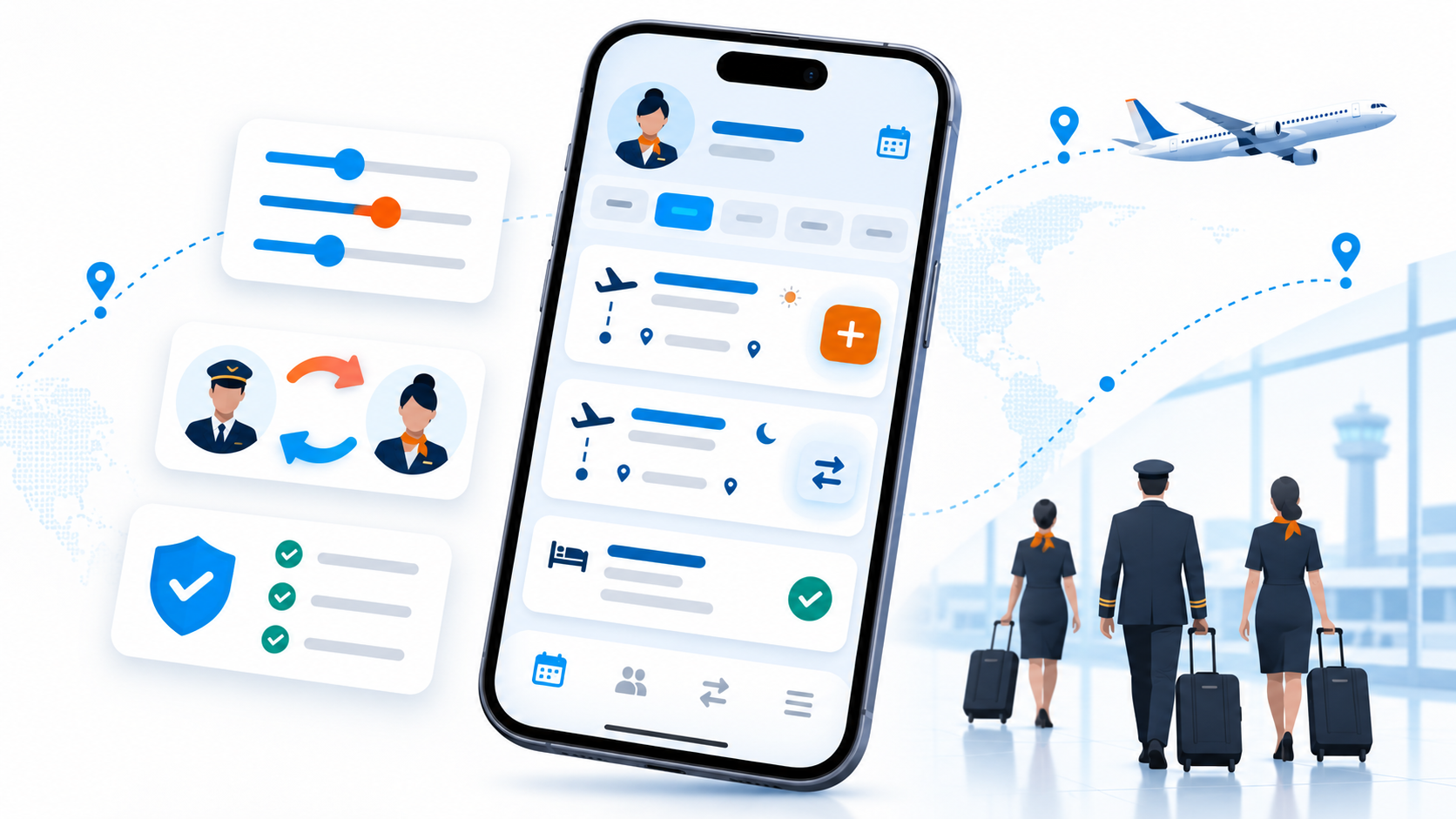
Rostering, qualifications and crew logistics without spreadsheet chaos.
Optimized routes, fuel and performance for every sector.
Current charts, manuals and performance data in every cockpit.

Replace paper techlogs with compliant digital defect records.
Connect schedule, aircraft, crew and maintenance status and recover from disruption faster. Start with the free Solution Finder to find the right flight operations software.