
Home / Technologies / Electronic Flight Bag
An electronic flight bag replaces paper charts, manuals and flight folders with current, synchronized documents and tools on a tablet. Pilots get the latest revisions, performance calculations and briefing packs in one place, and operations stops printing and distributing paper. We help airlines, charter and business aviation operators find the right EFB solution.
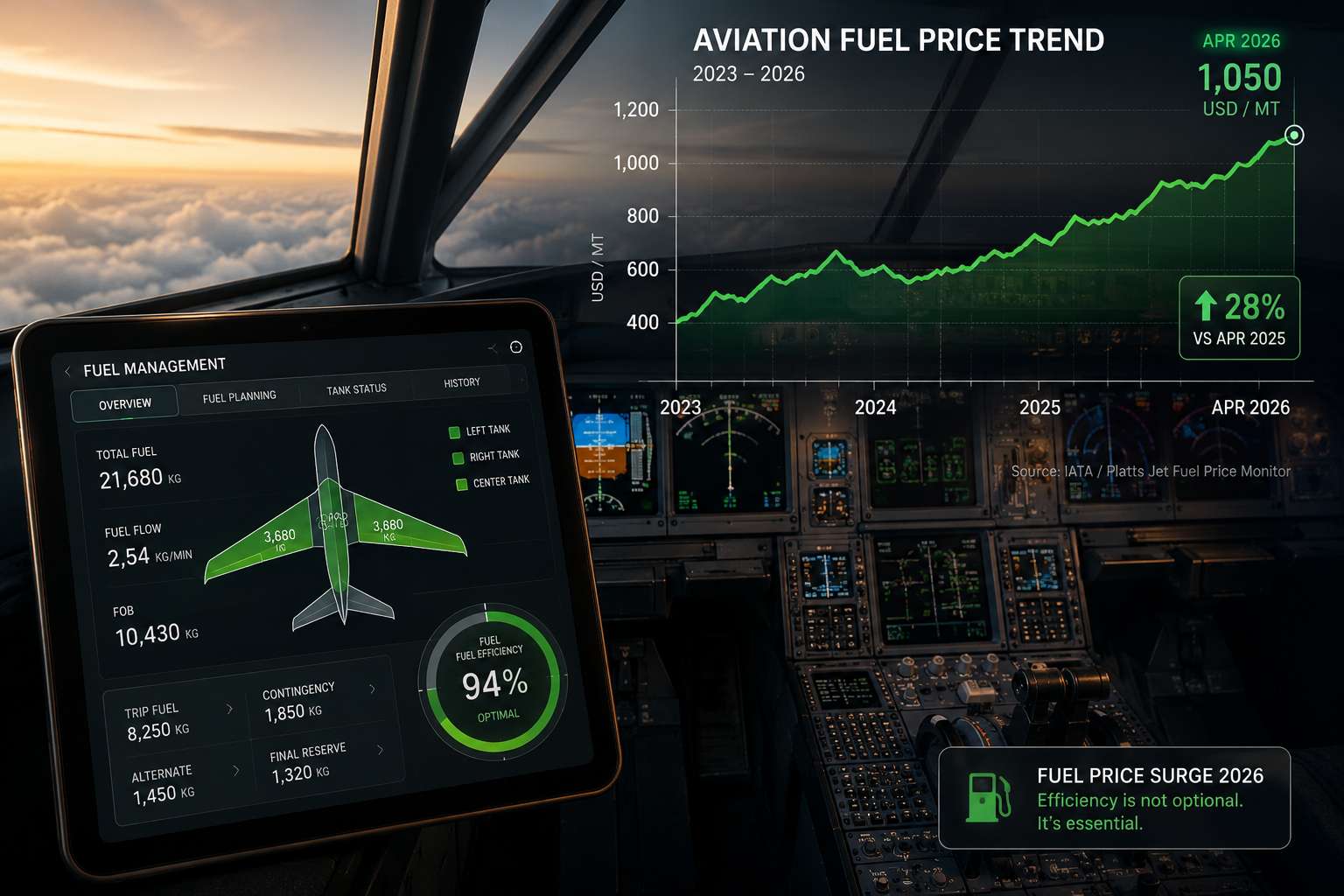
Illustrative dashboard, sample values
An electronic flight bag (EFB) is an electronic system, usually a tablet with approved applications, that gives flight crews the documents and tools they need: charts, manuals, checklists, performance and weight and balance calculations and the electronic flight folder (EFF) with the operational flight plan, weather and NOTAMs. EFB programs are approved by the operator’s authority.
Before EFBs, every flight meant heavy bags of manuals and charts, printed flight plans and briefing packs and a constant battle to keep revisions current across hundreds of pilots. Mistakes in document control were common and costly, and the paper itself added weight on every sector.
An EFB solves the distribution problem. Documents are pushed to every device and pilots always open the current version. Performance and weight and balance tools reduce calculation errors. The electronic flight folder brings the flight plan, weather, NOTAMs and briefing into one interactive package that can be updated right up to departure, and the completed folder flows back to operations as a record.
Everything the crew needs, current and in one place: charts, manuals, performance and the flight folder.
These six components make up a complete electronic flight bag program.
Digital terminal and en-route charts with moving map and situational awareness tools.
Operations manuals, checklists and company documents synchronized with revision control.
Takeoff and landing performance and load calculations on the device.
Flight plan, weather, NOTAMs and briefing in one interactive package.
Secure provisioning, updates and monitoring of every EFB device in the fleet.
Content management, user roles and the records your authority expects for approval.
With fuel costs surging, every kilogram and every minute of planning counts.
IATA expects the industry fuel bill to jump sharply in 2026, with fuel taking a much larger share of operating costs. Removing paper weight, improving performance calculations and getting accurate flight plans to crews quickly all help control fuel burn.
EFBs also support the pilots the industry needs to recruit. A modern, digital cockpit workflow is now an expectation for new pilots, and a well-run EFB program reduces workload for everyone.
Forecast airline fuel bill for 2026, up nearly 40% on 2025.
Fuel share of airline operating costs forecast for 2026, up from 25.4%.
New commercial pilots needed worldwide through 2044.
These are the benefits flight operations teams report most once paper leaves the cockpit.

“The best document control system is the one pilots never have to think about.”
The Aero NextGen advisory principle
Documents synchronize automatically, so pilots never fly with an outdated chart or procedure.
Removing paper manuals and charts reduces weight on every sector, which saves fuel over a year.
On-device performance and weight and balance tools reduce manual errors and speed up preparation.
The electronic flight folder brings everything together, so crews brief faster and with better information.
Operations stops printing and distributing flight folders and manual revisions to every base.
Completed flight folders and acknowledgements flow back to operations as records.
EFB needs differ by operation. Pick yours to see what usually matters most.

Airlines run large EFB programs with full document management, performance tools, electronic flight folders and integration with dispatch and techlog.

Charter operators and flight departments need easy-to-run EFB apps with trip briefings, documents and performance for varied fleets.
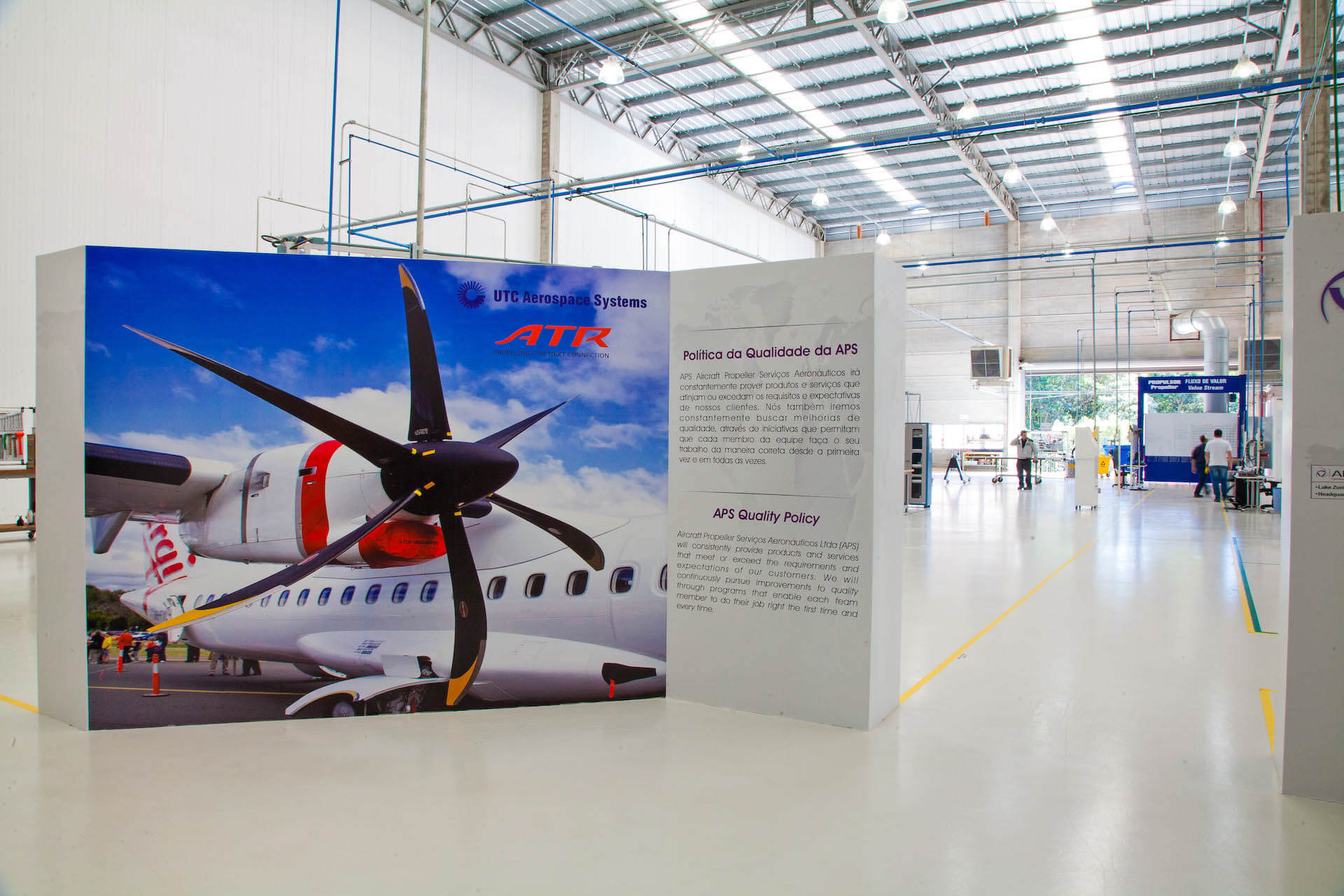
Helicopter and special mission operators use EFBs for low-level charts, mission planning and situational awareness in demanding environments.
EFB administrators need content management, device control and approval records that make the program easy to run and audit.
Here is what changes when charts, manuals and flight folders move from paper to an EFB.
| Area | Paper flight bag | Electronic flight bag |
|---|---|---|
| Revisions | ✕ Printed and distributed by hand | ✓ Pushed to every device |
| Weight | ✕ Kilograms of paper per aircraft | ✓ One tablet |
| Performance | ✕ Charts and manual calculations | ✓ Calculated on the device |
| Briefing pack | ✕ Printed before every flight | ✓ Interactive, updated to departure |
| Records | ✕ Paper folders filed later | ✓ Returned digitally |
| Errors | ✕ Outdated pages and miscalculations | ✓ Controlled versions and tools |
The fix: an EFB document system pushes every revision to every device and records which crews have the latest version.
The fix: the electronic flight folder replaces printed briefing packs with an interactive digital package.
The fix: on-device performance and weight and balance tools give accurate results in seconds.
The fix: EFB device management provisions, updates and monitors every tablet centrally.
EFBs pay back through fuel saved, printing eliminated and errors avoided.
Printing and distribution are the easiest costs to estimate. Use the calculator, then add fuel savings from weight reduction across your fleet.

EFB programs need approval, hardware and content working together. These five stages keep it orderly.
Decide which documents, charts, tools and flight folder functions the EFB will cover.
Select tablets, mounts and power that suit your aircraft and operation.
Compare EFB suites and specialist apps for documents, performance and flight folder.
Work with your authority on evaluation, training and operational approval.
Put content management, device control and records in place before launch.
Not sure which EFB solution fits your fleet? The Solution Finder scopes it in about three minutes and matches you with vetted vendors.
EFB solutions vary from single apps to complete suites. Use these criteria to compare.
Ask how the vendor supports your authority's EFB evaluation and approval.
Decide whether one suite or several specialist apps fits your program better.
Check links to flight planning, dispatch, techlog and crew systems.
Everything critical must work without connectivity in flight.
Look for strong device control and data protection.
Include apps, devices, mounts, content and administration.
Some vendors and consultants run EFB administration for you.
A sample of providers listed under electronic flight bag and flight folder, shown alphabetically. A listing is not an endorsement; the Solution Finder matches you on fit.

Monica Badra
Founder and CEO, Aero NextGen
Aero NextGen was founded by Monica Badra, who has spent more than a decade inside aviation translating real business needs into the right technology. That experience shapes how we approach the electronic flight bag: give crews current information without effort, and make the program easy to administer.
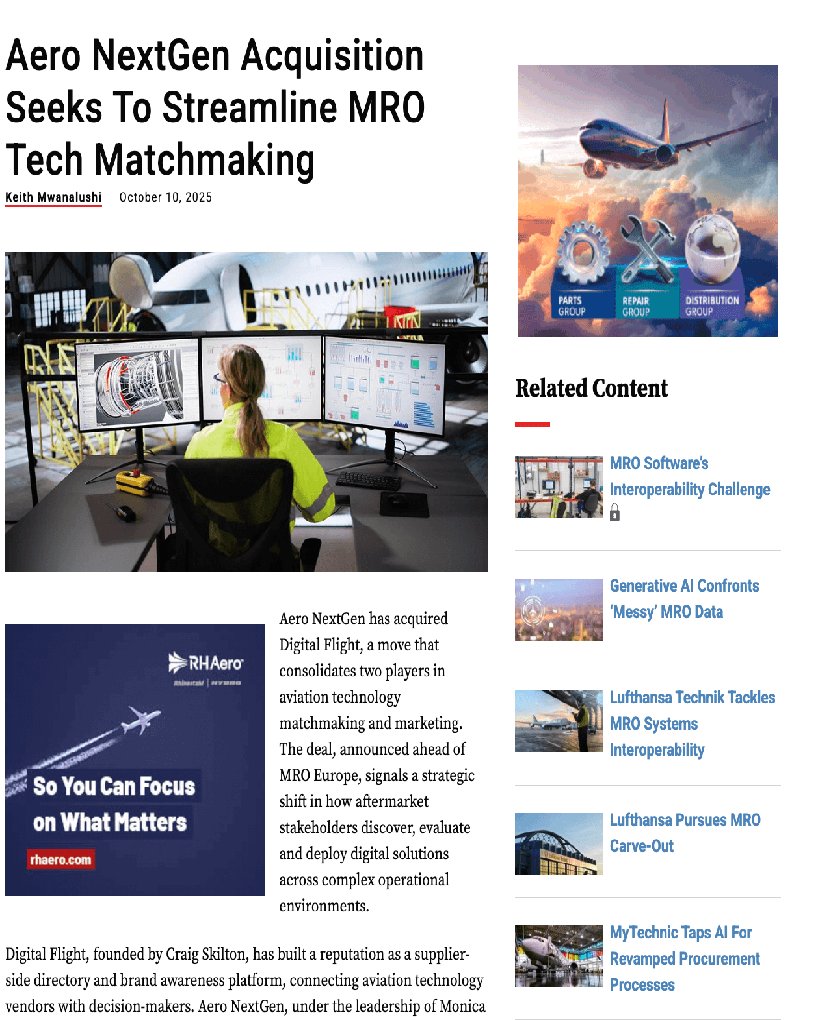
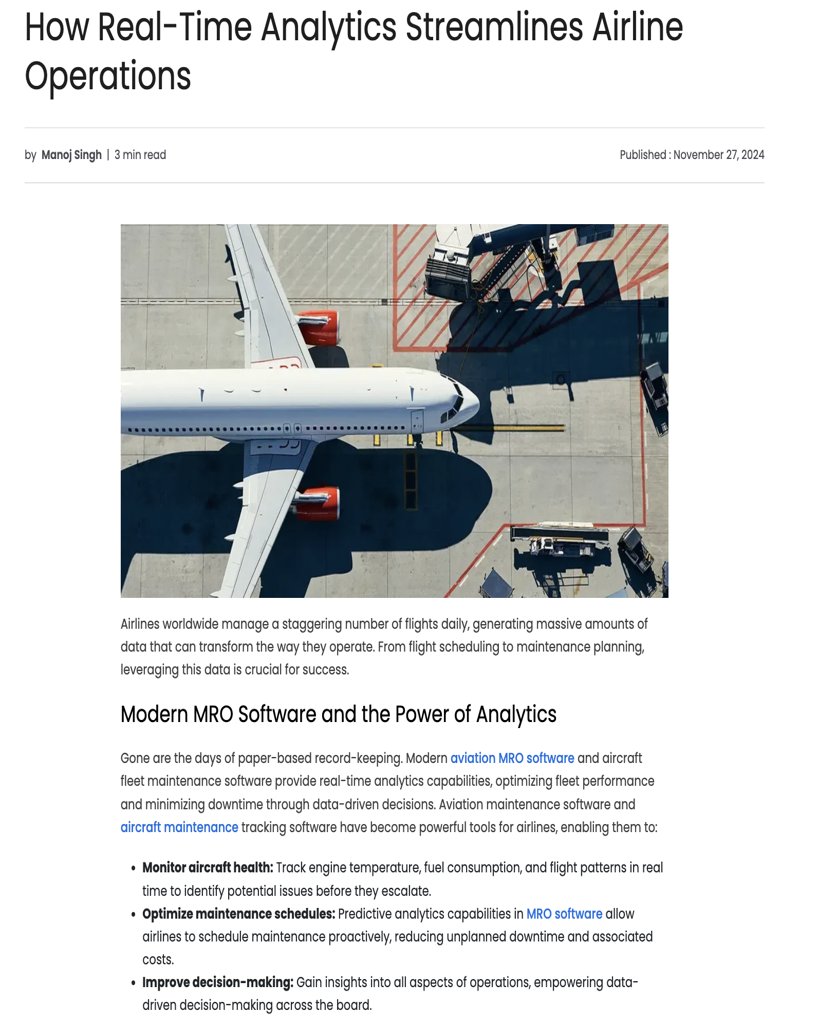
We are vendor-neutral. We do not resell software, and our matching is based on your operation, your systems and your budget. Our perspective on digital MRO and aviation technology has been featured across the industry press.

The questions aviation leaders ask us most before they start. Have one we did not cover? The Solution Finder routes it to the right expert.
It is an electronic system, usually a tablet with approved applications, that gives flight crews charts, manuals, checklists, performance tools and the electronic flight folder.
It is the digital version of the flight briefing pack: operational flight plan, weather, NOTAMs and related documents, updated up to departure and returned digitally afterwards.
Yes. Operators need authority approval for their EFB program, covering hardware, software, training and procedures.
Often yes. Many operators run EFB and electronic techlog apps on the same tablet.
EFB programs include redundancy, typically two devices per flight deck and procedures for failures.
Through mobile device management, controlled app installation and data protection policies. See cybersecurity.
Yes. Cloud EFB apps are affordable and remove the burden of paper document control even for small fleets.
Start with the free Solution Finder. It maps your cockpit documentation needs and matches you to the right EFB solution.

Replace paper techlogs with compliant digital defect records.
Optimized routes, fuel and performance for every sector.
Plan, dispatch and monitor every flight from one connected platform.

Protect aviation data, systems and uptime from attack.
Synchronize charts, manuals, performance and the flight folder on every device and retire the paper. Start with the free Solution Finder to find the right electronic flight bag.