
Why Asset Tracking in MRO No Longer Needs to Be a Major Infrastructure Project

Real-time asset tracking in MRO used to require a capital project. That requirement is gone. Changes in RTLS hardware, software, and deployment models now put location intelligence within reach of regional MROs, independent maintenance facilities, component repair shops, and specialist operators, not only the large operators with dedicated engineering and IT teams. The shift is not a better […]
The Five Execution Imperatives for MRO Leaders: What Record Order Books Mean for the Aftermarket’s Execution Gap

Farnborough roducedproduced record order numbers last week. The number that matters is how long they take to clear. About 17,000 unfilled aircraft orders sat on the books at the start of 2026, a backlog Oliver Wyman expects to take more than 12 years to work through at current production rates. That is not a manufacturing […]
Aviation Software Vendors Don’t Need a Bigger Marketing Team, They Need the Right Marketplace
Aviation software buyers research deliberately, compare vendors on operational proof rather than marketing copy, and typically involve multiple stakeholders, a Director of Maintenance, a VP of Operations, a Fleet Manager, sometimes a CFO, before a deal closes. That buying pattern rewards vendors with deep aviation credibility and punishes vendors who market like generic B2B SaaS […]
The Best Aviation MRO ERP Isn’t One Product, It’s the One Matched to Your Shop Type

Component shops, engine MRO, line maintenance, and CAMO organizations run fundamentally different value streams inside the same industry, and a single “best ERP” ranking that ignores that fact sends operators toward mismatched software. Component-level maintenance needs granular, part-by-part traceability from induction to release; engine MRO needs serialized, cycle-and-time build records across long OEM lead times; […]
From AI Pilots to Operational Impact: Why Aviation MRO Needs Workflow-Native Intelligence

Aviation AI is moving from experimentation to execution, and the constraint has changed. The models are ready. The gap is integration. MIT’s 2025 research found that 95% of enterprise AI pilots deliver no measurable impact – not because the models are weak, but because they sit outside the workflows teams actually use. The next advantage […]
Integration-First ERP Selection: The 10 Questions That Prevent Regret

The average MRO organization runs 8 to 14 discrete software systems to manage a single aircraft’s operational life, and a mid-size MRO absorbs roughly $2.1 million a year in manual data re-entry costs created by those systems not talking to each other (OxMaint, “API Integration Strategy for Aviation Maintenance Ecosystems”). Aviation IT leaders have taken […]
Aviation M&A Is Consolidating the Vertical, and Redrawing the Aftermarket Map

OEMs and large platforms are buying up and down the value chain, securing supply, pulling aftermarket revenue in-house, and tightening control of parts, data, and engine work. The strategic question is no longer whether the vertical is consolidating, but where you sit when the music stops. Aerospace dealmaking is no longer opportunistic. It is structural. […]
Choosing the Right ERP System for Aviation and MRO: A 2026 Selection Framework
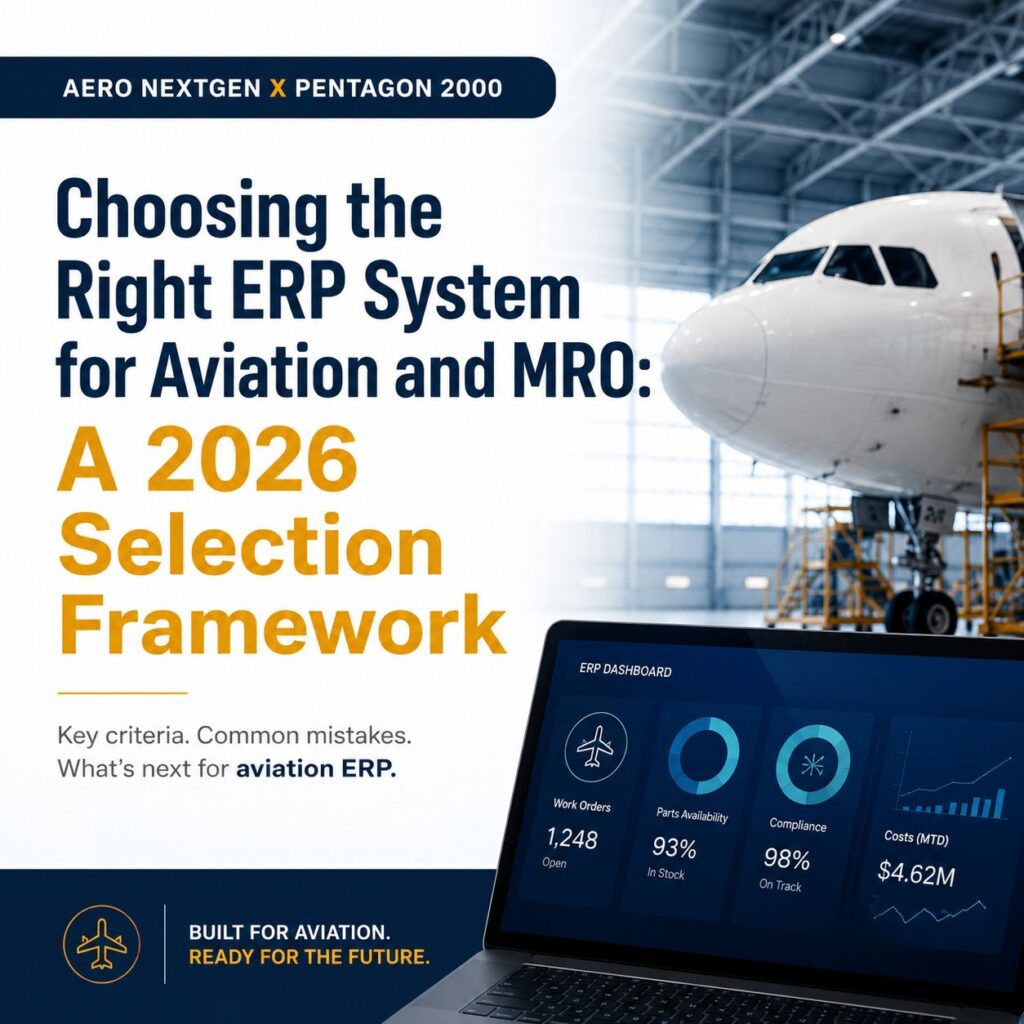
Aviation maintenance is in the middle of a demand super cycle, and the systems that run the shopfloor have become the constraint. The global MRO market is forecast to reach $156 billion by 2035, yet most operators still select aviation ERP software the way they did a decade ago. The result is predictable: budget overruns, stalled […]
The Software Problem Aero NextGen Was Built to Solve
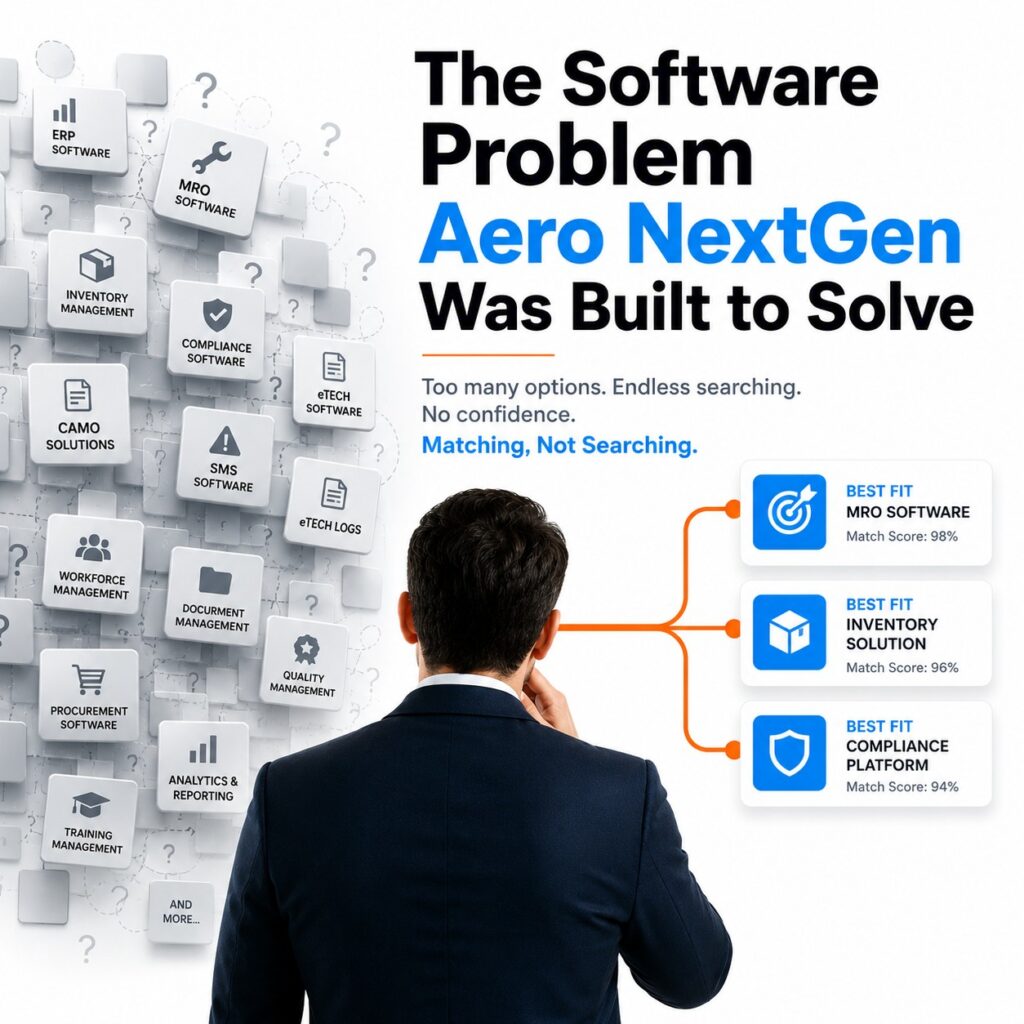
Aviation is in a demand super cycle, and its software is the bottleneck. The global maintenance market alone is set to reach roughly $119 billion in 2025 and climb to about $156 billion by 2035, driven by an aging fleet and durability issues on next-generation engines (Oliver Wyman, Feb 2025). Across the value chain, operators […]
Touch-Time Is the Most Valuable Asset in MRO. Digital Documentation Is How You Reclaim It.
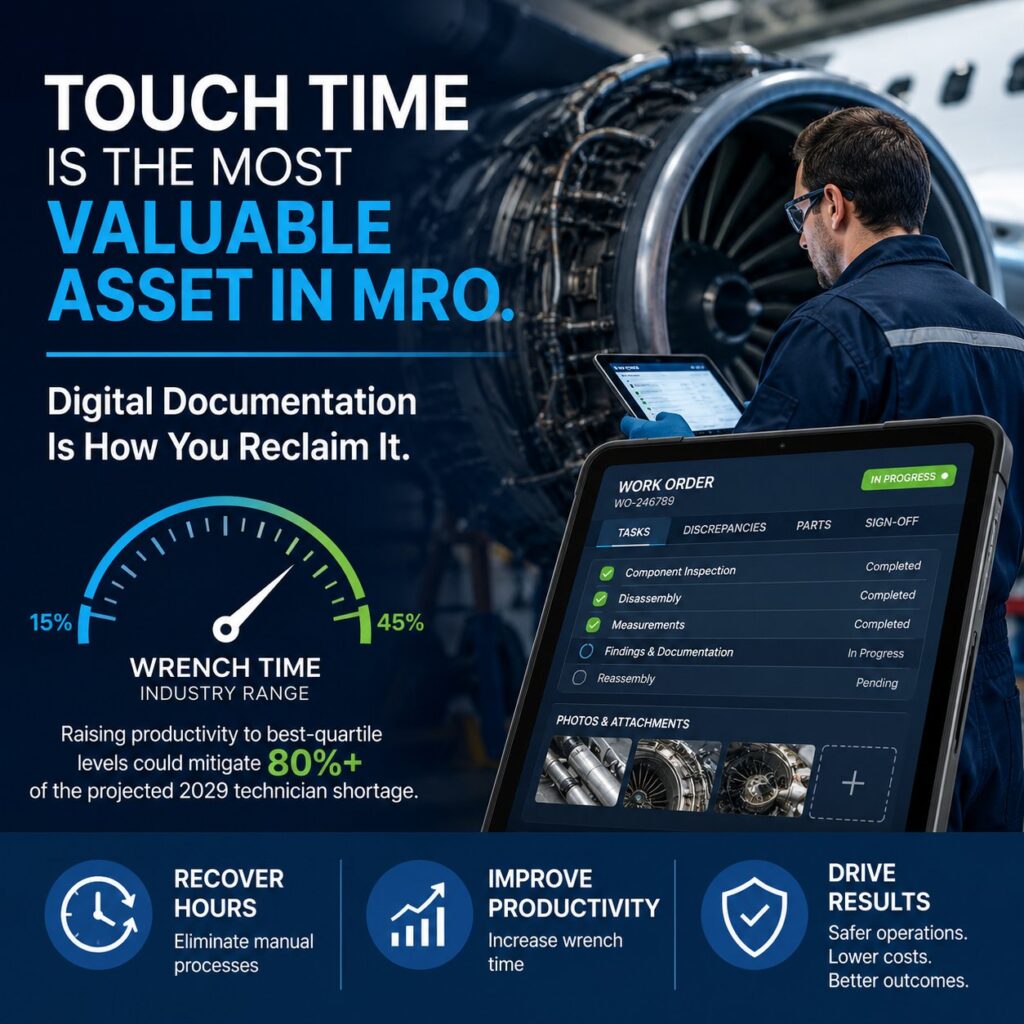
Aviation maintenance demand is at a record high, and the binding constraint is skilled technician hours. The market exceeded $136 billion in 2025 and is projected to approach $140 billion this year, driven by an extended maintenance “super cycle”. The supply of certified labor cannot expand at the same rate. That makes the productive use […]