
Home / Technologies / Flight Planning and Aircraft Performance
Flight planning software calculates the most efficient route, altitude and fuel for every sector using live weather, winds, restrictions and accurate aircraft performance. With fuel now a far larger share of airline costs, better planning pays back on every flight. We help airlines, charter operators and flight departments find planning and performance tools that fit.

Illustrative dashboard, sample values
Flight planning software calculates optimized operational flight plans, including route, cruise levels, speeds and fuel, using weather, winds, airspace restrictions, costs and aircraft performance data. Aircraft performance tools calculate takeoff, landing and en-route limits so each flight is both efficient and within certified limits.
Every flight is a trade-off between time, fuel, overflight charges and payload. Small differences in route, altitude and speed add up to large differences in fuel burn over a year. Manual or basic planning tools cannot evaluate those options quickly enough, especially when weather and restrictions change through the day.
Modern flight planning software evaluates thousands of options in seconds using the latest weather and winds. Accurate performance models, often tuned to each tail’s actual fuel burn, make sure the plan reflects the real aircraft. Takeoff and landing performance tools calculate limits for each runway and condition. The result is a plan that saves fuel, protects payload and keeps every flight legal.
Every sector optimized: route, fuel and performance calculated from the latest weather.
These six capabilities make up a complete planning and performance setup.
Routes, levels and speeds optimized for fuel, time and overflight costs.
High-resolution forecasts, turbulence and convective weather built into each plan.
Accurate trip, contingency and alternate fuel, with tankering analysis.
Runway-specific performance limits for each condition and configuration.
Load planning and trim calculations integrated with performance.
Plans filed and delivered to crews through dispatch and the electronic flight folder.
A sharp jump in fuel costs has made every kilogram of fuel count.
IATA expects the industry fuel bill to rise from $252 billion in 2025 to $350 billion in 2026, with jet fuel prices up almost 70% and fuel taking 31.4% of operating costs. A fraction of a percent saved on every flight is now worth more than ever.
Better flight planning and accurate performance data are among the fastest ways to save fuel without new aircraft, which matters when new deliveries are delayed by the supply chain.
Forecast airline fuel bill for 2026, up nearly 40% on 2025.
Fuel share of airline operating costs forecast for 2026, up from 25.4%.
Aircraft held back by supply chain limits through at least 2030.
These are the improvements dispatch and flight operations teams report most often.
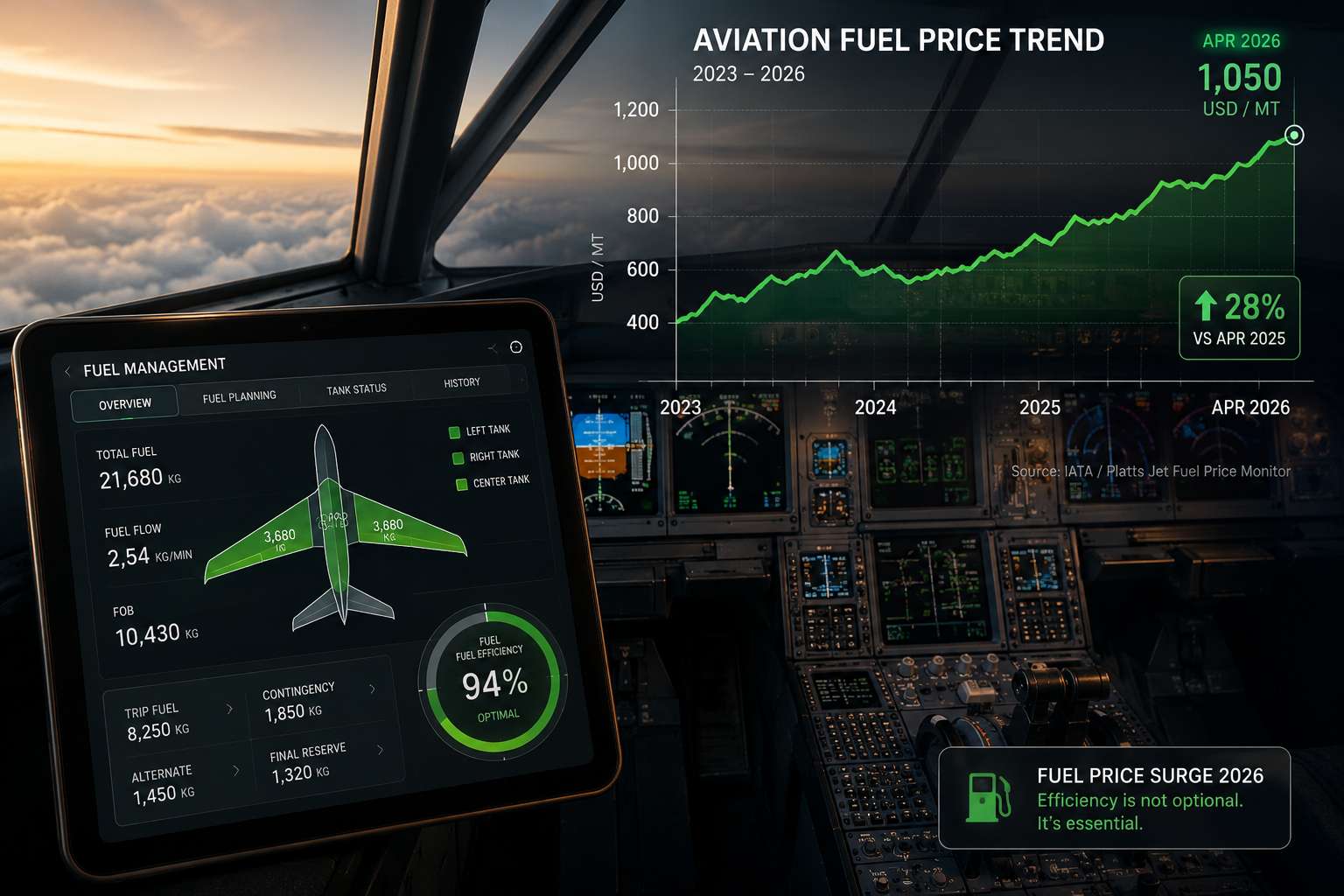
“Fuel saved on the plan is fuel never bought.”
The Aero NextGen advisory principle
Optimized routes, levels and speeds save fuel on every sector, which adds up across a year.
Accurate performance and fuel planning avoid carrying unnecessary fuel and protect payload.
Plans are calculated in seconds, freeing dispatchers for exceptions and changes.
Turbulence and convective weather are factored in, improving comfort and safety.
Performance tools enforce certified limits for every runway and condition.
Less fuel burned means lower CO2 emissions and easier sustainability reporting.
Planning needs differ by operation. Pick yours.

Airlines use enterprise planning systems with cost index optimization, tail-specific performance and integration with dispatch and operations control.

Charter operators and flight departments need fast trip planning, permits, handling and performance for varied aircraft and airports.
Operators add specialist weather and turbulence prediction to reduce injuries, delays and fuel burn from weather avoidance.

Performance engineers maintain airport and runway databases, monitor fuel burn by tail and keep performance models accurate.
Here is what changes when planning moves from basic tools to an optimized, integrated system.
| Area | Basic planning | Optimized flight planning |
|---|---|---|
| Routes | ✕ Standard company routes | ✓ Optimized for each flight |
| Weather | ✕ General forecasts | ✓ High-resolution winds and hazards |
| Fuel | ✕ Generous buffers | ✓ Accurate, policy-based fuel |
| Performance | ✕ Generic aircraft data | ✓ Tail-specific models |
| Planning time | ✕ Many minutes per plan | ✓ Seconds per plan |
| Delivery | ✕ Printed packs | ✓ Electronic flight folder |
The fix: accurate fuel planning with tail-specific performance cuts unnecessary fuel while staying within policy.
The fix: route optimization re-evaluates each flight against current winds and restrictions.
The fix: turbulence prediction and weather tools help plan around hazardous areas.
The fix: automated planning frees dispatchers to manage exceptions and changes.
Even a small fuel saving per flight is worth a great deal at 2026 fuel prices.
Use the calculator to estimate the value of a small percentage fuel saving across your annual fuel spend.

These five steps help you move to optimized planning with confidence.
Compare planned and actual fuel burn by route and tail to set a baseline.
List aircraft, routes, fuel policy, integrations and regulatory needs.
Plan real flights in parallel and compare fuel, time and payload.
Connect the new system to operations control and crew delivery.
Keep performance factors current and review savings monthly.
Not sure which planning system fits your fleet? The Solution Finder scopes it in about three minutes and matches you with vetted vendors.
Planning systems differ in optimization, data and integrations. Use these criteria to compare.
Ask for shadow trial results on your own routes, not generic claims.
Check the resolution and sources of winds, turbulence and weather.
Look for tail-specific factors and maintained airport databases.
Confirm links to dispatch, EFB, operations control and crew systems.
Make sure fuel policy and performance rules match your authority.
Compare licenses, per-flight fees, data subscriptions and integration.
Ask about support from performance engineers and dispatch specialists.
A sample of providers listed under flight planning and aircraft performance, shown alphabetically. A listing is not an endorsement; the Solution Finder matches you on fit.

Monica Badra
Founder and CEO, Aero NextGen
Aero NextGen was founded by Monica Badra, who has spent more than a decade inside aviation translating real business needs into the right technology. That experience shapes how we approach flight planning software: prove the savings on your own routes, then build planning into every part of the operation.
We are vendor-neutral. We do not resell software, and our matching is based on your operation, your systems and your budget. Our perspective on digital MRO and aviation technology has been featured across the industry press.


The questions aviation leaders ask us most before they start. Have one we did not cover? The Solution Finder routes it to the right expert.
It calculates optimized operational flight plans, including route, levels, speeds and fuel, using weather, winds, restrictions, costs and aircraft performance.
Savings vary by operation and starting point. Shadow trials on your own routes give the most reliable estimate before you commit.
It calculates takeoff, landing and en-route limits for each runway and condition, so each flight stays within certified limits.
Cost index balances time-related costs against fuel cost to find the most economical speed for each flight.
Yes. Plans are usually delivered through the electronic flight folder on the EFB.
Yes. Cloud planning services give charter and business aviation operators optimized plans without large systems.
Specialist turbulence and weather data help avoid hazards, reducing injuries, delays and fuel burn from late deviations.
Start with the free Solution Finder. It maps your fleet, routes and fuel goals and matches you to the right planning tools.
Current charts, manuals and performance data in every cockpit.

Plan, dispatch and monitor every flight from one connected platform.
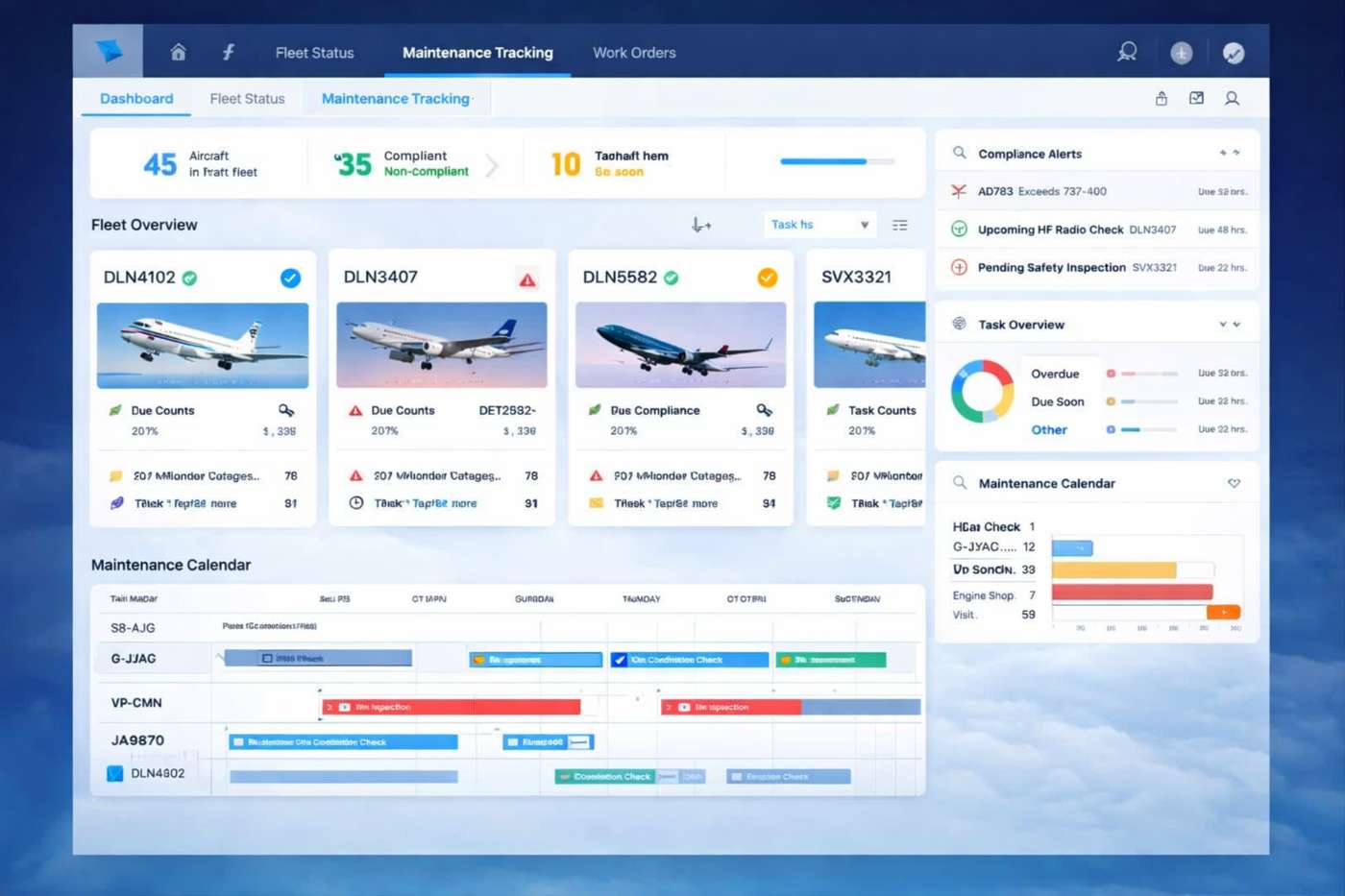
Turn maintenance, parts and finance data into live KPIs and forecasts.

Rostering, qualifications and crew logistics without spreadsheet chaos.
Optimize routes, fuel and performance with the latest weather on every sector. Start with the free Solution Finder to find the right flight planning software.