Home / Technologies / Cybersecurity and Data Protection
Aviation cybersecurity protects the systems, data and connected equipment that keep aircraft flying, from maintenance records and ERPs to airport operational technology. Ransomware, data theft and supply chain attacks are rising fast. We help airlines, MROs, airports and suppliers find security partners who understand aviation’s systems and regulators.
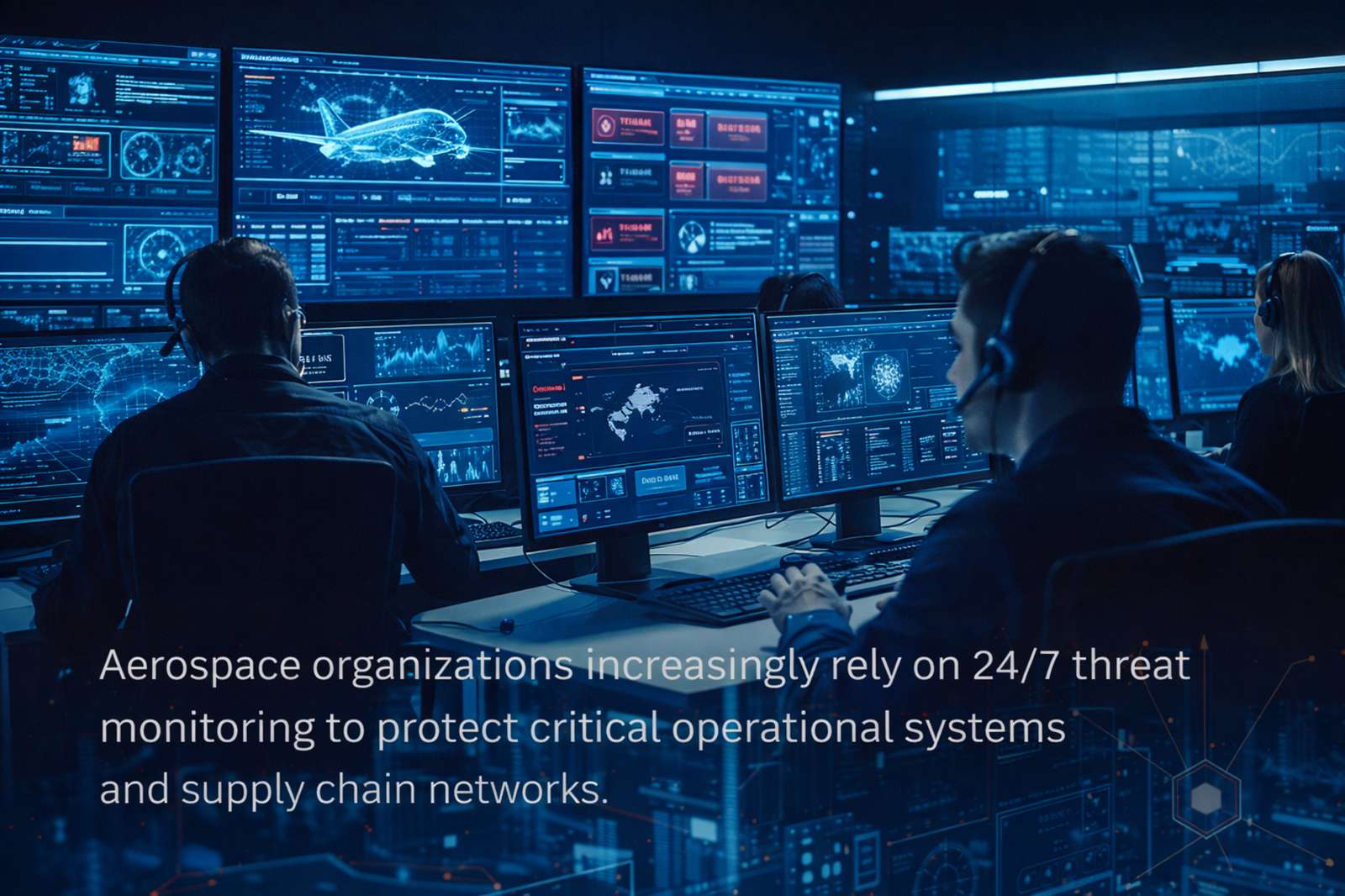
Illustrative dashboard, sample values
Aviation cybersecurity is the protection of aviation IT systems, operational technology, connected aircraft systems and data from cyberattacks, theft and disruption. It covers security monitoring, identity and access control, data protection, OT and IoT security, vulnerability testing, incident response and compliance with aviation and data protection regulations.
Aviation has become a prime target. Airlines, airports, MROs and manufacturers hold valuable data, run time-critical operations and depend on long supply chains of connected partners. Thales reported a 600% year-on-year rise in cyberattacks on the sector, with ransomware groups targeting operations where downtime is extremely expensive.
Good aviation cybersecurity starts with visibility: knowing what systems and devices you run and who can access them. It adds monitoring that detects attacks early, protections for data and operational technology, regular testing and a practiced response plan. For smaller MROs and suppliers, managed security services provide enterprise-grade protection without a full in-house team.
Watching around the clock: security operations that spot an attack before it stops the operation.
These six capabilities form the core of an aviation cybersecurity program.
Around-the-clock detection and response across networks, endpoints and cloud systems.
Multi-factor authentication, least-privilege access and control of shared accounts.
Encryption, backups and data loss prevention for records, customer and operational data.
Protection for airport systems, baggage, ground equipment and connected hangar devices.
Penetration testing, vulnerability scanning and aviation security assessments.
Plans, playbooks and specialists ready to contain and recover from an attack.
Attacks on aviation have risen sharply, and ransomware groups are targeting the sector deliberately.
Thales recorded a 600% year-on-year rise in cyberattacks on aviation, with 27 attacks attributed to 22 different ransomware groups between January 2024 and April 2025. Airlines, airports, manufacturers and suppliers were all hit.
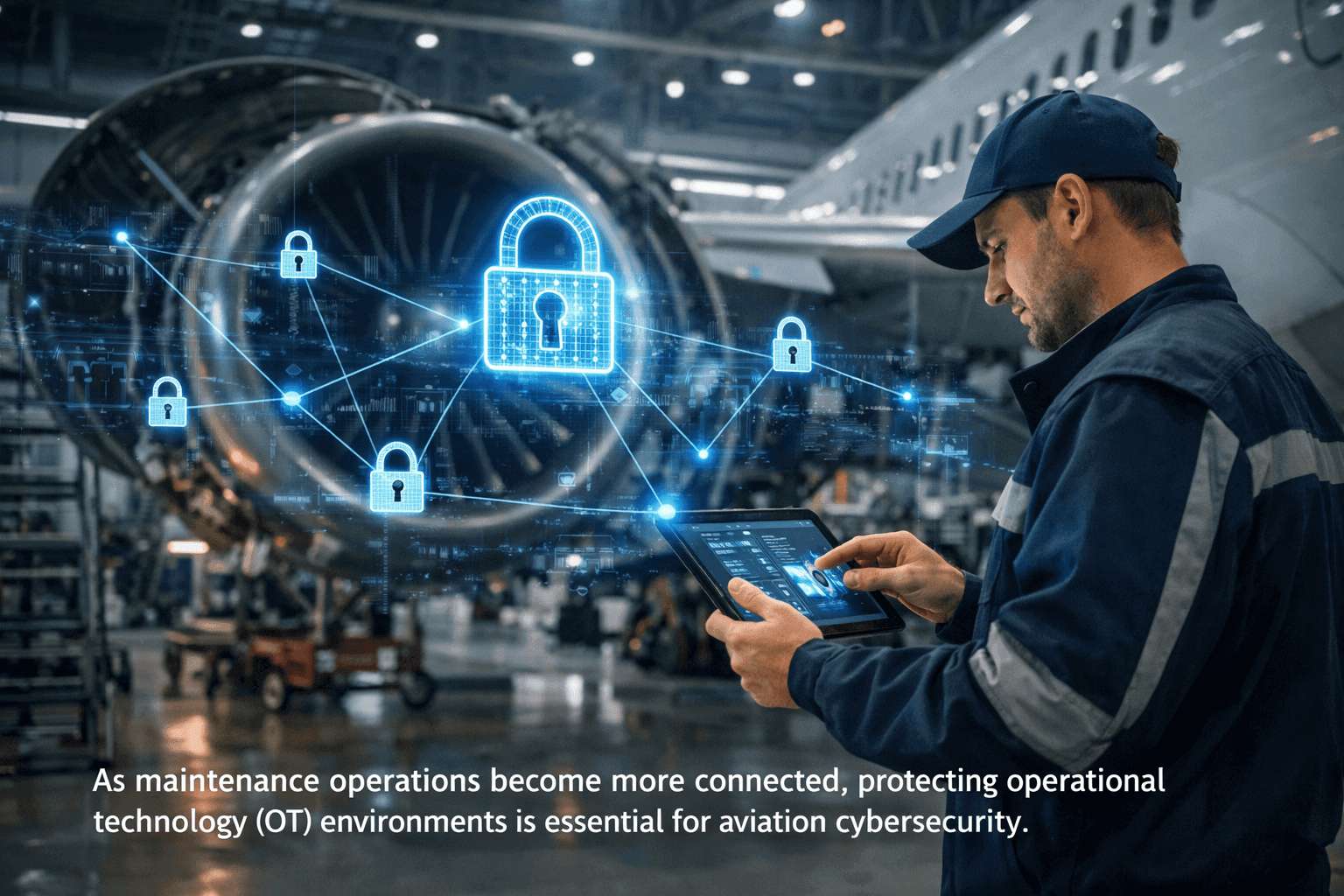
At the same time, operations are more connected than ever: cloud ERPs, mobile apps, EFBs, connected tools and data shared with partners. Every connection is useful and every connection needs protecting.
Year-on-year rise in cyberattacks against the aviation sector.
Ransomware groups behind the 27 attacks on aviation recorded from January 2024 to April 2025.
Global MRO demand in 2025, up 8% on the year before.
These are the outcomes a mature cybersecurity program protects.
“Assume someone is trying the door every day. Make sure you know when they do.”
The Aero NextGen advisory principle
Early detection and fast response prevent attacks from grounding aircraft or stopping the shop.
Maintenance records, customer data and intellectual property stay confidential and intact.
Controls and evidence that satisfy aviation security rules and data protection laws.
Airlines and OEMs increasingly audit supplier security. A strong program wins and keeps contracts.
Prevention and fast containment cost far less than ransom, recovery and lost business.
New systems, apps and connections can be added safely because security is built in.
Every part of aviation has different systems and threats. Pick your organization.
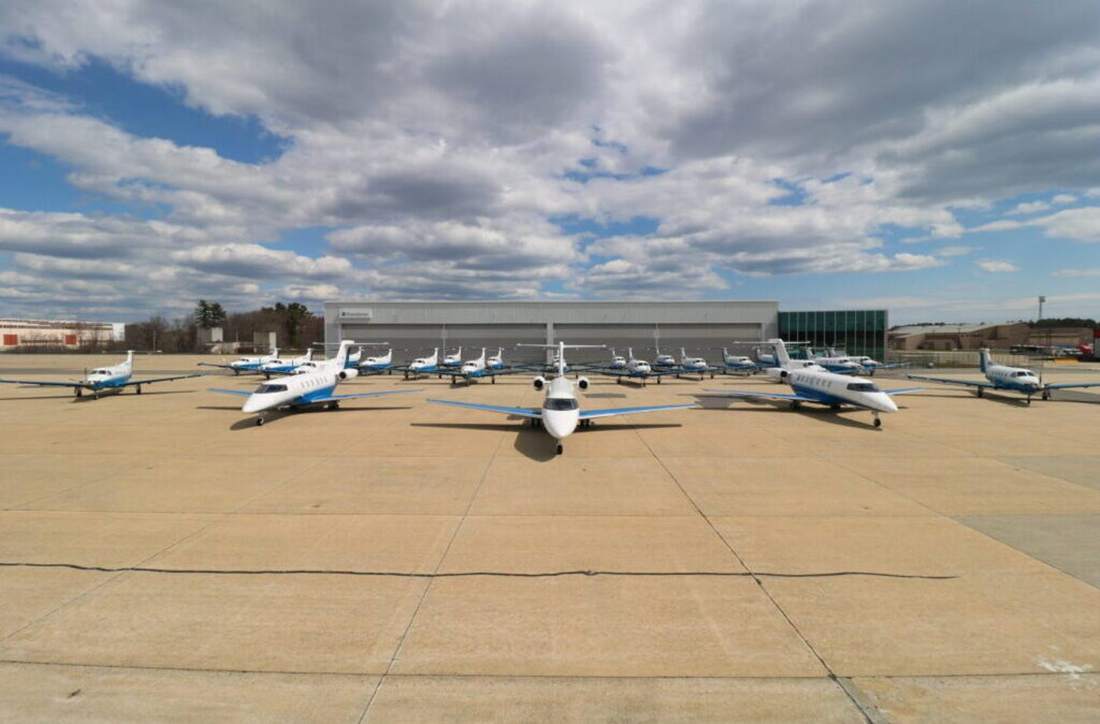
Airlines protect reservations, operations, maintenance and crew systems, plus EFB devices and aircraft connectivity.

MROs protect ERPs, records and customer data, often with managed security services sized for a smaller IT team.

Airports protect operational technology such as baggage, airfield lighting and building systems alongside IT networks.

Manufacturers protect intellectual property, production systems and supply chain connections, often under defense security requirements.
Antivirus and a firewall are no longer enough. Here is what changes with a structured program.
| Area | Basic IT security | Aviation cybersecurity program |
|---|---|---|
| Detection | ✕ Alerts nobody watches | ✓ 24/7 monitoring and response |
| Access | ✕ Shared passwords | ✓ Multi-factor, least privilege |
| Operational technology | ✕ Not considered | ✓ Monitored and segmented |
| Testing | ✕ Rarely, if ever | ✓ Regular penetration tests |
| Response | ✕ Improvised during an attack | ✓ Planned and practiced |
| Suppliers | ✕ Trusted by default | ✓ Assessed and monitored |
The fix: managed detection and response watches networks and endpoints around the clock and acts on threats in minutes.
The fix: identity and access management with multi-factor authentication and least privilege closes the most common way in.
The fix: OT and IoT monitoring and network segmentation protect baggage, airfield and hangar systems.
The fix: an incident response plan, tested backups and specialist support limit downtime and recovery cost.
Security pays back in incidents avoided, and a single serious incident can be devastating.
Downtime is the cost most operations feel first. Use the calculator to see what a few days of disrupted systems could cost, then weigh it against the cost of protection.
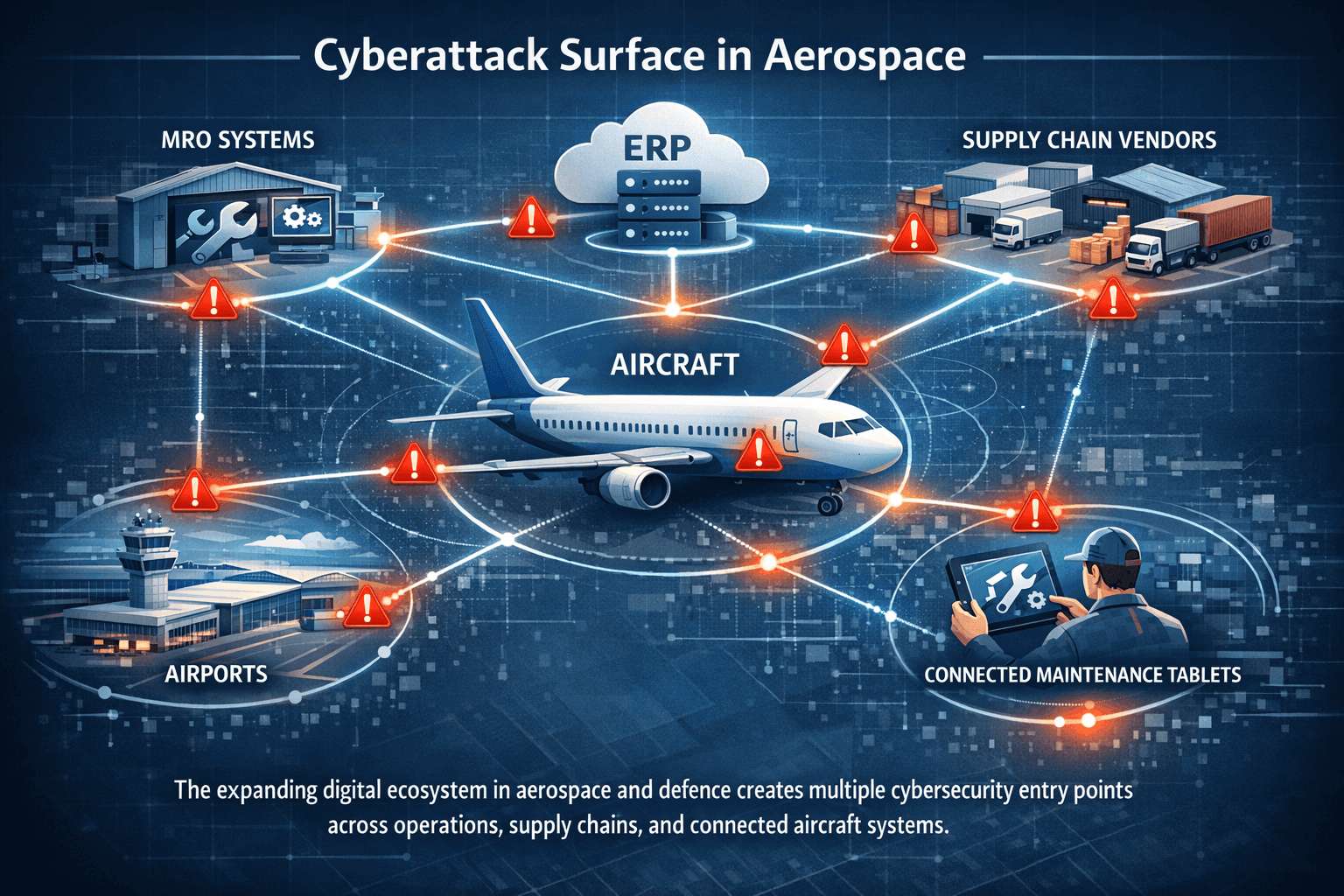
Security programs grow in layers. These five steps cover the essentials first.
List systems, devices, data and users, including operational technology and supplier connections.
Run a security assessment or penetration test to find the biggest gaps.
Roll out multi-factor authentication and remove shared and excess access.
Put 24/7 detection and response in place, in-house or managed.
Write the incident response plan, test backups and run exercises.
Not sure where your biggest security gaps are? The Solution Finder scopes it in about three minutes and matches you with vetted security partners.
General security firms are plentiful. Partners who understand aviation systems, OT and regulators are rarer.
Ask for work with airlines, airports, MROs or aerospace manufacturers.
Check experience securing operational technology, not just office IT.
Look for recognized certifications and, in the UK, CAA ASSURE accreditation where relevant.
Understand response times and who acts when an alert fires at 3am.
Ask how they help with aviation security rules and data protection laws.
Compare managed service fees, tools and the internal effort required.
Confirm incident response is included or available on retainer.
A sample of providers listed under cybersecurity and data protection, shown alphabetically. A listing is not an endorsement; the Solution Finder matches you on fit.

Monica Badra
Founder and CEO, Aero NextGen
Aero NextGen was founded by Monica Badra, who has spent more than a decade inside aviation translating real business needs into the right technology. That experience shapes how we approach aviation cybersecurity: protect the systems that keep aircraft flying first, and make sure someone is always watching.
We are vendor-neutral. We do not resell software, and our matching is based on your operation, your systems and your budget. Our perspective on digital MRO and aviation technology has been featured across the industry press.
The questions aviation leaders ask us most before they start. Have one we did not cover? The Solution Finder routes it to the right expert.
It is the protection of aviation IT systems, operational technology, connected aircraft systems and data from cyberattacks, theft and disruption.
Aviation holds valuable data, runs time-critical operations where downtime is expensive and relies on many connected partners, which makes it attractive to ransomware groups and other attackers.
Thales reported a 600% year-on-year increase in cyberattacks on the aviation sector in its 2025 analysis.
Yes. Smaller suppliers are often targeted as a way into larger customers. Managed security services make strong protection affordable.
Operational technology security protects systems that control physical equipment, such as baggage systems, airfield lighting and building controls.
Any connected device can be. EFB programs use device management and controlled apps. See electronic flight bag.
Turn on multi-factor authentication everywhere, back up critical data offline and get an assessment of your biggest gaps.
Start with the free Solution Finder. It maps your systems and risks and matches you to the right security partners.
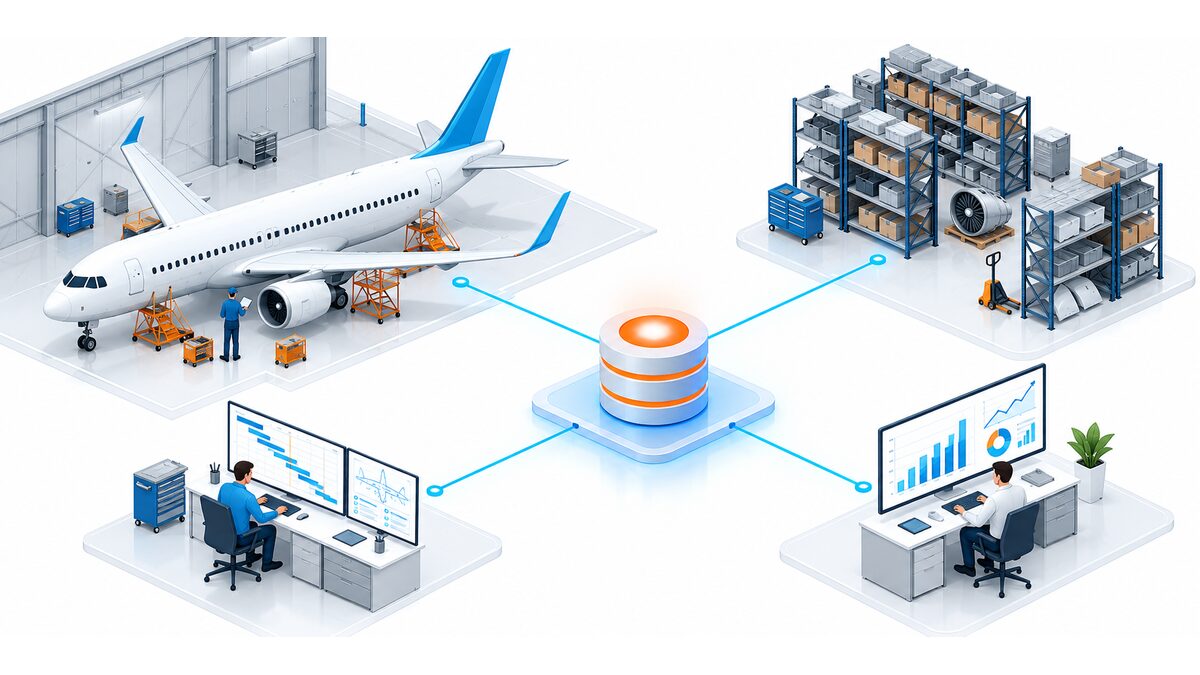
Run finance, maintenance, inventory and HR on one connected core system.
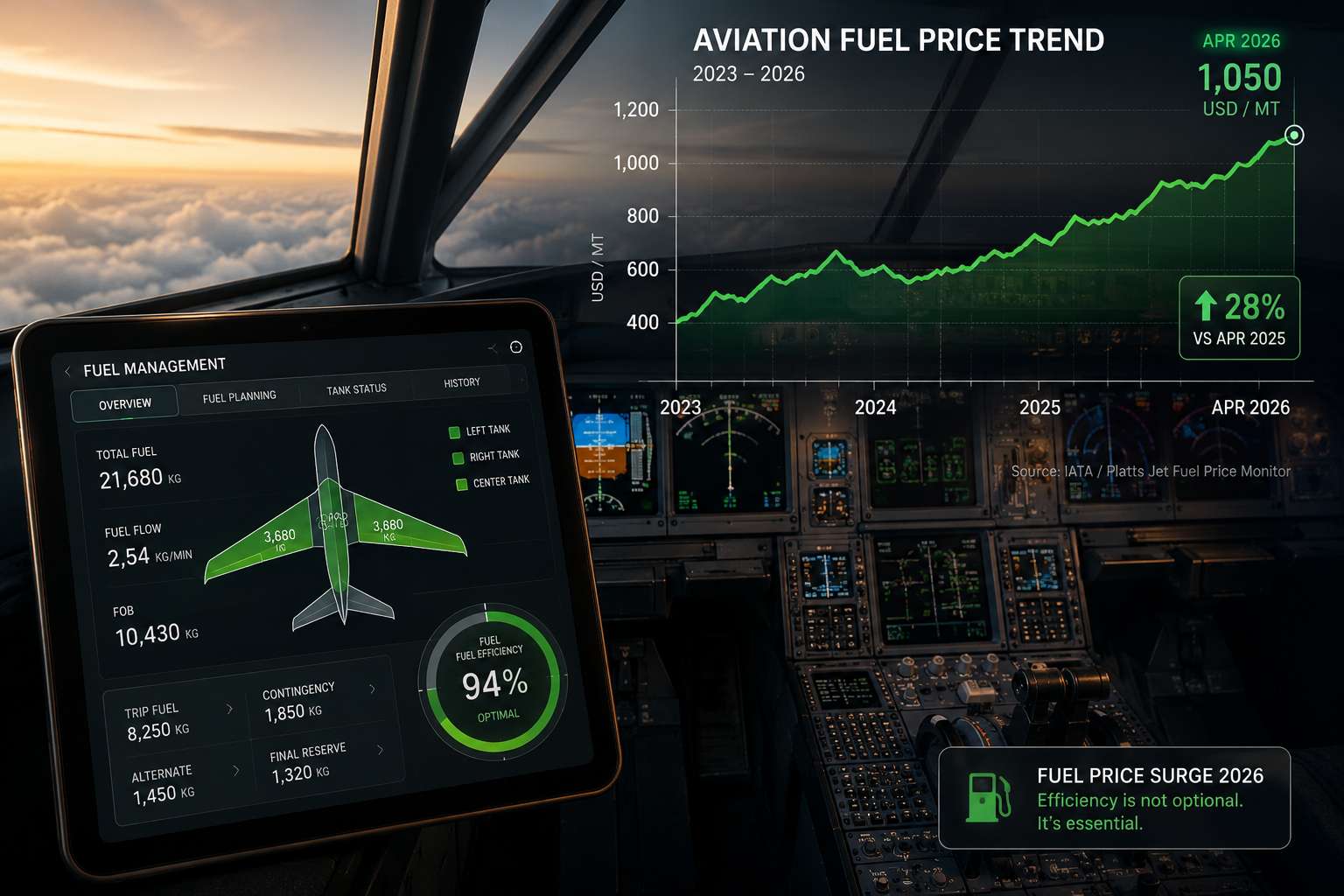
Current charts, manuals and performance data in every cockpit.
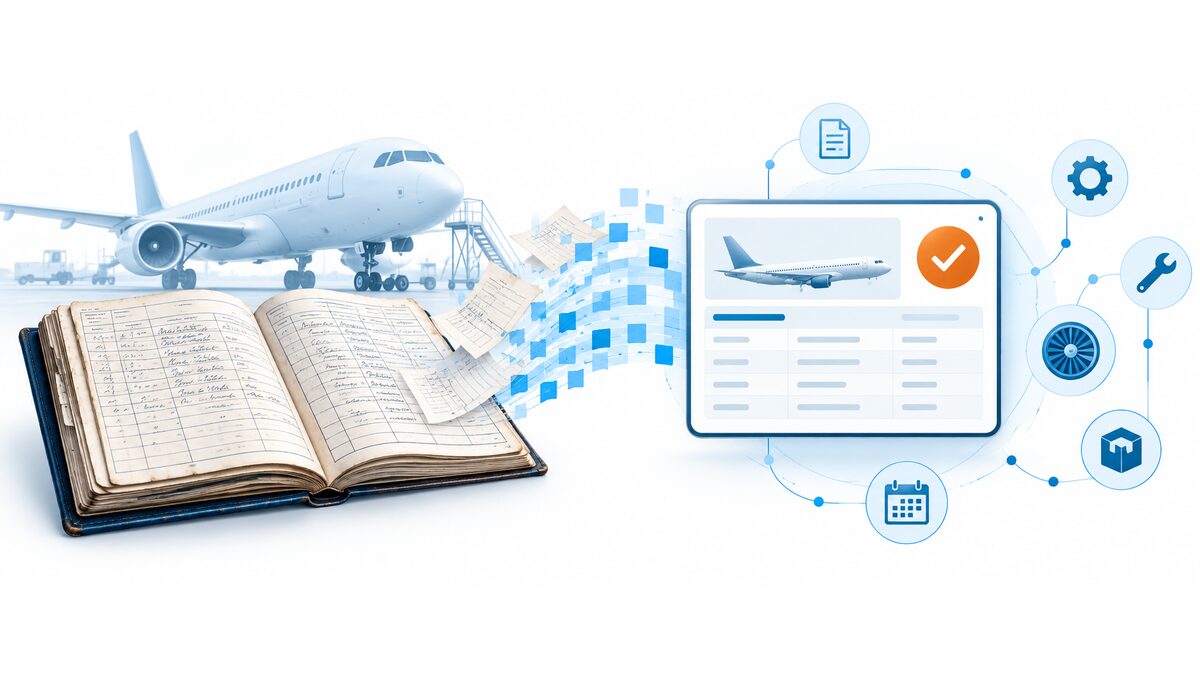
Clean, standardized records are the foundation every system depends on.
Tamper-proof part histories and agreements that enforce themselves.
Monitor around the clock, lock down access and protect data and operational technology. Start with the free Solution Finder to find the right aviation cybersecurity partner.