

Aircraft Maintenance Tracking Programs: How the Right System Transforms Your Operation in 2026

The aviation maintenance landscape is evolving faster than at any point in the past four decades. A new generation of aircraft maintenance tracking programs is delivering on the industry’s long-standing digital transformation goals — giving operators real-time visibility, seamless compliance, and operational intelligence that legacy systems were never designed to provide. The opportunity is significant. As Monica Badra, founder of Aero NextGen, puts it: “Operators who invest in the right maintenance tracking platform don’t just improve compliance — they unlock operational efficiencies that compound across every department. The technology has matured to the point where the ROI case is no longer theoretical.”

Understanding the Real ROI of Modern Aircraft Maintenance Tracking Programs
The financial case for upgrading maintenance tracking systems has never been stronger. Boeing estimates that AOG situations cost airlines between $10,000 and $150,000 per hour depending on aircraft type and route. Research published in Applied Sciences (2025) found that operators using integrated predictive maintenance systems reduced maintenance-related delays by up to 35%. And according to Deloitte’s aerospace outlook, predictive maintenance programs deliver a 15% reduction in downtime and a 20% increase in labor productivity.
The value of modern tracking programs goes well beyond avoiding downtime:
Compliance automation replaces manual audit trail management. With EASA Part-IS mandating information security management systems from October 2025 and February 2026, and FAA intensifying digital record-keeping requirements, operators with integrated tracking systems are ahead of the curve rather than scrambling to catch up.
Data-driven planning replaces reactive decision-making. When maintenance planners have real-time access to aircraft health data, component life tracking, and parts availability in a single view, they make faster, better-informed decisions that keep aircraft in revenue service.
Technician productivity improves when skilled personnel spend their time on maintenance execution rather than searching for documentation and reconciling data across disconnected systems.

What Sets Modern Aircraft Maintenance Tracking Programs Apart
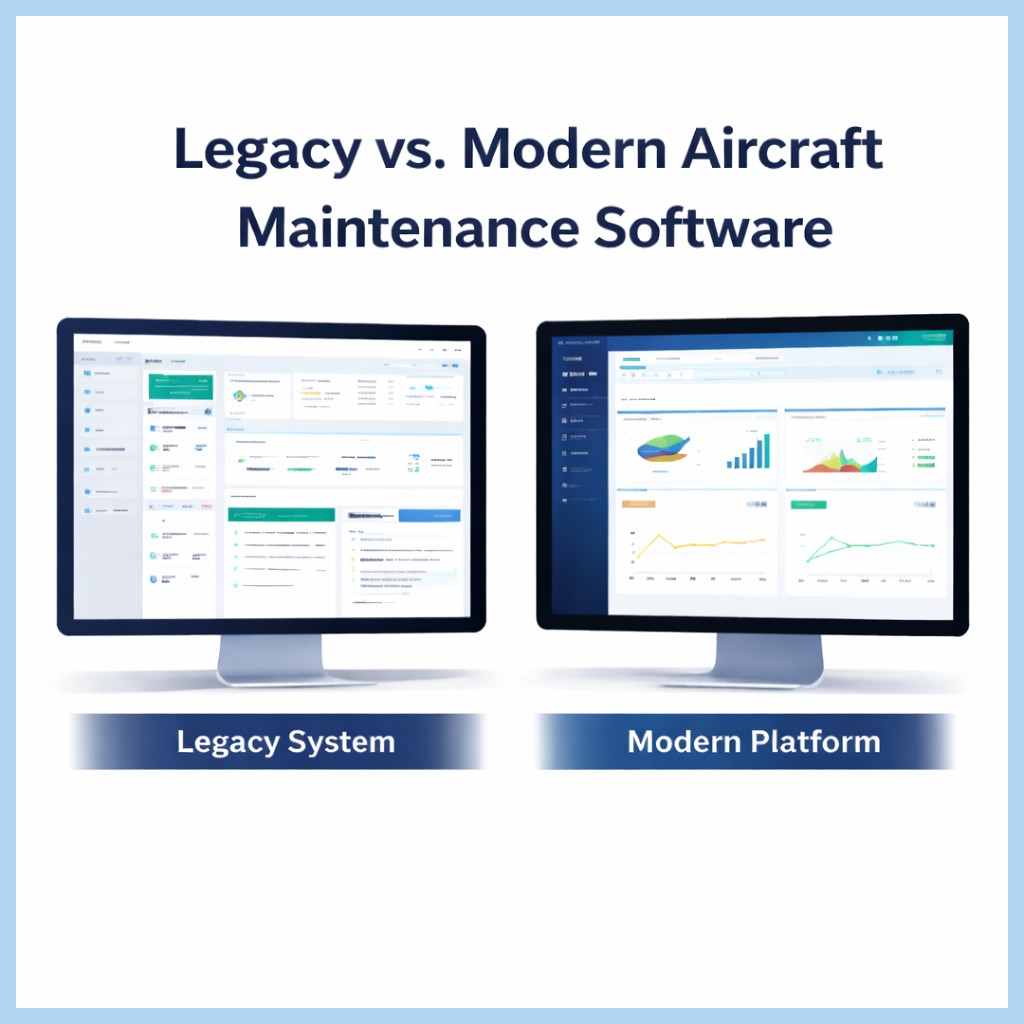
The distinction between legacy and next-generation aircraft maintenance tracking programs comes down to architectural philosophy. Modern solutions are built cloud-native, mobile-first, and API-centric from the ground up — enabling capabilities that were simply not possible on the client-server architectures of the 1990s and 2000s.
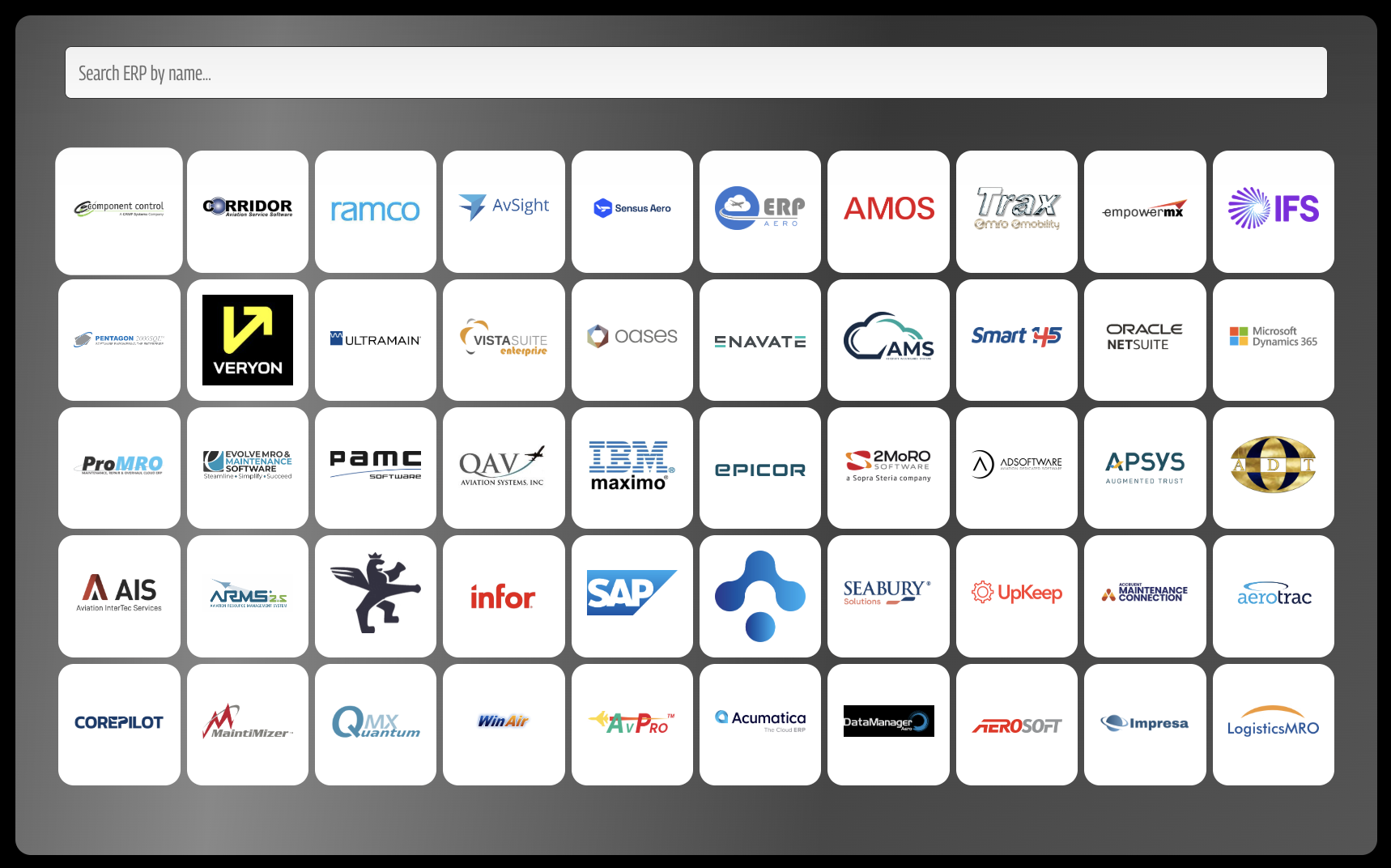
CORRIDOR represents this modern approach well. Rather than forcing operators to adapt their processes to software limitations, CORRIDOR’s flexibility allows customization to match actual maintenance workflows. For Part 145 repair stations managing multiple customer requirements simultaneously, this adaptability eliminates the workarounds that slow down operations on legacy platforms.
Swiss-AS’s AMOS demonstrates how modern aircraft maintenance tracking programs integrate across the entire aviation ecosystem. AMOS connects maintenance tracking with supply chain, finance, and regulatory compliance in a unified platform. With over 200 customers worldwide and 600+ integrations across the aircraft maintenance ecosystem, AMOS shows what’s possible when tracking is part of a fully connected operational architecture.
Ramco Aviation brings cloud-native architecture with strengths in mobility and intuitive user experience. Their mobile-first approach puts maintenance data directly into technicians’ hands on the flight line, and their recent deployments in Q1 2026 — including Sahar Group’s selection of Ramco for end-to-end lifecycle coverage — demonstrate the platform’s growing traction across helicopter, defense, and component MRO operations.

Selecting the Right Aircraft Maintenance Tracking Program: A Practical Framework
The most successful operators approach software selection by starting with operational requirements rather than feature checklists. Three questions can sharpen the evaluation:
How many data sources feed your maintenance planning decisions? If planners routinely pull from three or more disconnected systems, integration capability should be the top evaluation criterion — ahead of any individual feature.
How much time does your team spend reconciling data? This number directly quantifies the ROI threshold for modern aircraft maintenance tracking programs. Every hour spent on reconciliation is an hour not spent on value-adding maintenance work.
What is your true cost per hour of unscheduled downtime? Understanding this figure reveals whether you need enterprise-grade predictive maintenance capabilities or whether core tracking functionality delivers sufficient value.
Beyond the selection itself, the most important success factor is implementation approach. Phased rollouts that build organizational confidence, upfront investment in data cleanup before migration, and executive sponsorship that goes beyond budget approval to active workflow redesign — these are the factors that separate implementations that deliver lasting value from those that stall.

The Cloud-Native Momentum: Where the Industry Is Heading
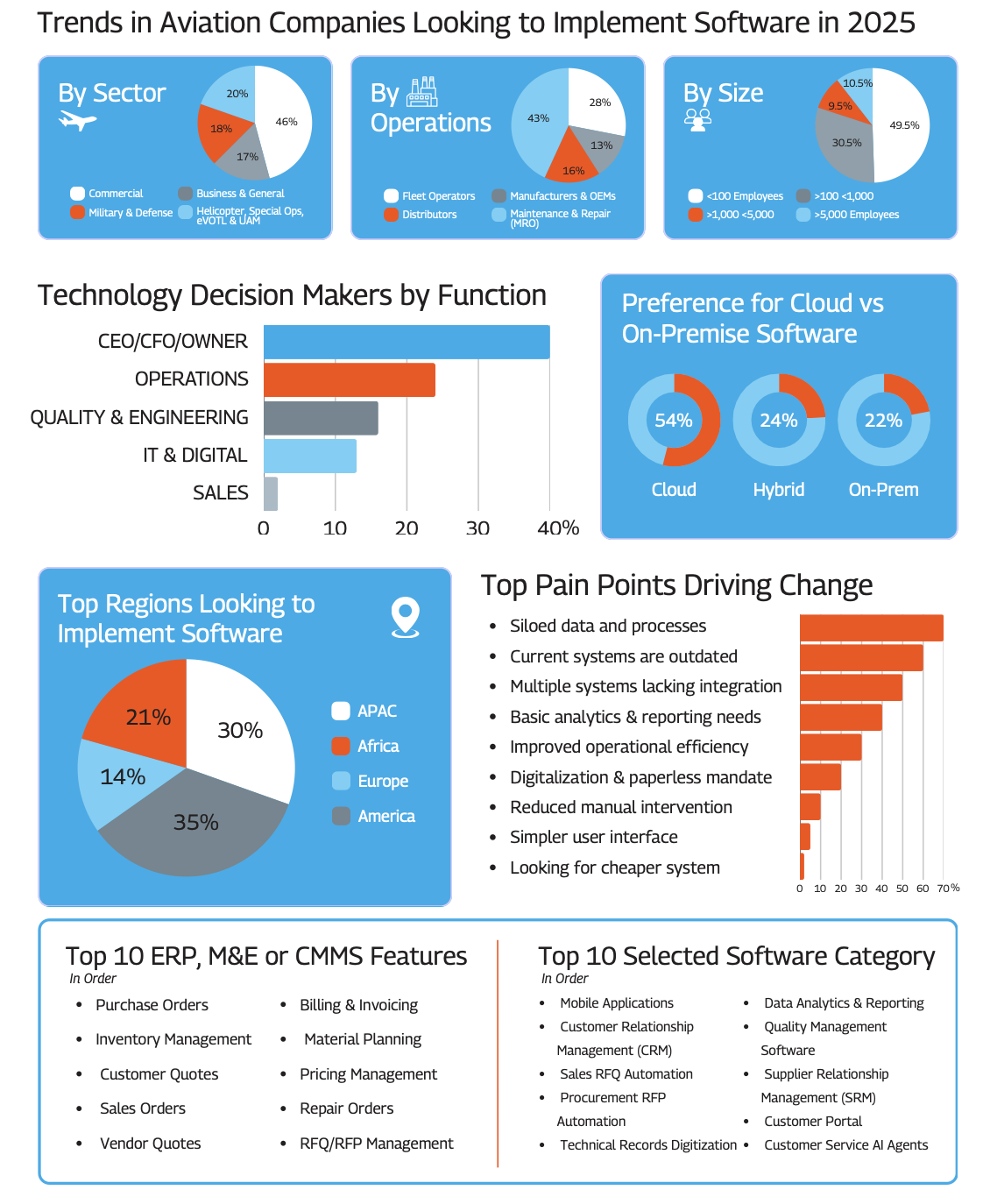
The aircraft maintenance tracking landscape has shifted decisively toward cloud-native architectures. According to Mordor Intelligence’s 2025 Aviation Software Market report, cloud-based solutions accounted for nearly 50% of aviation software revenue in 2024, with hybrid architectures growing at an 8.45% CAGR through 2030. The overall aviation software market is projected to grow from $13.13 billion in 2025 to $18.12 billion by 2030.
This shift is driven by tangible operational advantages: real-time multi-site collaboration, automatic regulatory updates, predictable OpEx pricing models, and enterprise-grade disaster recovery without dedicated IT infrastructure. For operators managing fleets across multiple bases, cloud-native systems eliminate the data synchronization headaches that have plagued on-premise deployments for decades.
The talent factor is increasingly relevant as well. As Boeing’s 2025 Pilot and Technician Outlook projects the industry will need 710,000 new maintenance technicians through 2044, operators with modern, intuitive digital tools have a meaningful advantage in attracting and retaining the next generation of aviation professionals.
The Bottom Line: Tracking Programs as Strategic Assets
Aircraft maintenance tracking programs have evolved from back-office utilities into strategic assets that either enable or constrain your entire operation. The operators getting the most value in 2026 are those who treat software selection as a strategic investment decision — one that touches compliance, productivity, talent acquisition, and ultimately, fleet availability.
The technology has matured. The ROI is proven. The question is no longer whether to upgrade, but which platform best fits your operation’s specific needs.
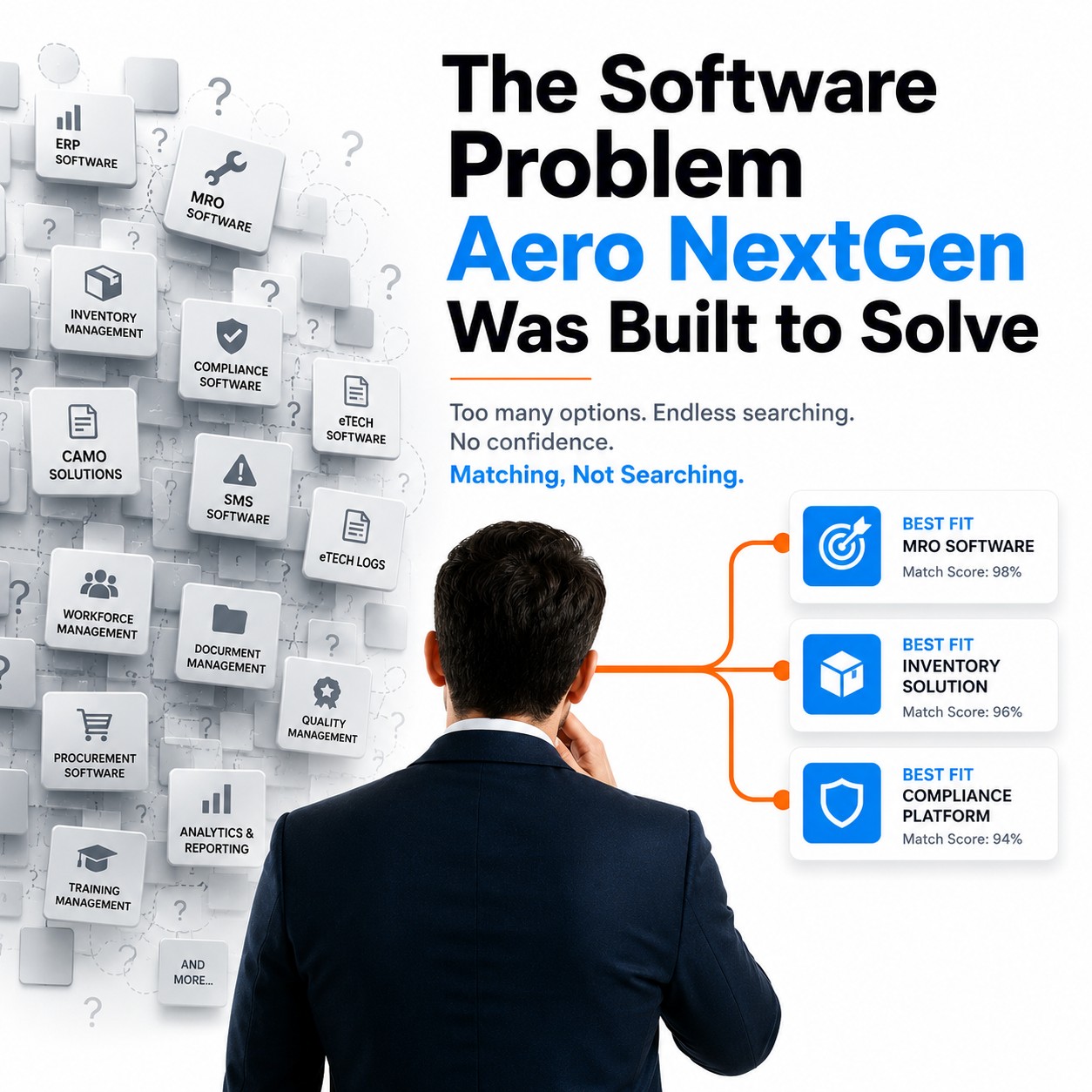
Not sure which platform is right for you? Aero NextGen’s Solution Finder Quiz matches you with the right aviation software for your specific operation in under 2 minutes. Take the quiz and discover your ideal solution today.
Sources & References
Boeing AOG Cost Estimates — $10,000 to $150,000 per hour depending on aircraft type and route (Boeing / Wikipedia)
Applied Sciences (MDPI, 2025) — Predictive maintenance reduces maintenance delays by up to 35% (AFI KLM Prognos data)
Deloitte Aerospace & Defense Outlook — Predictive maintenance delivers 15% downtime reduction, 20% labor productivity increase
Mordor Intelligence (2025) — Aviation Software Market: $13.13B (2025) to $18.12B (2030); cloud solutions held 49.80% of revenue in 2024
Boeing 2025 Pilot and Technician Outlook — 710,000 new maintenance technicians needed through 2044
EASA Part-IS — Information Security Regulations (EU) 2023/203 and 2022/1645, applicable October 2025 / February 2026
Swiss-AS — AMOS: 200+ customers, 600+ integrations, 35+ years aviation software (swiss-as.com)
AviTrader (March 2026) — Ramco Aviation selected by Sahar Group for end-to-end lifecycle MRO coverage







.webp)





.png)

.png)
.png)


%20(1).png)
.png)








.png)









.jpeg)




.png)














Aviation Solutions, Find your Match
Run the survey to get a shortlist of the systems that match your operational needs – fast, simple, free.
Related Posts

.jpg)




%20(1).png)
%20(1).png)
.png)
%20(1)%20(1)%20(1).png)
.png)
.png)


%20(1).png)
.png)







%20(1)%20(1)%20(1)%20(1).png)
.png)
%20(1).png)
.png)
%20(1).png)
.png)
%20(1)%20(1).png)
.png)
.png)
.png)
%20(1)%20(1)%20(1)%20(1).png)
%20(1).webp)
.png)
.jpeg)
%20(1).webp)

.webp)

%20(1).webp)

Aero NextGen matched us to the right solution providers that helped us standardize the data in such a way that we can now put it to use. Aero Nextgen’s ability to quickly understand the business needs and translate them into tangible solutions was impressive.


Aero NextGen matched us to the right solution providers that helped us standardize the data in such a way that we can now put it to use. Aero Nextgen’s ability to quickly understand the business needs and translate them into tangible solutions was impressive.
Aero NextGen matched us to the right solution providers that helped us standardize the data in such a way that we can now put it to use. Aero Nextgen’s ability to quickly understand the business needs and translate them into tangible solutions was impressive.
We generate a tremendous amount of data. Aero NextGen matched us to the right solution providers that helped us standardize the data in such a way that we can now put it to use. Aero Nextgen's ability to quickly understand the business needs and translate them into tangible solutions was impressive.


Aero Next Gen quickly identified our challenges and matched us with the right ERP solution. Their expertise saved us time, and transformed our MRO operations.


My experience working with Aero NextGen is extremely positive. We setup a battery shop in the middle of Brexit in under 6 months with their help. Thoroughly professional. Attention to detail is second to none with innovative and creative ideas.
.png)

We have been struggling to performance manage our shopfloors for ages. Aero NextGen has connected us to solution providers that solved this for us within weeks. We are now capable of tracking capacity, productivity, utilization, and operational efficiency with instantaneously. The level of expertise has made the engagement seamless for our internal teams.


Straight to Your Inbox.
Subscribe to receive the latest trends on aviation software and services.