

Top 10 ERP Systems for Aviation Parts Trading Companies in 2026

At Aero NextGen, we work with aviation parts traders, distributors, brokers, and MROs every day to match them with the right technology for their operations. Our platform hosts a growing network of vetted ERP and digital solution providers purpose-built for the aerospace aftermarket — and we see firsthand which systems are delivering real results for parts trading companies.
The aircraft aftermarket parts market is projected to grow from approximately $53 billion in 2025 to $78.5 billion by 2030, according to Global Market Insights. That growth means more volume, more complexity, and more pressure on the systems that manage quoting, inventory, procurement, compliance, and logistics. For parts traders still running on spreadsheets, disconnected tools, or generic ERPs not built for aviation, the operational gap is widening fast.
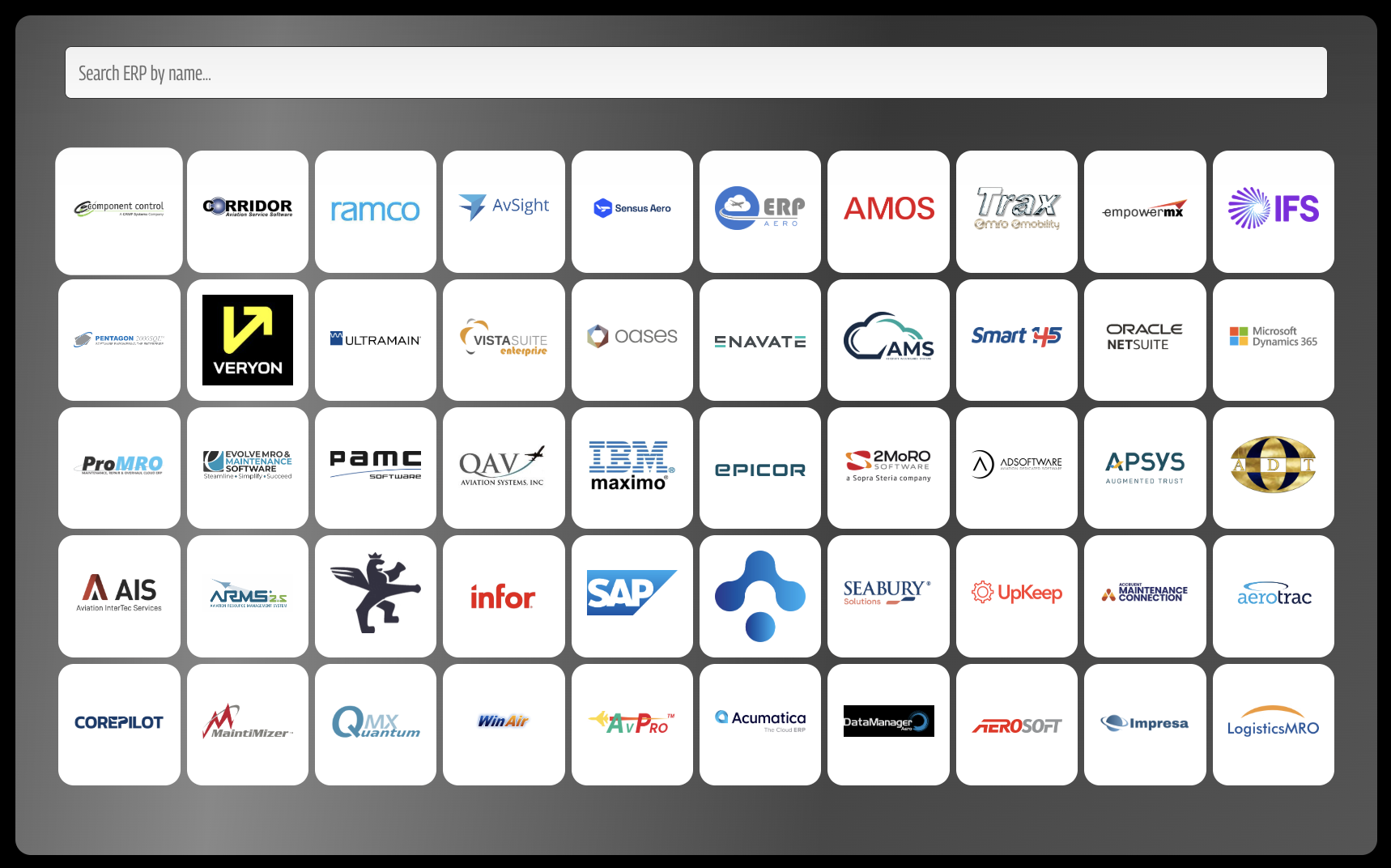
This guide covers the 10 ERP systems we consider the strongest options for aviation parts trading companies in 2026 — presented in no particular order. Every system listed is aviation-native, meaning it was designed from the ground up for aerospace workflows, not adapted from another industry.
%20(1)%20(1)%20(1)%20(1)%20(1)%20(1)%20(1)%20(1)%20(1)%20(1)%20(1)%20(1)%20(1).png)
Why Aviation Parts Traders Need a Specialized ERP
Parts trading is a distinct business model within the aerospace aftermarket. Unlike MRO shops focused on labor and repair execution, or airlines focused on fleet availability, parts traders operate at the intersection of procurement, sales, logistics, and compliance — often across multiple warehouses, currencies, and regulatory jurisdictions simultaneously.
The operational demands are:
RFQ speed and accuracy are everything in parts trading. A trader who can respond to an RFQ in minutes with accurate pricing, availability, and certification data wins the deal. A trader who takes hours to manually compile the same information from disconnected systems loses it.
Parts traceability and certification management underpin every transaction. Aviation parts require complete documentation — trace-to-birth records, release certificates, serviceable tags, shelf-life tracking, and compliance with FAA, EASA, and international standards. A single documentation gap can void a sale or trigger a regulatory action.
Inventory visibility across locations determines margin and fill rate. Whether managing consignment stock, exchange pools, loan agreements, or multi-warehouse inventory, traders need a single real-time view of what is available, what is committed, and what is in transit.
Integrated financials tie every transaction together. Multi-currency invoicing, margin tracking by part number and customer, credit management, and real-time profitability reporting are baseline requirements — not optional add-ons.
Generic ERP systems from outside aviation consistently fail at these requirements. The systems in this guide were built to handle them natively.
%20(1).png)
The Top 10 ERP Systems for Aviation Parts Trading Companies
Pentagon 2000 is one of the most established aviation-native ERPs in the market, with over 1,000 clients worldwide and 40 years of continuous development. The platform serves parts traders, distributors, MROs, manufacturers, and operators across commercial, military, and business aviation. For parts trading companies, Pentagon delivers deep functionality in RFQ/quote management, inventory control, exchange and consignment tracking, pricing management, and full financial integration. The system offers 100+ modules, giving organizations the flexibility to deploy exactly what they need. Pentagon supports cloud, on-premise, and browser-based deployment. Clients include Boeing, Airbus, and United Airlines, alongside hundreds of mid-market distributors and brokers. The platform’s recent web version Pentagon UpStream and AI-powered RFQ-to-quote processing reflect its continued investment in modernization. Headquarters: New York, USA. Deployment: Cloud, on-premise, browser.
2. Quantum Control / CAMP Aviate
Quantum Control by Component Control has been a dominant force in the aviation aftermarket for decades, with approximately 2,000 clients globally. The platform is purpose-built for aviation MROs, distributors, and parts traders, offering end-to-end functionality from quoting and procurement to maintenance, sales, and invoicing with full FAA and EASA compliance. Quantum’s strengths for parts traders include serialized inventory tracking, real-time analytics, and integrations with key industry platforms including ILS, PartsBase, and AeroXchange. Component Control is now part of CAMP Systems, and the next-generation platform — CAMP Aviate — is designed for phased adoption, allowing organizations to deploy AI and workflow capabilities alongside their existing systems before transitioning to the full Aviate ERP. This approach protects prior technology investments while delivering immediate value. Headquarters: United States. Deployment: Cloud and hybrid.
3. AvSight
AvSight is a cloud-based ERP built specifically for aviation suppliers and MROs, with a strong presence in the aftermarket parts trading segment. Built on Salesforce’s infrastructure, AvSight delivers full visibility into operations with modules covering inventory, sales, procurement, repair management, CRM, and warehouse operations. For parts traders, the platform’s strengths include paperless processes, intuitive quoting workflows, and seamless integrations with ILS, PartsBase, SkySelect, and AeroXchange. AvSight holds multiple security certifications including SOC-2, FedRAMP, GDPR, and NIST/CMMC. Notable clients include KP Aviation, Willis Lease, TrueAero, and Eirtrade. Headquarters: United States. Deployment: Cloud (Salesforce). Starting price: $119/user/month.
4. ERP.Aero
ERP.Aero is an aviation-native cloud ERP designed specifically for aviation suppliers, distributors, brokers, and MROs. The platform unifies quoting, sourcing, inventory, document management, repairs, finance, and compliance into a single real-time environment. For parts traders, ERP.Aero’s standout capabilities include automated RFQ import and processing from ILS, PartsBase, and email parsing, integrated eCommerce and marketplace functionality with Stripe payment processing, and a built-in digital insurance integration with Flycovr providing instant coverage up to $2M per shipment. The platform reports a 98.6% customer retention rate and offers a 4–8 week implementation timeline. Security certifications include SOC-2, FedRAMP, GDPR, and NIST/CMMC. Headquarters: Miami, USA. Deployment: Cloud. Starting price: $110/user/month.
5. Vista-Suite by Ambry Hill Technologies
Vista-Suite is a cloud-native ERP explicitly designed for aviation parts traders, distributors, Part 145 repair stations, and teardown companies. Ambry Hill Technologies built the platform to address the gaps they saw in legacy systems serving the aftermarket. Vista-Suite includes patented technology for automating customer quotes and incoming RFQ processing, along with full inventory management, repair order tracking, logistics management, and Android/iOS mobile apps. The system integrates with ILS, The 145, and Salesforce. Notable clients include Latitude Aero, VSE Aviation, Aerfin, Standard Aero, and Aero Products. Headquarters: United States. Deployment: Cloud. Starting price: $50/user/month.
6. CorePilot
CorePilot is a modern, cloud-native ERP purpose-built for the aviation aftermarket. The platform combines AI-powered workflow automation with an intuitive interface designed for parts traders, brokers, distributors, and leasing companies. CorePilot covers inventory, sales, procurement, repair management, CRM, and warehouse operations in a single environment. The platform’s AI automation eliminates manual tasks in quoting and procurement workflows, accelerating turnaround times and reducing errors. CorePilot integrates with ILS, PartsBase, Locatory.com, SkySelect, AeroXchange, and Salesforce. The platform is backed by an advisory board of 30+ aviation professionals. Security certifications include SOC-2 and GDPR. Implementation typically takes 2–4 weeks. Headquarters: United States. Deployment: Cloud. Starting price: $250/user/month.
7. Smart145
Smart145 is a cloud-based MRO and inventory management ERP founded in 2018 by industry veterans in Florida. The platform serves Part 145 repair stations, parts brokers, and distributors with a focus on simplicity and accessibility. Smart145’s differentiator is its pricing model and flexibility — no contracts (month-to-month), all-included access to every module for every user, free updates, and no hidden fees. For parts traders, the platform covers full inventory management, RFQ/quote processing, exchange management, consignment tracking, and integrated financials. Smart145 integrates with ILS, AeroXchange, PartsBase, ePlane, The 145, and QuickBooks. Notable clients include Aviotek, A&W Group, Mecko Group, and Fenix Aerospace. Headquarters: Florida, USA. Deployment: Cloud. Starting price: $95/user/month.
LogMRO is built on 40+ years of aviation software experience — its founders created the GOLD (Government On-Line Data System) and ARMS (Aerospace Repair Management System) platforms, both of which were later acquired by Boeing. That institutional knowledge is embedded into LogMRO’s architecture, which uses a Meta Driven model similar to Salesforce for fast reporting and high configurability. For parts brokers, the platform provides a unified view of every aspect of a part on a single page — inventory across locations, purchase orders, sales orders, repair status, and movement history. The system supports heavy maintenance work orders with nearly unlimited sub-work orders, making it equally capable for MROs that also trade parts. LogMRO integrates with ILS, PartsBase, and AeroXchange. Headquarters: United States. Deployment: Cloud. Starting price: $150/user/month.
9. Power Aero Suites (PAS)
Power Aero Suites is a comprehensive cloud-based ERP designed by aviation professionals for MROs and parts traders. The platform covers inventory management with detailed stock tracing, RFQ and quote management, repair workflows, tool calibration, publication management, and full financial reporting — all in a single application. PAS differentiates through its all-in-one approach: rather than requiring multiple add-on modules, the core application includes the full range of functionality. The platform is built on modern cloud-native architecture with dynamic dashboards and real-time business analytics. Recent deployments include MTI Aviation in South Florida, which migrated from a legacy ERP with minimal downtime. Headquarters: United States. Deployment: Cloud.
10. ePlaneAI
ePlaneAI represents the emerging AI-first approach to aviation aftermarket operations. The platform combines traditional ERP functionality — inventory, procurement, quoting, and logistics — with embedded artificial intelligence for demand forecasting, supplier scoring, and predictive analytics. For parts traders, the AI capabilities translate into practical outcomes: automated prioritization of high-value RFQ opportunities, seasonality-aware procurement forecasts, and a natural-language query tool (AeroGenie) that allows users to ask questions like “Which suppliers had the most delayed shipments last quarter?” and receive instant, data-verified answers. Early adopters report measurable improvements in inventory turnover and AOG reduction through AI-driven early-warning maintenance alerts. Headquarters: United States. Deployment: Cloud.
%20(1)%20(1)%20(1)%20(1).png)
How to Choose the Right ERP for Your Parts Trading Operation
Every parts trading company has a different profile — different fleet types served, different warehouse footprint, different transaction volume, different regulatory environment. The right ERP depends on where you are today and where you need to be in three years. Four factors matter most:
Transaction volume and quoting speed. If your operation processes hundreds of RFQs per day, AI-powered quoting automation (available in platforms like CAMP Aviate, CorePilot, ERP.Aero, and ePlaneAI) can be a transformative capability. If your volume is lower but your quotes are complex, deep configurability matters more.
Integration with industry marketplaces. Most aviation parts transactions flow through platforms like ILS, PartsBase, AeroXchange, and SkySelect. Your ERP should integrate natively with the marketplaces where your customers and suppliers transact. Every system in this guide connects with at least two of these platforms.
Compliance and traceability requirements. If you serve defense customers or operate under NIST/CMMC, SOC-2, or FedRAMP requirements, verify that the platform holds the relevant certifications. AvSight, ERP.Aero, Pentagon 2000, and CAMP Aviate all hold multiple security certifications.
Implementation timeline and internal resources. Cloud-native platforms like CorePilot (2–4 weeks), ERP.Aero (4–8 weeks), and Smart145 (4–6 weeks) can get you operational quickly. More comprehensive platforms like Pentagon 2000 and Quantum Control may require longer implementation timelines but deliver deeper functionality for complex operations.
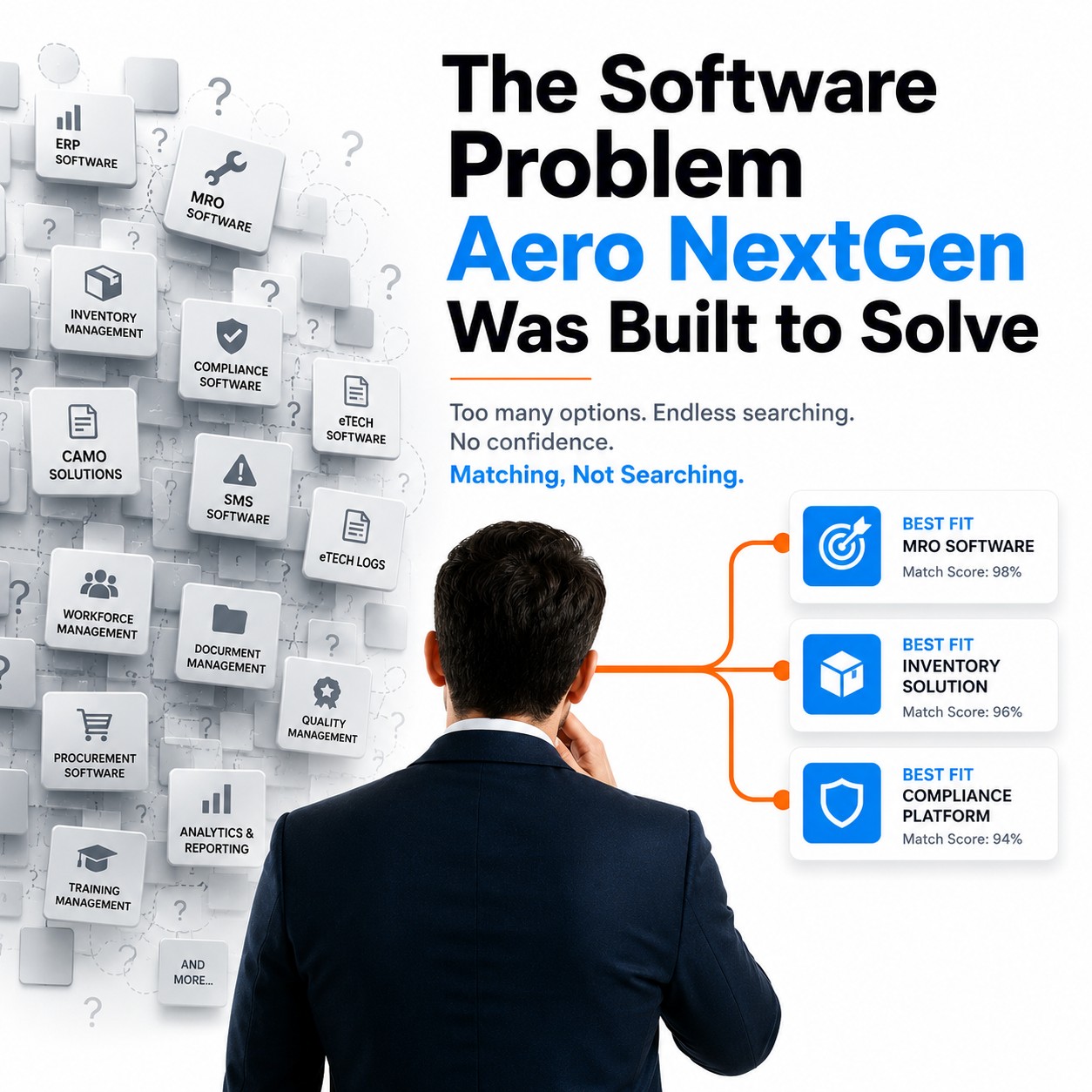
Not sure which system fits your operation? Aero NextGen’s Solution Finder Quiz matches you with the right aviation ERP based on your business type, fleet size, transaction volume, and specific operational requirements — in under 2 minutes. Every vendor in this guide is part of the Aero NextGen platform, and our team can facilitate introductions, demos, and side-by-side comparisons at no cost to you.
.png)
Sources & References
Global Market Insights (2025) — Aircraft Aftermarket Parts Market: $53.2B (2025) to $78.5B (2030), CAGR 8.3%
Pentagon 2000 — 1,000+ clients worldwide, 40+ years in market (pentagon2000.com)
Component Control / CAMP Systems — Quantum Control: ~2,000 clients; CAMP Aviate next-generation platform (campaviate.aero)
AvSight — Built on Salesforce, 75+ clients including KP Aviation, Willis Lease, TrueAero (avsight.net)
ERP.Aero — 98.6% customer retention rate, 4–8 week implementation (erp.aero)
Vista-Suite / Ambry Hill Technologies — Patented RFQ automation, cloud-native with mobile apps (ambryhill.com)
CorePilot — Cloud-native aftermarket ERP, 30+ member aviation advisory board (corepilotcloud.com)
Smart145 — No-contract month-to-month pricing, founded 2018 (smart145.com)
LogisticsMRO — Founders created Boeing’s GOLD and ARMS systems (logisticsmro.com)
Power Aero Suites — Cloud ERP for MROs and parts traders (poweraerosuites.com)
ePlaneAI — AI-first aviation aftermarket platform (eplaneai.com)
All vendor data verified against company websites and Aero NextGen platform profiles as of April 2026.







.webp)





.png)

.png)
.png)


%20(1).png)








.png)













.jpeg)



.png)













Aviation Solutions, Find your Match
Run the survey to get a shortlist of the systems that match your operational needs – fast, simple, free.
Related Posts


.jpg)




%20(1).png)
%20(1).png)
.png)
%20(1)%20(1)%20(1).png)
.png)
.png)

%20(1).png)
.png)







%20(1)%20(1)%20(1)%20(1).png)
.png)
%20(1).png)
.png)
%20(1).png)
.png)
%20(1)%20(1).png)
.png)
.png)
.png)
%20(1)%20(1)%20(1)%20(1).png)
%20(1).webp)
.png)
.jpeg)
%20(1).webp)

.webp)

%20(1).webp)

Aero NextGen matched us to the right solution providers that helped us standardize the data in such a way that we can now put it to use. Aero Nextgen’s ability to quickly understand the business needs and translate them into tangible solutions was impressive.


Aero NextGen matched us to the right solution providers that helped us standardize the data in such a way that we can now put it to use. Aero Nextgen’s ability to quickly understand the business needs and translate them into tangible solutions was impressive.
Aero NextGen matched us to the right solution providers that helped us standardize the data in such a way that we can now put it to use. Aero Nextgen’s ability to quickly understand the business needs and translate them into tangible solutions was impressive.
We generate a tremendous amount of data. Aero NextGen matched us to the right solution providers that helped us standardize the data in such a way that we can now put it to use. Aero Nextgen's ability to quickly understand the business needs and translate them into tangible solutions was impressive.


Aero Next Gen quickly identified our challenges and matched us with the right ERP solution. Their expertise saved us time, and transformed our MRO operations.


My experience working with Aero NextGen is extremely positive. We setup a battery shop in the middle of Brexit in under 6 months with their help. Thoroughly professional. Attention to detail is second to none with innovative and creative ideas.
.png)

We have been struggling to performance manage our shopfloors for ages. Aero NextGen has connected us to solution providers that solved this for us within weeks. We are now capable of tracking capacity, productivity, utilization, and operational efficiency with instantaneously. The level of expertise has made the engagement seamless for our internal teams.


Straight to Your Inbox.
Subscribe to receive the latest trends on aviation software and services.