
Digital Twin Technology and Agentic AI: The Future of Aviation Maintenance Planning

The aviation MRO software market is experiencing unprecedented growth, projected to expand from $7.15 billion in 2025 to $8.88 billion by 2030. At the heart of this transformation lies the convergence of digital twin technology and agentic AI—innovations fundamentally reshaping how airlines and MROs approach aircraft maintenance planning.
The Aircraft Maintenance Planning Paradigm Shift
Traditional aircraft maintenance management software operates reactively, following predetermined schedules and manual analysis. Monica Badra, founder of Aero NextGen, observes: "We've digitized paper processes for decades. Digital twins and agentic AI fundamentally change the game—from recording what happened to predicting and autonomously optimizing what should happen next."
According to research published in the European Journal of Computer Science and Information Technology (2025), airlines implementing digital twin technology have documented maintenance cost reductions averaging 28.5% across their fleets, with operational availability increases reaching up to 37.2% for wide-body aircraft.
What Is Digital Twin Technology in Aviation Maintenance Software?
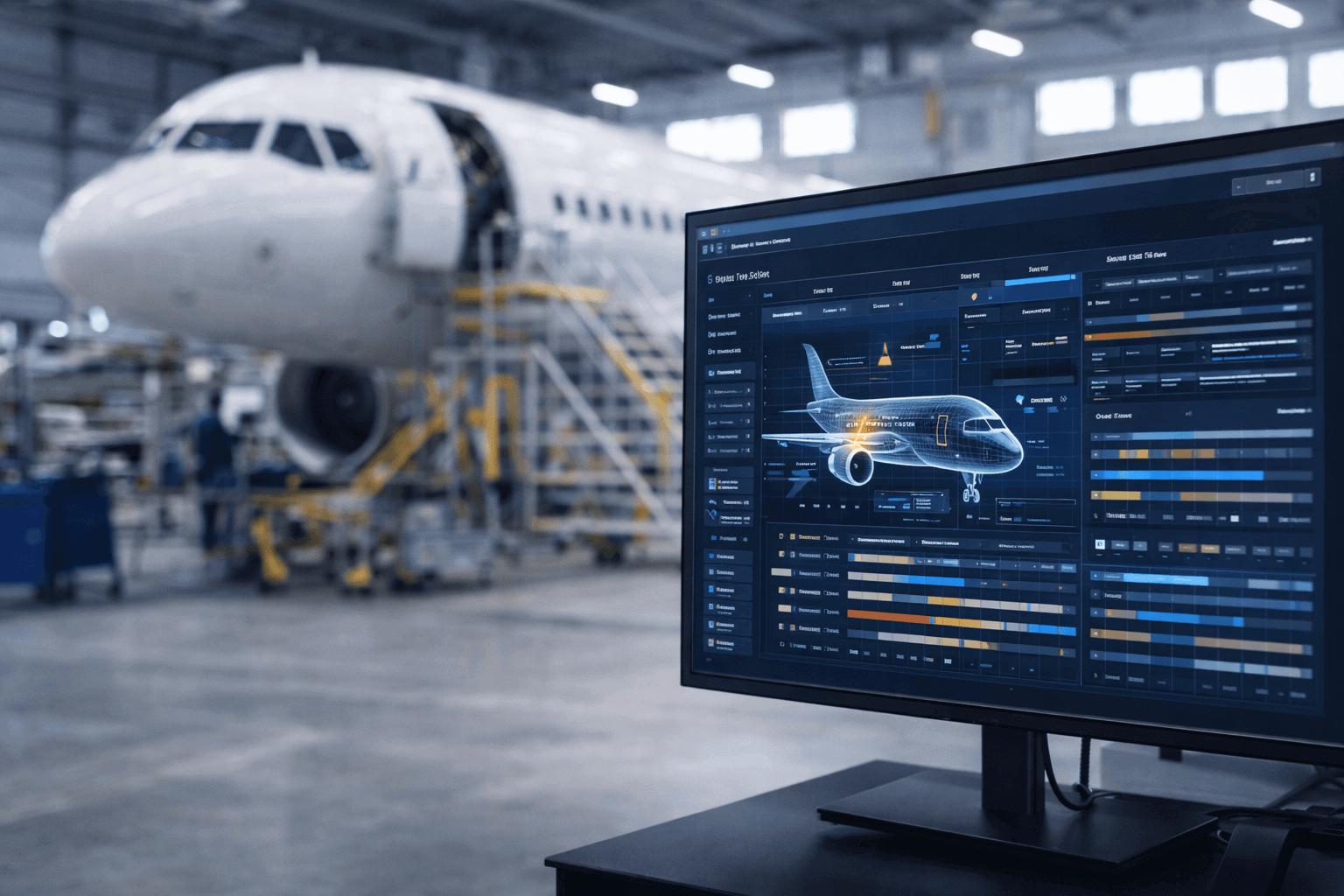
A digital twin creates a continuously updated virtual replica of a maintenance organization's full ecosystem—physical aircraft, financials, components—mirroring real-time operational data, maintenance history, component life cycles, and performance parameters. Unlike static databases in legacy aviation maintenance tracking software, digital twins evolve in real-time.
Patrick Corrigan, Chief Customer Officer at Aerogility, explains how digital twins function in practice: "Aerogility integrates with M&E systems and uses this data to generate agents that operate within your maintenance footprint. These agents are continuously refreshed through automated data feeds from source systems, ensuring the digital twin accurately reflects the current state of the fleet and its operating environment."
The Architecture: Airbus's Skywise platform exemplifies this integration. Over 12,000 aircraft are currently connected to Skywise, where real-time data from sensors feeds their virtual twins. This empowers more than 50,000 users worldwide to develop models that predict wear, optimize maintenance schedules, reduce downtime, and extend component life.
Lufthansa's AVIATAR platform has successfully integrated with 34 different airline maintenance management systems worldwide, processing approximately 23.7 terabytes of operational data daily. This integration has enabled predictive maintenance coverage for 71.4% of critical aircraft systems across participating airlines, with planned expansion to 87.5% coverage by mid-2026.
Modern platforms like Aerogility integrate with enterprise systems including M&E solutions such as AMOS, SAP, Maintenix, and TRAX, as well as broader data platforms like Skywise and Snowflake, ensuring comprehensive data integration across the maintenance ecosystem.









.webp)



.png)

.png)
.png)


%20(1).png)








.png)











.jpeg)



.png)











Agentic AI: Beyond Predictive to Prescriptive Maintenance
While predictive analytics forecast component failures, agentic AI autonomously recommends—and in advanced implementations, executes—optimal maintenance interventions.
The Critical Distinction: Traditional aircraft maintenance planning software presents data. Agentic AI systems analyze constraints across maintenance capacity, parts availability, aircraft utilization schedules, crew resources, and regulatory windows—then autonomously generate optimized maintenance plans.
Research published in the Global Journal of Engineering and Technology Advances (2025) documented how AI-powered maintenance scheduling systems can simultaneously optimize across "more than two dozen distinct constraint categories, including parts availability across multiple inventory locations, technician certification requirements for specialized tasks, aircraft routing projections, facility capacity limitations, and regulatory compliance requirements." Generating an optimized quarterly maintenance plan for a 900-aircraft fleet traditionally required approximately 15,000 person-hours using manual methods.
Aerogility has pioneered agentic AI application in maintenance planning for several years, using a transparent white-box approach that ensures decisions are explainable and auditable in safety-critical environments. The platform's intelligent agents continuously evaluate operational data, constraints, and objectives to optimize maintenance plans while operating within user-defined policies and governance frameworks. Current autonomous capabilities include determining optimal facility placement for maintenance events, identifying the best timing for interventions, and merging maintenance events for efficiency—while maintaining human oversight for decisions with significant operational, financial, or regulatory impact.
Real-World Implementation: Digital Twins Meet Aviation MRO Software
Leading MROs are integrating digital twin capabilities beyond proof-of-concept to operational deployment. Lufthansa Technik's predictive models using digital twin technology reduce unscheduled component removals by 35%, according to industry analysis.
One airline customer implementing Aerogility's platform achieved significant operational gains, supporting a larger fleet and expanded flying programme without increasing planning effort or headcount. In one winter programme, the airline delivered its maintenance plan with 169 days of contingency remaining—equivalent to the potential for up to £9.5 million in additional revenue through increased aircraft availability. While multiple operational improvements contributed to this outcome, advanced planning and scenario optimization capabilities played a key role in enabling more efficient use of assets, facilities, and maintenance windows.
Economic Benefits: Analysis of 82 airlines using various forms of digital twin technology revealed average maintenance cost savings of $2.67 million per wide-body aircraft annually, with ROI achievement typically occurring within 14-22 months.
Dutch carrier KLM reduced its minimum equipment list defects, delays, and cancellations by 50% since introducing AI to manage predictive maintenance, according to industry reports on digital twin implementation.
Technical Integration with Aircraft Maintenance Management Software
API-First Architecture: Modern implementations connect digital twin platforms to incumbent aircraft maintenance software via RESTful APIs, avoiding costly system replacements. This approach preserves institutional knowledge embedded in legacy systems while adding predictive capabilities.
During implementation, leading vendors work closely with customers to understand their IT landscape and design effective data architecture and flows, ensuring the digital twin is powered by the right combination of sources to meet operational needs.
Data Quality Prerequisites: According to Aerotime's Q4 2025 MRO technology survey, 68% of digital twin implementation failures stem from inadequate data governance, not technology limitations. Operators must first audit their aircraft maintenance management software data—maintenance records, component traceability, failure codes—before AI can deliver value.
The Role of MRO Software in the AI-Enhanced Maintenance Ecosystem
Aviation MRO software serves as the execution layer beneath digital twin intelligence. While AI determines optimal maintenance timing and resource allocation, robust aircraft maintenance tracking programs manage work orders, parts procurement, compliance documentation, and technician assignment.
Integration Imperative: According to the 2026 market outlook released by Research and Markets, Boeing forecasts 42,595 new commercial aircraft deliveries by 2042. These deliveries emphasize the critical role MRO software plays in facilitating data-driven maintenance strategies, optimizing inventory, setting preventive maintenance schedules, and handling technical data.
EmpowerMX's EMX Vision, introduced in October 2023, is an AI-powered module enhancing MRO planning and execution through accurate predictions of maintenance needs and durations, representing the maturation of AI-integrated solutions.
Market Growth and Adoption Trends
According to Mordor Intelligence, the aviation software market is projected to grow from USD 13.13 billion in 2025 to USD 18.12 billion by 2030, at a CAGR of 6.64%. The MRO software segment accounted for 58.18% market share in 2024, reflecting airlines' focus on operational reliability.
McKinsey research shows that investments in digital twin technologies will rise to more than $48 billion by 2026 globally. According to Deloitte studies, implementing predictive maintenance programs results in a 15% reduction in downtime and a 20% improvement in labor productivity.
Challenges: Technical Debt and Organizational Readiness
Airlines running aircraft maintenance management software older than 15 years face critical decisions. According to AviTrader estimates, incremental API development to integrate AI platforms costs $800K-$1.5M, while complete system replacement exceeds $5M for mid-sized operators.
Beyond technical challenges, Corrigan identifies organizational mindset as a key barrier: "The biggest barrier is often the industry's reliance on established processes, a 'if it isn't broken, don't fix it' mindset, combined with understandable caution around adopting new technologies in a safety-critical environment. Many organizations are hesitant to change proven maintenance planning approaches without clear evidence of reliability, integration feasibility, and measurable return on investment."
The Calculation: Fleets under 30 aircraft may not achieve ROI on advanced AI implementations. Operators with 100+ aircraft see payback periods of 14-22 months.
What Forward-Thinking Operators Are Doing Now
Progressive airlines and MROs are taking incremental approaches:
Data Infrastructure Audit: Assessing aircraft maintenance tracking software data quality and API readiness
Pilot Programs: Deploying digital twins for specific fleets before enterprise rollout
Workforce Development: Training maintenance planners on AI collaboration
Vendor Evaluation: Selecting aviation maintenance management software with documented AI integration capabilities
Addressing industry hesitation requires continued education, transparency, and demonstrable results. Collaborative pilots, industry case studies, and clear regulatory alignment can help accelerate adoption by proving that digital twins enhance rather than disrupt safe and effective maintenance operations.
The 2026 Decision Point
According to a study published in the Journal of Prognostics and Health Management (2026), next-generation AI systems in development are expected to identify potential failures up to 42 days in advance with accuracy rates approaching 98.1% for specific components.
Digital twin-driven predictive maintenance can reduce maintenance costs by 18-25% while increasing availability by 5-15%, according to McKinsey research. For airlines and MROs, this means fewer grounded aircraft and more efficient use of maintenance resources.
The aircraft maintenance planning software you implement today determines whether your operation leads or follows the industry's AI transformation.
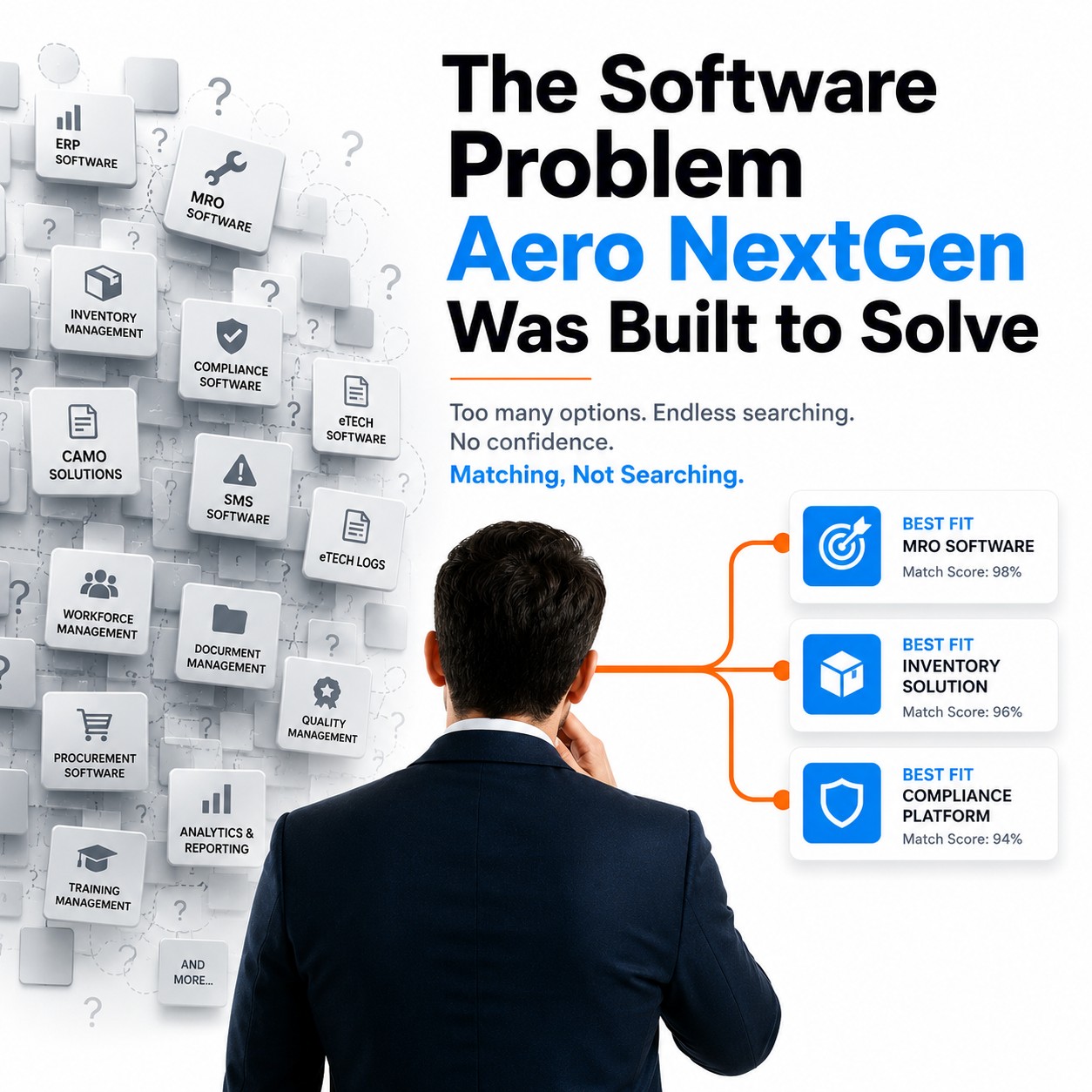
Discover aviation maintenance planning solutions with digital twin and AI capabilities. Take Aero NextGen's Solution Finder Quiz to receive a personalized shortlist of aviation maintenance management platforms matched to your fleet complexity, operational requirements, and digital readiness. Get your vetted recommendations at https://www.aero-nextgen/ .
Sources:
• Grand View Research - Aviation Software Market Report
• Research and Markets - Aviation MRO Software Market Report 2026
• Mordor Intelligence - Aviation Software Market Analysis
• European Journal of Computer Science and Information Technology - Digital Twin Technology Study (2025)
• Global Journal of Engineering and Technology Advances - AI in Aviation Maintenance (2025)
• Aerogility - Aviation Maintenance Trends 2026
• AviTrader - Digital Twins in the Hangar
• Airbus - Digital Twins Accelerating Aerospace Innovation
• Boeing - Commercial Market Outlook
• Wizz Air Case Study: https://www.aerogility.com/wizz-air-selects-ai-from-aerogility-for-future-fleet-maintenance-planning-2/
• Digital Twin Investment Article: https://www.linkedin.com/pulse/7-business-critical-reasons-airlines-investing-digital-twin-xjsdf/
• Aerogility Platform Demo: https://www.youtube.com/watch?v=8Kkf5QMV5NM

Aviation Solutions, Find your Match
Run the survey to get a shortlist of the systems that match your operational needs – fast, simple, free.
Related Posts

.jpg)

%20(1).png)
%20(1).png)
.png)
%20(1)%20(1)%20(1).png)
.png)
.png)

%20(1).png)
.png)




%20(1)%20(1)%20(1)%20(1).png)
.png)
%20(1).png)
.png)
%20(1).png)
.png)
%20(1)%20(1).png)
.png)
.png)
.png)
%20(1)%20(1)%20(1)%20(1).png)
%20(1).webp)
.png)
.jpeg)
%20(1).webp)

.webp)
%20(1).webp)

Aero NextGen matched us to the right solution providers that helped us standardize the data in such a way that we can now put it to use. Aero Nextgen’s ability to quickly understand the business needs and translate them into tangible solutions was impressive.


Aero NextGen matched us to the right solution providers that helped us standardize the data in such a way that we can now put it to use. Aero Nextgen’s ability to quickly understand the business needs and translate them into tangible solutions was impressive.
Aero NextGen matched us to the right solution providers that helped us standardize the data in such a way that we can now put it to use. Aero Nextgen’s ability to quickly understand the business needs and translate them into tangible solutions was impressive.
We generate a tremendous amount of data. Aero NextGen matched us to the right solution providers that helped us standardize the data in such a way that we can now put it to use. Aero Nextgen's ability to quickly understand the business needs and translate them into tangible solutions was impressive.


Aero Next Gen quickly identified our challenges and matched us with the right ERP solution. Their expertise saved us time, and transformed our MRO operations.


My experience working with Aero NextGen is extremely positive. We setup a battery shop in the middle of Brexit in under 6 months with their help. Thoroughly professional. Attention to detail is second to none with innovative and creative ideas.
.png)

We have been struggling to performance manage our shopfloors for ages. Aero NextGen has connected us to solution providers that solved this for us within weeks. We are now capable of tracking capacity, productivity, utilization, and operational efficiency with instantaneously. The level of expertise has made the engagement seamless for our internal teams.


Straight to Your Inbox.
Subscribe to receive the latest trends on aviation software and services.