

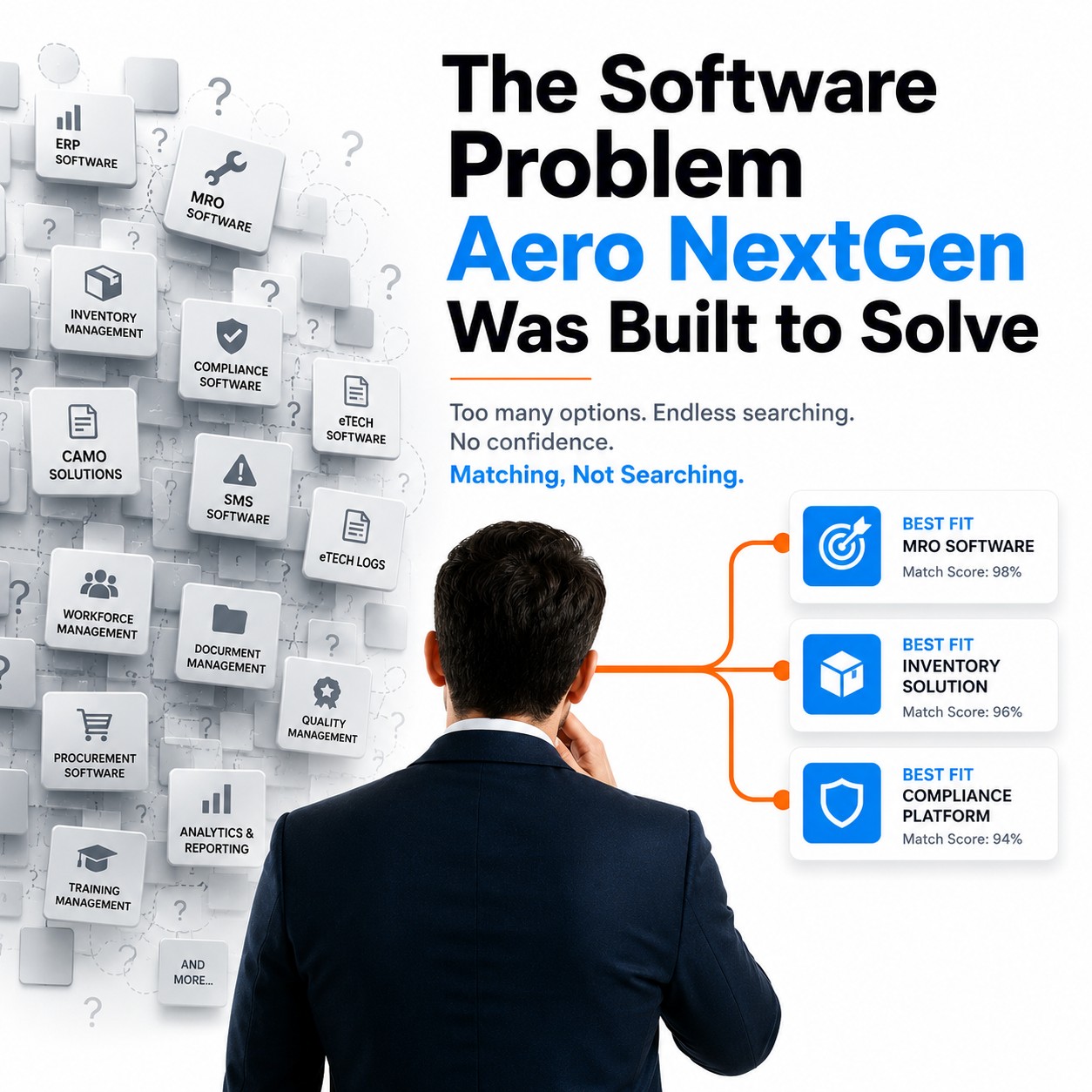
The Software Problem Aero NextGen Was Built to Solve

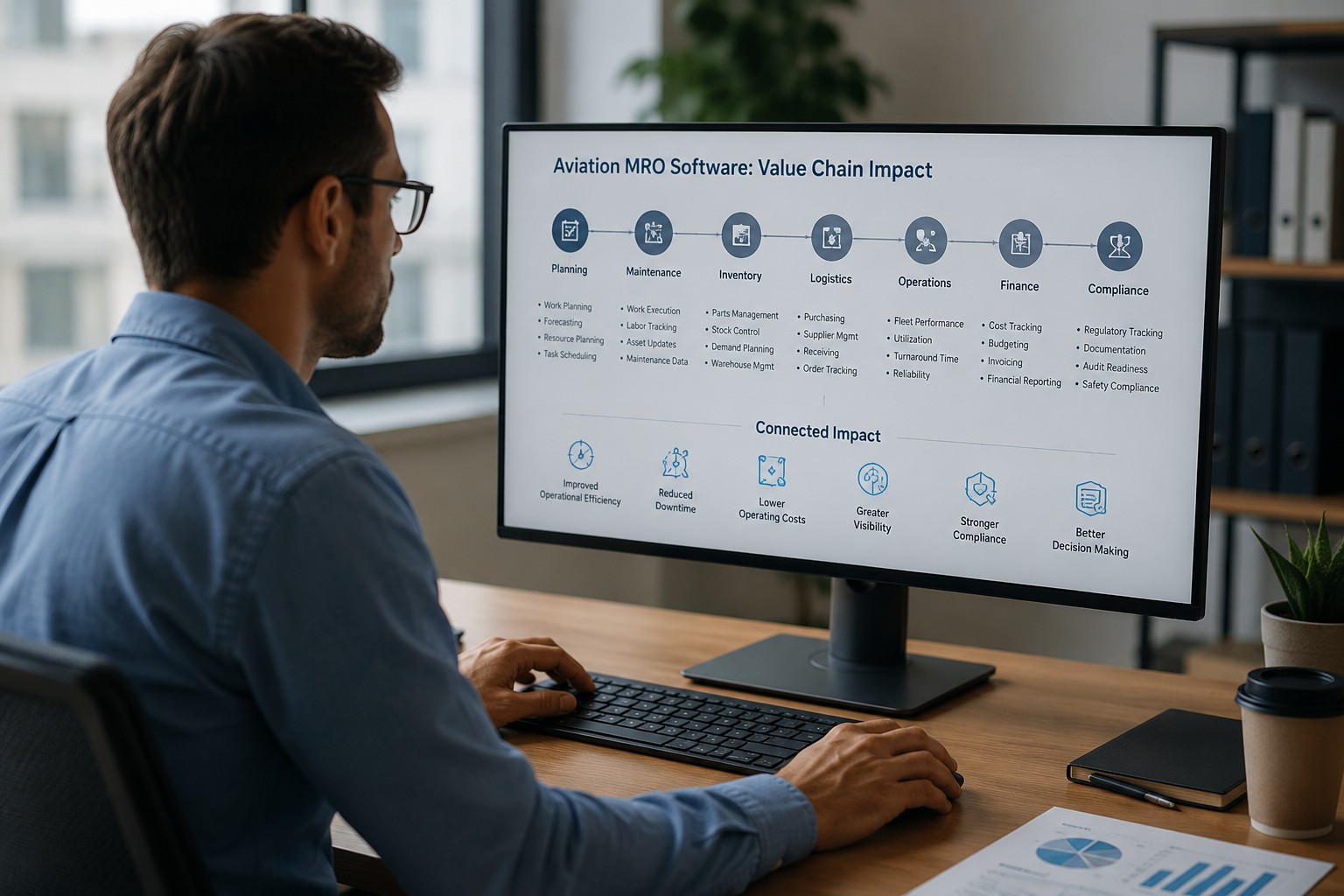
Aviation is in a demand super cycle, and its software is the bottleneck. The global maintenance market alone is set to reach roughly $119 billion in 2025 and climb to about $156 billion by 2035, driven by an aging fleet and durability issues on next-generation engines (Oliver Wyman, Feb 2025). Across the value chain — operators and airlines, maintenance providers, OEMs, parts distributors, and lessors — demand for capacity, parts, and throughput has never been higher. Yet only 6% of maintenance organizations have integrated digital tools at scale (McKinsey, Aircraft MRO 2.0). The gap between what aviation companies need and what they have actually adopted is the problem Aero NextGen exists to close — and it is a problem of connection, not capability.
The market is fragmented by design
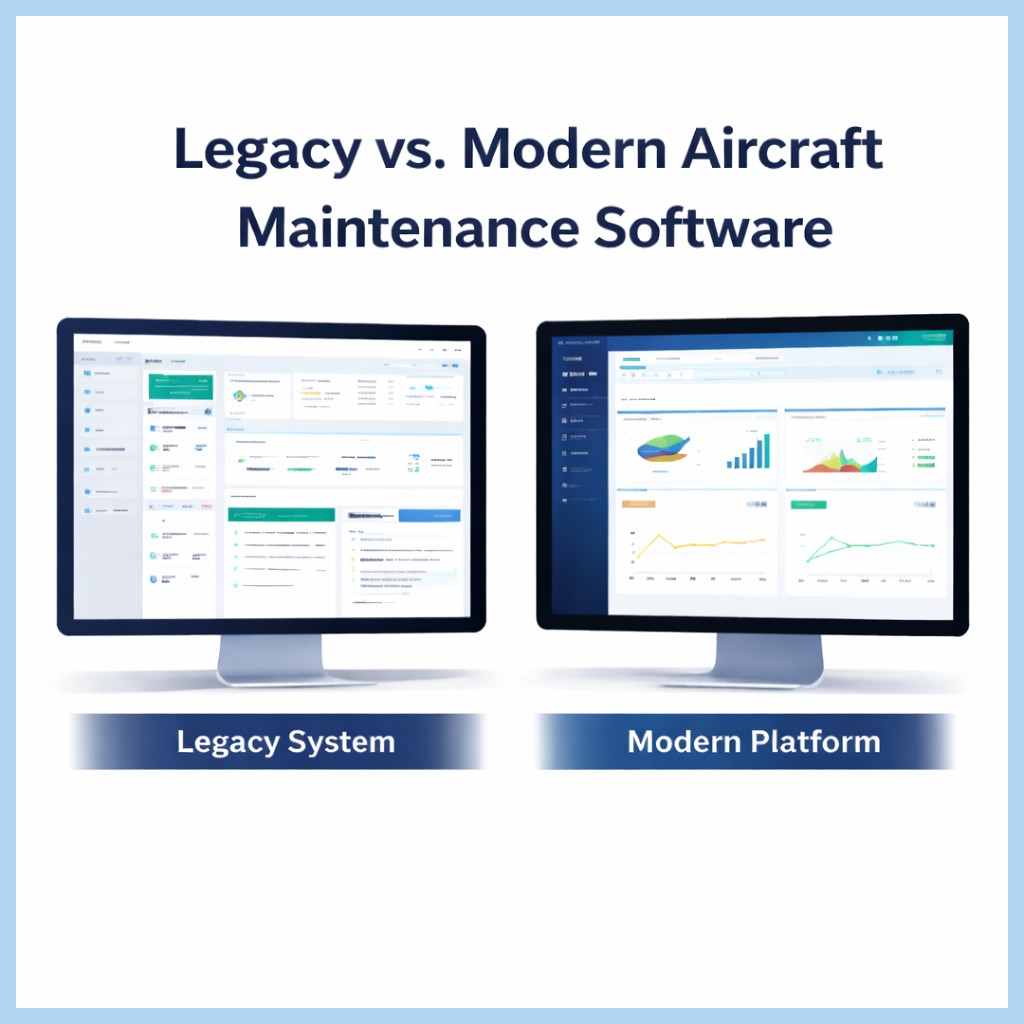
The aviation software landscape is split between incumbent OEM-affiliated platforms and agile cloud-native entrants, with companies frequently forced to stitch together multiple vendors for different phases of a single implementation (Mordor Intelligence). An aviation business with a defined pain point — turnaround time, parts traceability, technical records, procurement lead time, fleet visibility — faces dozens of overlapping tools and no neutral way to compare them.
- The buyer has the pain point. The market has the solution. Nothing connects the two with precision.
- Procurement decisions get made on the loudest sales pitch or the nearest existing relationship, not on fit.
- Vendors with the right capability for a niche workflow stay invisible to the companies that need them most.
This is the core inefficiency in aviation technology buying. It is not a shortage of software. It is a matching problem — and it spans the whole industry, not one segment of it. The same fragmentation that frustrates a buyer also starves a strong vendor of qualified demand, so both sides lose.
It affects every link in the value chain
The matching problem is not exclusive to maintenance shops. A regional operator selecting an M&E system, an airline standardizing line-maintenance data, an OEM building an aftermarket data offering, a parts distributor wiring up a marketplace channel, and a lessor managing records across a transitioning fleet are all solving the same meta-problem: which vetted provider actually fits this requirement, this data maturity, and this budget. Each segment evaluates in isolation, repeats the same discovery work its peers have already done, and carries the same risk of buying the wrong tool and living with it for a decade.
The cost of a mismatched purchase is rarely the licence fee. It is the stalled implementation, the parallel spreadsheets that survive alongside the new system, the integration that never finishes, and the team that quietly reverts to the old way of working. Multiply that across hundreds of operators and providers and the industry is spending heavily on software while capturing a fraction of the value — which is precisely why scaled digital adoption sits at 6% despite years of investment.
Vendors that solve the data foundation underpinning all of these decisions are already on the marketplace. Data cleansing and standardization specialists such as FPT USA Corp and AircraftCloud address the records problem before any platform migration begins, while technical-records and asset-transition providers like Flydocs and ProvenAir Technologies convert paper history into transferable digital assets across operators, MROs, and lessors alike. The point is not that these tools exist — it is that the right one for a given company is hard to find and easy to get wrong.
Adoption stalls because the data and the decision are both hard
Two barriers keep the other 94% from scaling digital. First, data limitations: more than 80% of organizations cite fragmented, paper-bound records — a direct consequence of regulatory retention rules — as the primary obstacle to digital adoption (McKinsey). Second, organizational readiness: more than 70% cite internal resistance to change and a shortage of digital talent.
Both barriers compound the matching problem. A company that cannot cleanly assess its own data maturity cannot confidently select the tool that fits its stage — and selecting a platform too advanced for a paper-heavy operation is one of the most common ways implementations fail. The decision is high-stakes, the options are many, and the evaluation burden falls on teams already short on people. So the project stalls, gets deferred to "next year," or defaults to whatever the largest incumbent is selling. Not because the technology does not exist, but because the path to the right technology is unclear.
This is where a neutral, structured match changes the outcome. When a buyer can articulate the pain point and have it mapped to a shortlist of vetted providers calibrated to their data maturity and segment, the evaluation shrinks from months of unguided research to a focused comparison. The decision stops being a leap of faith and becomes an evidence-based choice.
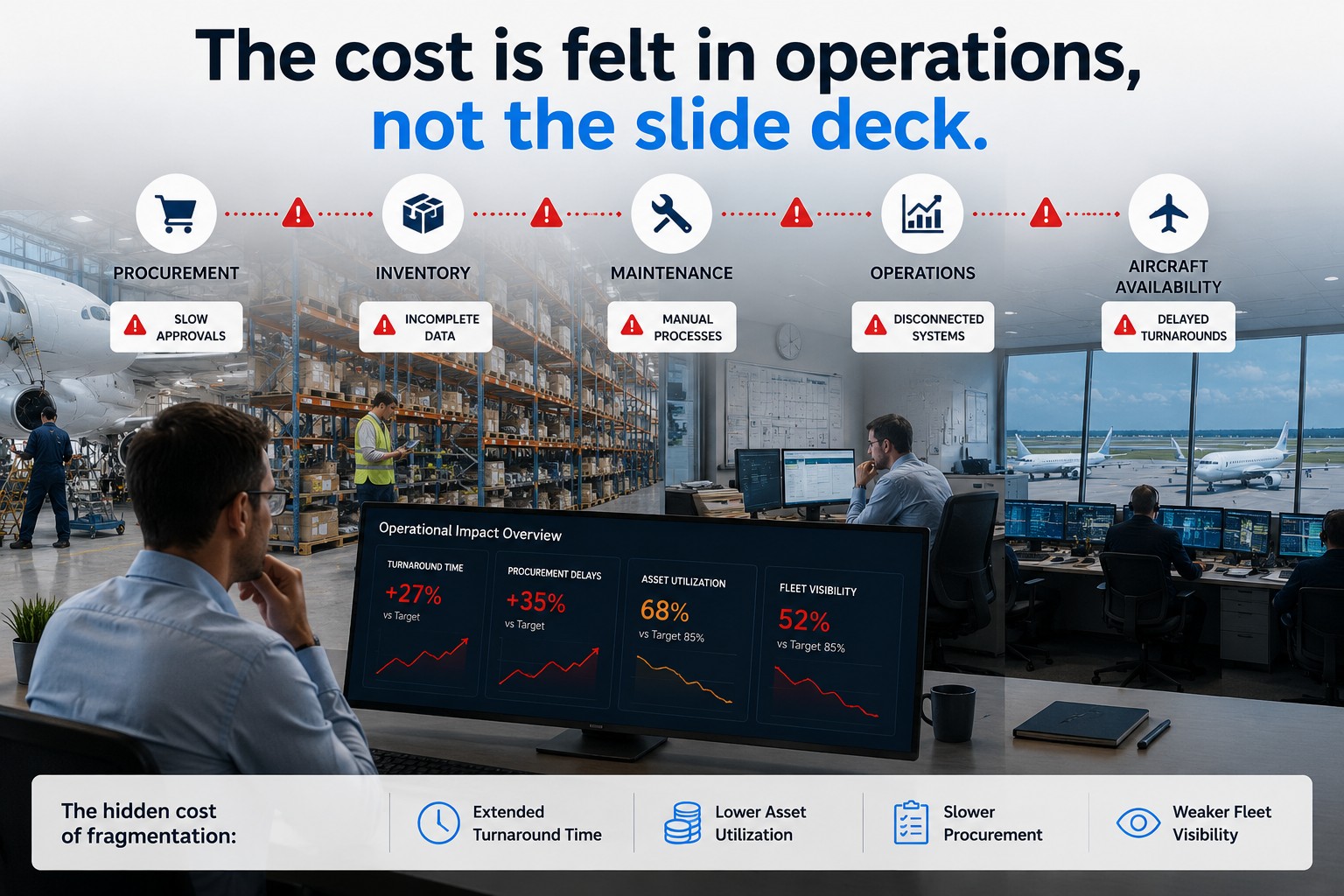
The cost is felt in operations, not the slide deck
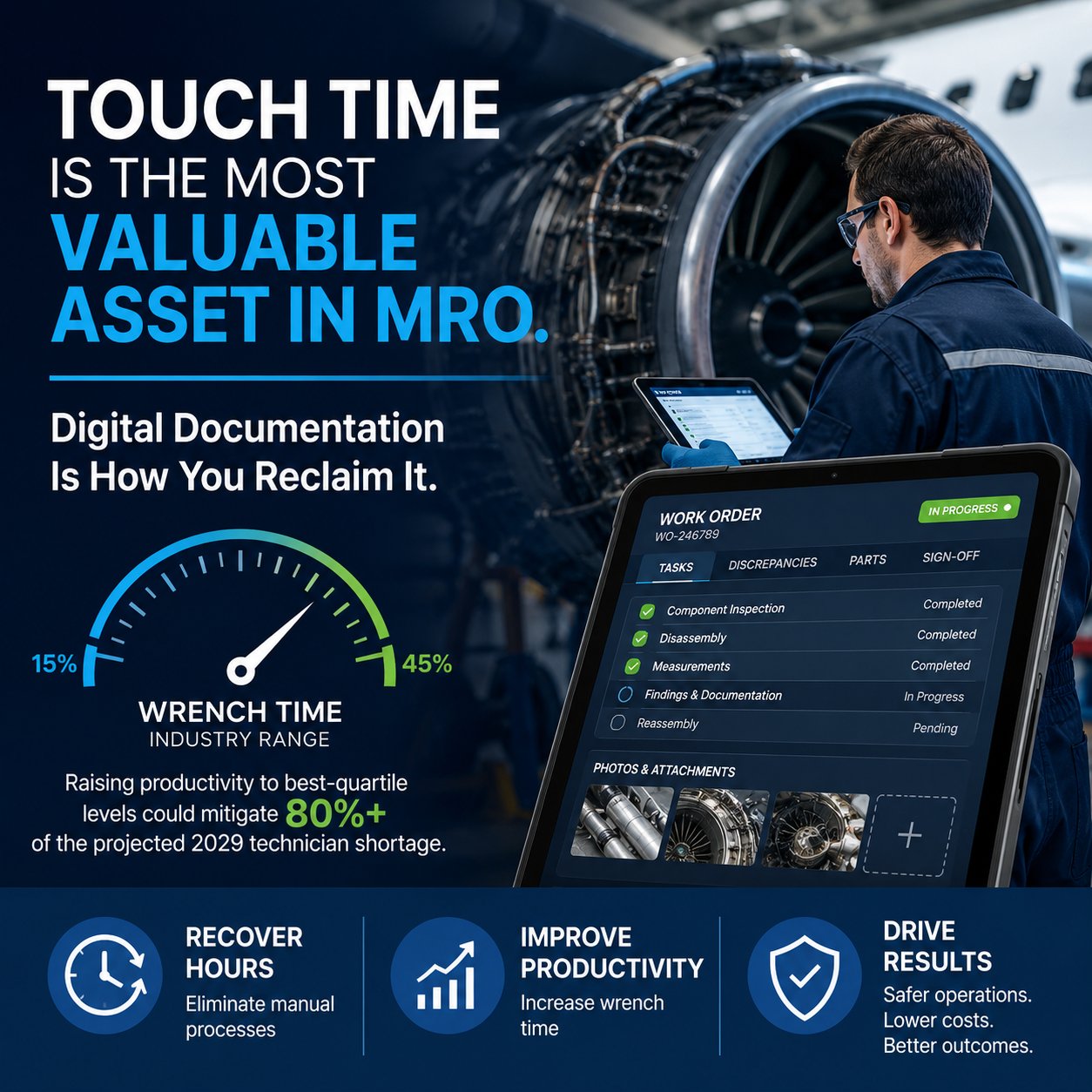
The fragmentation tax shows up as operational cost across the industry: extended turnaround time, lower asset utilization, slower procurement, and weaker fleet visibility. Material and labor shortages — named among the top disruptors in Oliver Wyman's 2025 survey (Oliver Wyman, Apr 2025) — make every hour lost to administrative work more expensive than it was a year ago.
The solution direction is well understood and well supplied:
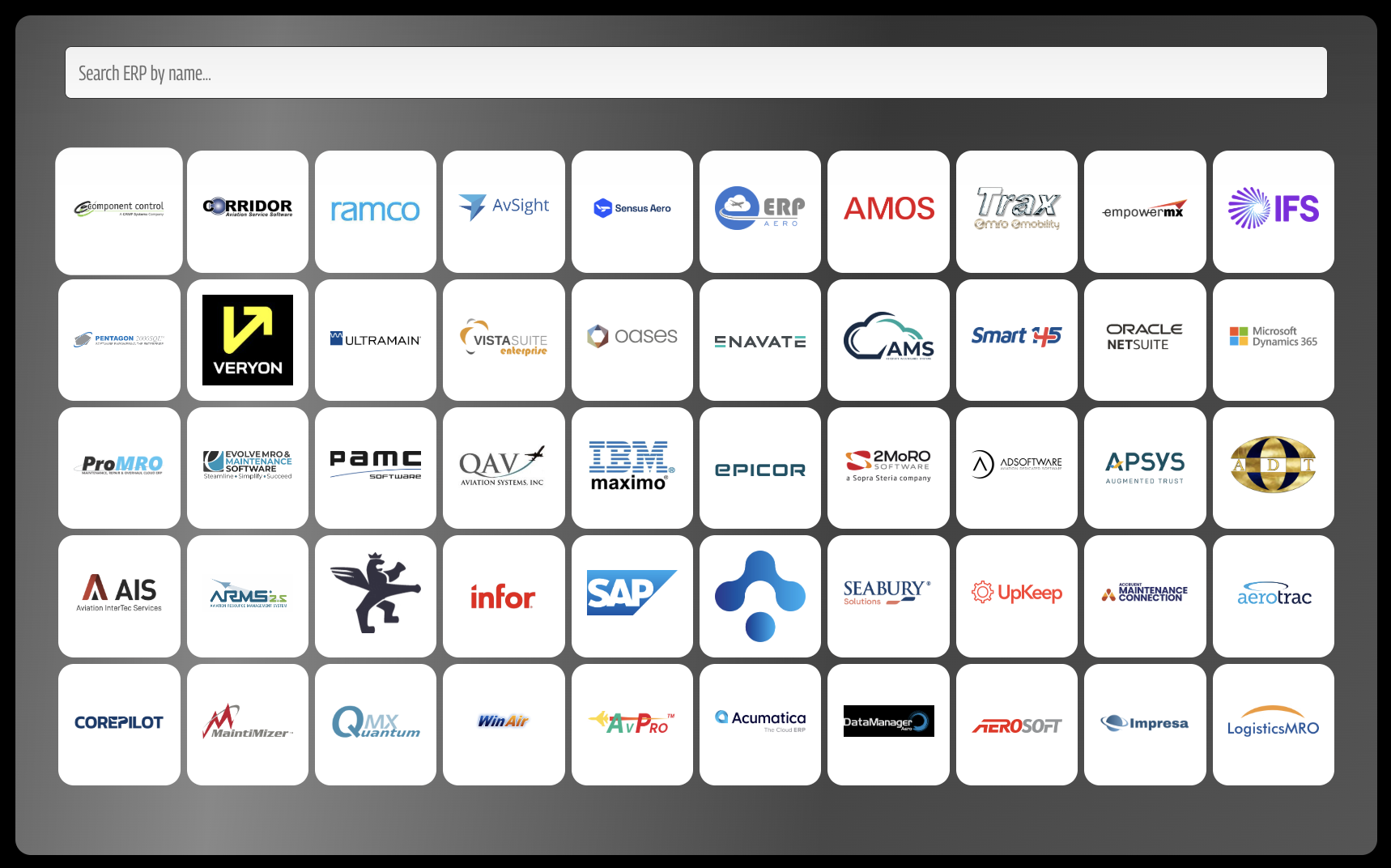
- Core ERP, M&E, and fleet operating systems — Pentagon 2000, Swiss AviationSoftware (AMOS), Veryon, and IFS / EmpowerMX — give companies a single operating system instead of disconnected silos.
- Predictive maintenance and analytics providers such as Aviation InterTec Services and Lufthansa Technik (AVIATAR) turn historical data into forward visibility on demand and capacity.
- Parts marketplaces and supplier networks — Rotabull, Locatory.com, and Inventory Locator Service (ILS) — connect distributors and buyers, compress lead time, and improve fill rates.
- Shopfloor and training tools like DeepSight (Augmented Reality) attack time lost to manual lookups and lengthy certification.
The capability exists across more than 150 aviation pain points. The work — the part the industry has not solved — is connecting each specific pain point to the vetted provider that resolves it, for the right company at the right stage.
Why "the best tool" is the wrong question
Buyers often frame the search as finding "the best" ERP, the best predictive engine, the best marketplace. There is no single best; there is only best-fit. The right system for a 40-person component shop is the wrong system for a 4,000-person airline MRO, and the right records solution for a lessor mid-transition is not the right one for an OEM standardizing aftermarket data. Fit is a function of segment, data maturity, integration surface, and the team's capacity to adopt — which is exactly why generic rankings and peer recommendations so often disappoint. The question that produces good outcomes is narrower and harder to answer alone: which vetted provider fits this problem, this company, this moment. Answering it at scale is a structured-matching task, not a search-engine task.
Where the industry is heading
The aging-fleet super cycle is not a temporary spike; Oliver Wyman projects steady growth through 2035, and the pressures driving it — older aircraft, constrained new-engine durability, and tight labor and material supply — are structural. Companies that fix their software matching problem now will compound the advantage: faster turnaround, better cash flow, higher utilization, and a digital foundation that gets stronger with every dataset. Those who keep buying tools in isolation will keep paying the fragmentation tax, and the gap between the digital leaders and the 94% will widen. The differentiator over the next decade is not whether an aviation business digitizes, but whether it digitizes with the right-fit stack, selected on evidence rather than on the nearest sales relationship.
The Aero NextGen take
Aero NextGen was built for exactly this gap, for the entire aviation industry. The platform maps a company's specific pain points to a curated set of vetted solution providers — across operators, MROs, OEMs, distributors, and lessors — then connects them directly, replacing scattered sales pitches and guesswork with a structured, evidence-based match. It is a neutral marketplace and a matching engine, grounded in a proprietary library of 150+ aviation pain points, that turns "we know we have a problem" into "here is the provider that solves it." The same engine gives strong vendors qualified demand instead of cold outreach, so the efficiency runs in both directions.
"Aviation does not have a software shortage. It has a matching problem. Our job is to connect a precise operational pain point to the vetted provider that resolves it — for every part of the industry, and to make that the standard way aviation buys technology, not the exception."— Monica Badra, Founder & CEO, Aero NextGen







.webp)




.png)

.png)
.png)


%20(1).png)








.png)












.jpeg)



.png)












Aviation Solutions, Find your Match
Run the survey to get a shortlist of the systems that match your operational needs – fast, simple, free.
Related Posts


.jpg)



%20(1).png)
%20(1).png)
.png)
%20(1)%20(1)%20(1).png)
.png)
.png)


%20(1).png)
.png)







%20(1)%20(1)%20(1)%20(1).png)
.png)
%20(1).png)
.png)
%20(1).png)
.png)
%20(1)%20(1).png)
.png)
.png)
.png)
%20(1)%20(1)%20(1)%20(1).png)
%20(1).webp)
.png)
.jpeg)
%20(1).webp)

.webp)

%20(1).webp)

Aero NextGen matched us to the right solution providers that helped us standardize the data in such a way that we can now put it to use. Aero Nextgen’s ability to quickly understand the business needs and translate them into tangible solutions was impressive.


Aero NextGen matched us to the right solution providers that helped us standardize the data in such a way that we can now put it to use. Aero Nextgen’s ability to quickly understand the business needs and translate them into tangible solutions was impressive.
Aero NextGen matched us to the right solution providers that helped us standardize the data in such a way that we can now put it to use. Aero Nextgen’s ability to quickly understand the business needs and translate them into tangible solutions was impressive.
We generate a tremendous amount of data. Aero NextGen matched us to the right solution providers that helped us standardize the data in such a way that we can now put it to use. Aero Nextgen's ability to quickly understand the business needs and translate them into tangible solutions was impressive.


Aero Next Gen quickly identified our challenges and matched us with the right ERP solution. Their expertise saved us time, and transformed our MRO operations.


My experience working with Aero NextGen is extremely positive. We setup a battery shop in the middle of Brexit in under 6 months with their help. Thoroughly professional. Attention to detail is second to none with innovative and creative ideas.
.png)

We have been struggling to performance manage our shopfloors for ages. Aero NextGen has connected us to solution providers that solved this for us within weeks. We are now capable of tracking capacity, productivity, utilization, and operational efficiency with instantaneously. The level of expertise has made the engagement seamless for our internal teams.


Straight to Your Inbox.
Subscribe to receive the latest trends on aviation software and services.