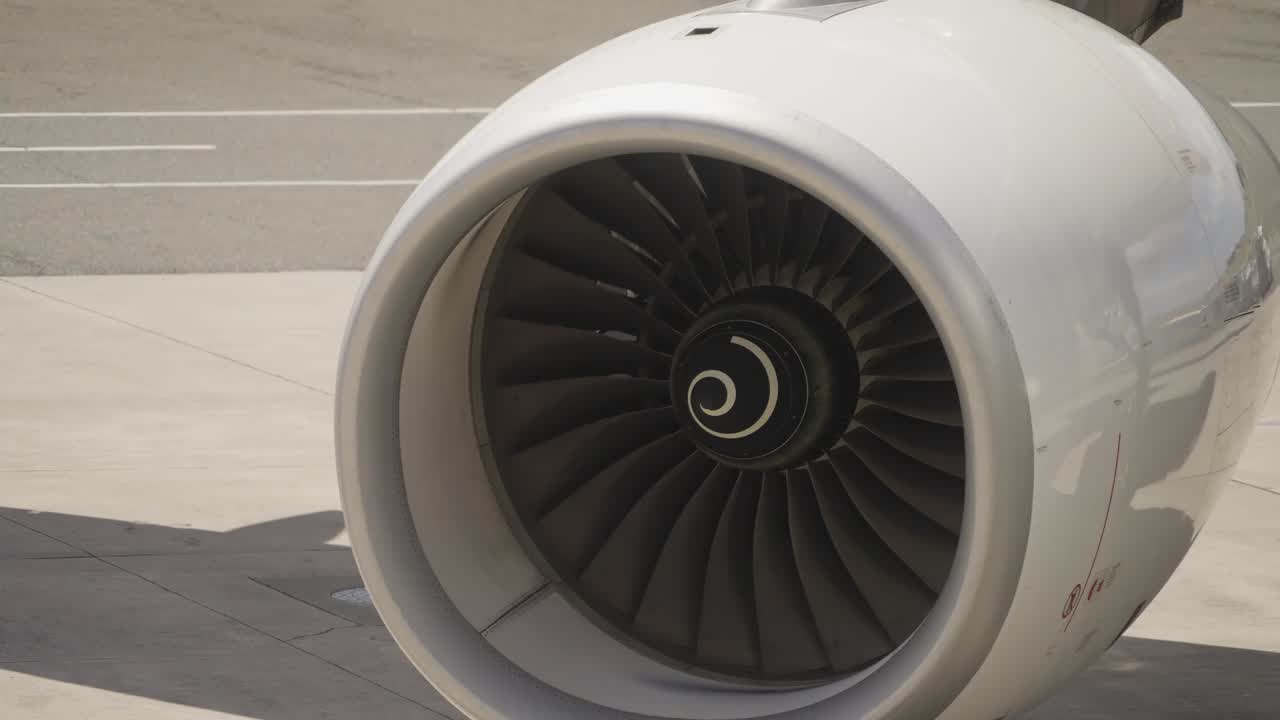

Aviation M&A Is Consolidating the Vertical — and Redrawing the Aftermarket Map

OEMs and large platforms are buying up and down the value chain — securing supply, pulling aftermarket revenue in-house, and tightening control of parts, data, and engine work. The strategic question is no longer whether the vertical is consolidating, but where you sit when the music stops.
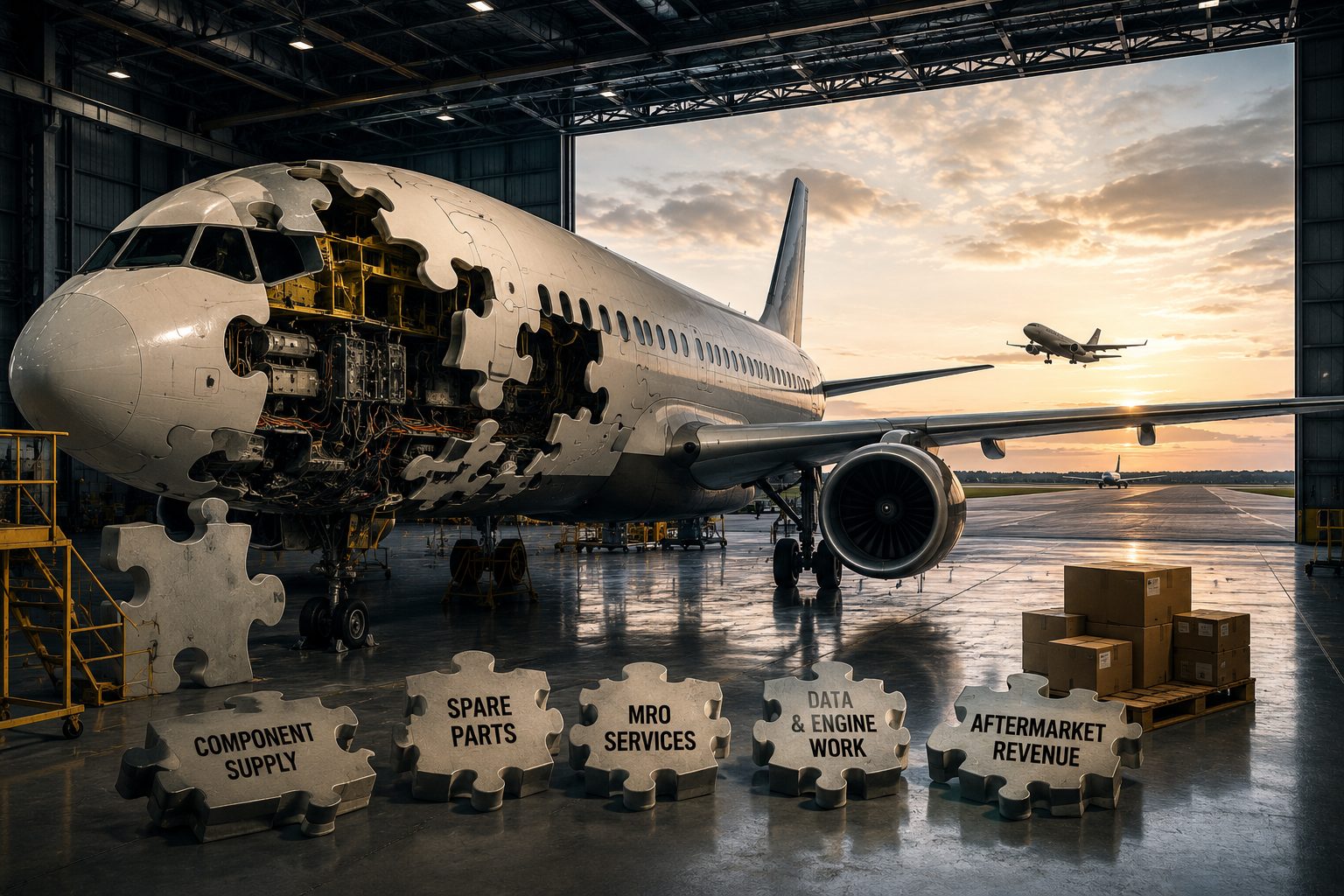
Aerospace dealmaking is no longer opportunistic. It is structural. OEMs and large platforms are buying their way up and down the value chain — securing component supply, pulling aftermarket revenue in-house, and tightening control of the parts, data, and engine work that independent operators depend on. The 2025–2026 deal cycle confirmed the direction of travel: aerospace accounted for roughly 38% of all M&A activity by late 2025, inside an aerospace and defense M&A market valued at about $218 billion in 2025 and projected to reach $243 billion in 2026 (Mordor Intelligence). For airlines, MROs, OEMs, parts distributors, and lessors, the strategic question has shifted from whether the vertical is consolidating to where you sit when the music stops.
Vertical integration is now the headline strategy
The defining deals of the cycle were about owning the supply chain, not just expanding it. Boeing completed its acquisition of Spirit AeroSystems on December 8, 2025 — a transaction valued at $4.7 billion in equity and roughly $8.3 billion including assumed debt, bringing about 15,000 employees across five sites in-house (Boeing, Manufacturing Dive). The strategic logic is explicit: Boeing reabsorbed its largest supplier of spare parts, expanded its global MRO footprint, and added Spirit's rotable, lease, and exchange portfolio to its services business. Safran moved on the same axis with its roughly $1.8 billion acquisition of Collins Aerospace's flight control and actuation unit, securing mission-critical components (PwC).
These are not isolated moves. Persistent supply constraints in engines, castings, and forgings are pushing OEMs to internalize the parts of the value stream they cannot afford to have fail. For the independent operator, that translates directly to a real cost: OEM pricing disadvantage and harder sourcing of mission-critical parts — the exact pressure aviation professionals feel when an OEM controls both the component and the data needed to repair it.
The aftermarket is the prize — and private capital knows it
Consolidation is moving fastest where the recurring revenue lives. With OEM order backlogs extending for years, aftermarket and MRO assets have become the most contested targets for both strategic and financial buyers. Strategic buyers accounted for 53% of total A&D M&A transactions in 2025, reflecting a market where well-capitalized acquirers advanced aggressively while smaller financial sponsors faced liquidity constraints and longer holding periods (eplane AI).
The roll-up is visible in the numbers:
- VSE Corporation completed its acquisition of Precision Aviation Group for approximately $2.025 billion, creating a scaled independent aftermarket platform with 61 locations across 8 countries (VSE Corp 8-K).
- HEICO's $2.05 billion acquisition of Wencor (2024) materially expanded its PMA parts and repair reach across commercial and military aerospace (eplane AI).
The pattern is scale-buying scale. Distributors, repair shops, and parts suppliers that once competed as mid-sized independents are being absorbed into platforms large enough to set terms with both customers and the OEMs above them. That concentrates supplier performance and lead-time risk into fewer hands — and rewards the operators who can see across the whole supplier network rather than one relationship at a time. Platforms such as Locatory.com and Inventory Locator Services exist to give independents that cross-market parts visibility and supplier reach without the balance sheet of a HEICO.
Engines: where control is most concentrated
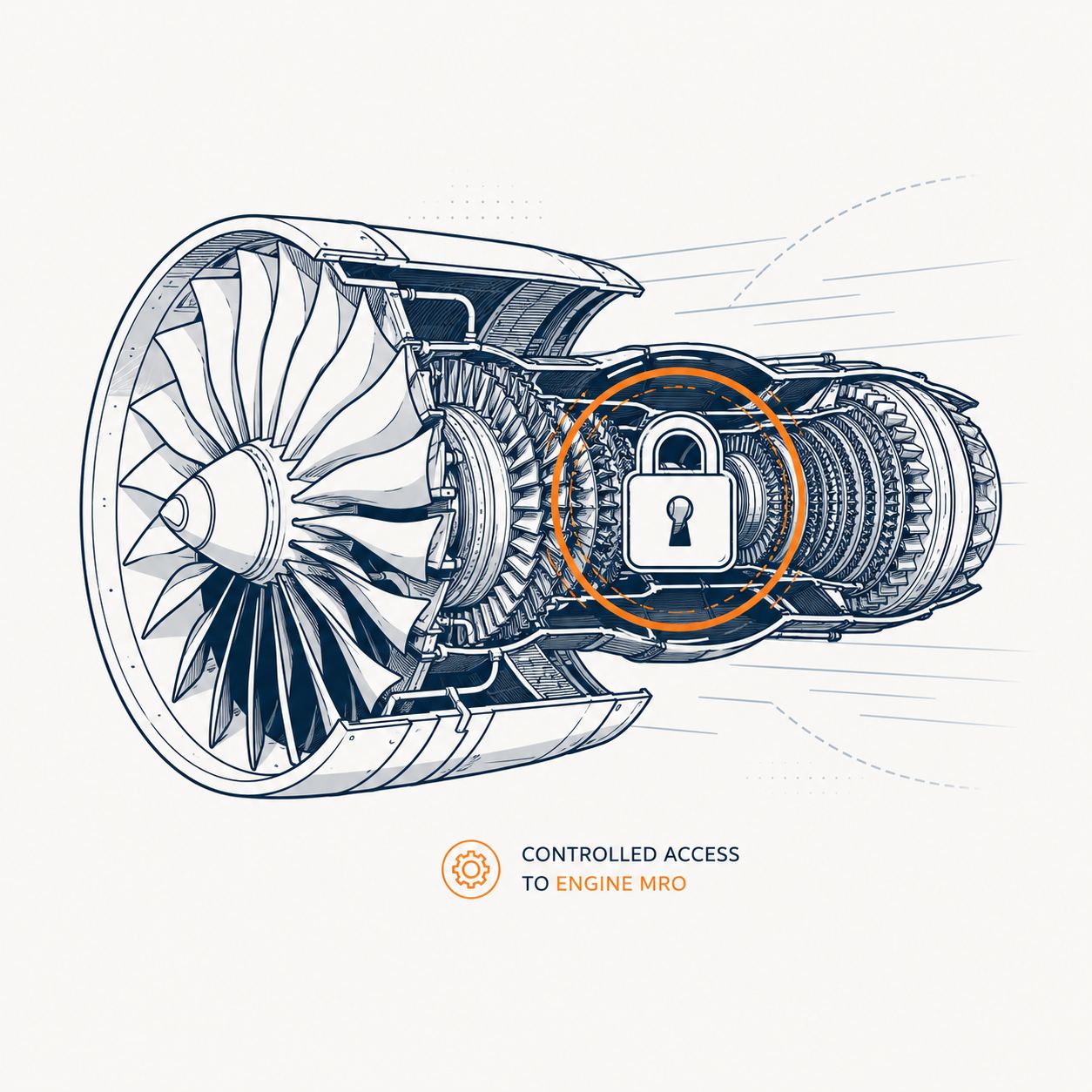
Nowhere is OEM control tighter than in engine maintenance. The first major wave of LEAP and GTF engines hit their initial shop visits in 2025, and unscheduled durability work overwhelmed available shop capacity — a shortage severe enough that legacy engine programs also lost slots (Aviation Week). Demand is the leverage. Engine makers grant significant purchase discounts in exchange for customers committing engines to manufacturer-controlled maintenance, and they limit aftermarket competition by prohibiting licensed partner shops from using PMA parts or used serviceable material, according to a 2025 supply chain report by IATA and Oliver Wyman (Flight Global).
The independents are responding with capacity and contracts. StandardAero is expanding LEAP-1A and LEAP-1B maintenance capacity toward 2029 under a renewed agreement with CFM International (AviTrader), and CFM extended its IATA aftermarket competition agreement into 2033 — a structural concession that keeps the independent engine MRO market open (Flight Global). New capacity is also coming on line: Lufthansa Technik and WestJet are opening a CAD 120 million LEAP-1B shop in Calgary in 2027 (Mordor Intelligence).
PMA and alternative parts are the counterweight
As OEMs verticalize, the market's pricing discipline increasingly depends on credible alternatives to OEM parts. PMA (Parts Manufacturer Approval) parts are produced under FAA approval and held to the same safety, performance, and quality standards as OEM articles. Adoption is now mainstream: nearly three-quarters of 46 responding airlines confirmed PMA use, citing cost and availability as the primary drivers, with two-fifths reporting better performance from non-OEM articles (Flight Global).
For independents, the opportunity is to operationalize that choice — to price dynamically against OEM lists, to track part provenance well enough to defend every alternative-part decision in an audit, and to source on competitive terms instead of accepting OEM defaults. That requires systems, not spreadsheets: dynamic pricing and parts capability in platforms like Pentagon 2000, procurement resilience tooling such as Skyselect, and parts-distribution reach through marketplaces like Rotabull. The operators who win the aftermarket will be the ones who can prove, instantly, that a non-OEM choice was the right one.
Where the industry is heading
Three shifts define the next 24 months. First, the M&A backlog is set to unblock further into 2026 as financing conditions ease, which means more aftermarket targets change hands and the window to act as a buyer or a seller narrows (Aviation Business News). Second, OEM control of parts and repair data will keep tightening, making independent access to alternative parts, supplier networks, and clean technical records a competitive necessity rather than a nice-to-have. Third, valuation discipline will separate the operators who get acquired on strong multiples from those who get absorbed at a discount — and the difference is overwhelmingly operational readiness: clean data, documented processes, and demonstrable margin control.
For any operator weighing a sale, a roll-up, or simply a stronger negotiating position, that readiness is buildable. Endeavor Elements offers valuation comparison and exit-ready transformation roadmaps specifically for aviation businesses preparing for that conversation — turning "we think we're worth more" into a defensible number.
The Aero NextGen take
Consolidation is not a threat to the independent aviation business. It is a sorting mechanism. The operators who lose ground are the ones running on tribal knowledge, manual records, and a single OEM relationship they cannot price against. The operators who gain are the ones who digitized early, can see across the supplier market, and can prove their numbers to a buyer or a regulator on demand. M&A rewards readiness — and readiness is a choice you make before the offer arrives, not after.
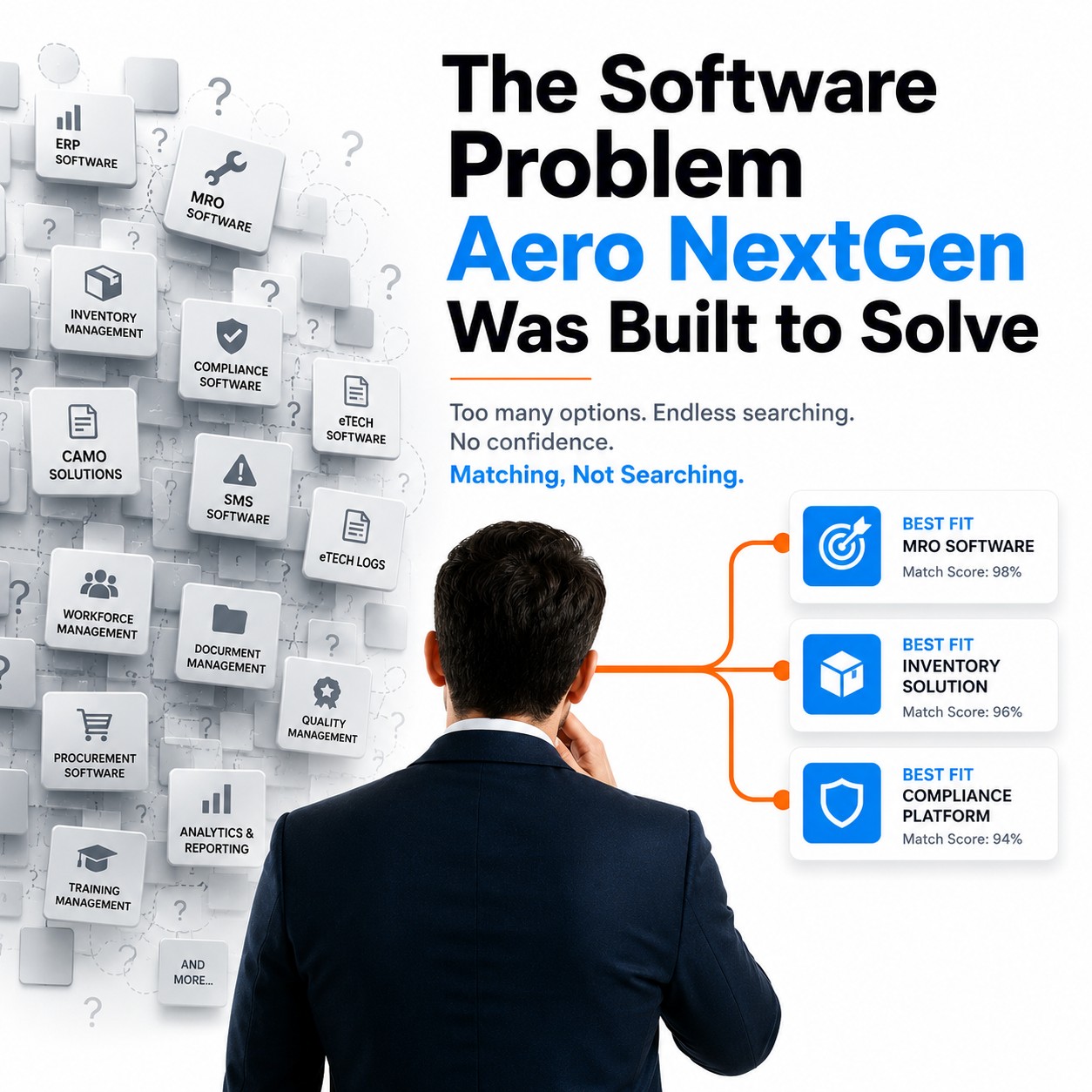
Aero NextGen exists to make that choice executable. The platform maps real operator pain points — across our library of 150+ MRO pain points — to vetted technology and consulting providers that solve them, so an airline, MRO, OEM, distributor, or lessor can move from exposure to advantage without spending six months evaluating vendors blind.
"Vertical integration concentrates control, but it doesn't decide who wins the aftermarket. The operators who digitize, see across the supplier market, and can prove their value on demand are the ones who set their own terms — whether they're buying, selling, or staying independent. That readiness is built before the deal, and it's exactly what we help operators put in place."
— Monica Badra, Founder & CEO, Aero NextGen
Find your fit in 3 minutes
Match your operation to the right software and consulting providers.
Take the Solution Finder quiz →
SOURCES
- Mergers and Acquisitions in Aerospace and Defense Market — Mordor Intelligence
- Global M&A trends in industrials and services: 2026 outlook — PwC
- Boeing Completes Acquisition of Spirit AeroSystems (Dec 8, 2025) — Boeing
- Boeing completes $8.3B Spirit AeroSystems acquisition — Manufacturing Dive
- VSE Corporation 8-K (Precision Aviation Group acquisition) — SEC
- Signs Point to Easing of Aerospace M&A Backlog by 2026 — eplane AI
- CFM extends IATA aftermarket competition agreement into 2033 — Flight Global
- MROs Plan For New-Gen Engines As OEMs Grow Aftermarket Networks — Aviation Week
- StandardAero accelerates LEAP engine MRO expansion towards 2029 — AviTrader
- North America Aircraft MRO Market — Mordor Intelligence
- Unblocking of M&A backlog in aerospace in 2026 — Aviation Business News





.webp)



.png)

.png)
.png)


%20(1).png)








.png)












.jpeg)



.png)











Aviation Solutions, Find your Match
Run the survey to get a shortlist of the systems that match your operational needs – fast, simple, free.
Related Posts




.jpg)



%20(1).png)
%20(1).png)
.png)
%20(1)%20(1)%20(1).png)
.png)
.png)

%20(1).png)
.png)





%20(1)%20(1)%20(1)%20(1).png)
.png)
%20(1).png)
.png)
%20(1).png)
.png)
%20(1)%20(1).png)
.png)
.png)
.png)
%20(1)%20(1)%20(1)%20(1).png)
%20(1).webp)
.png)
.jpeg)
%20(1).webp)

.webp)
%20(1).webp)

Aero NextGen matched us to the right solution providers that helped us standardize the data in such a way that we can now put it to use. Aero Nextgen’s ability to quickly understand the business needs and translate them into tangible solutions was impressive.


Aero NextGen matched us to the right solution providers that helped us standardize the data in such a way that we can now put it to use. Aero Nextgen’s ability to quickly understand the business needs and translate them into tangible solutions was impressive.
Aero NextGen matched us to the right solution providers that helped us standardize the data in such a way that we can now put it to use. Aero Nextgen’s ability to quickly understand the business needs and translate them into tangible solutions was impressive.
We generate a tremendous amount of data. Aero NextGen matched us to the right solution providers that helped us standardize the data in such a way that we can now put it to use. Aero Nextgen's ability to quickly understand the business needs and translate them into tangible solutions was impressive.


Aero Next Gen quickly identified our challenges and matched us with the right ERP solution. Their expertise saved us time, and transformed our MRO operations.


My experience working with Aero NextGen is extremely positive. We setup a battery shop in the middle of Brexit in under 6 months with their help. Thoroughly professional. Attention to detail is second to none with innovative and creative ideas.
.png)

We have been struggling to performance manage our shopfloors for ages. Aero NextGen has connected us to solution providers that solved this for us within weeks. We are now capable of tracking capacity, productivity, utilization, and operational efficiency with instantaneously. The level of expertise has made the engagement seamless for our internal teams.


Straight to Your Inbox.
Subscribe to receive the latest trends on aviation software and services.